Increasing fluorine content generally improves chemical, thermal, electrical, and surface performance in fluoropolymers. Higher fluorination typically delivers greater resistance to aggressive reagents, heat, flames, weathering, and electrical leakage, while reducing surface energy, friction, dielectric constant, and sample adhesion. The principal trade-off is that some mechanical properties—such as strength or cut-through resistance—may decline slightly, so fully fluorinated materials like PTFE and PFA are best selected when chemical purity and endurance outweigh structural strength.
The more demanding the chemical, thermal, or purity requirements, the more valuable higher fluorination becomes. However, material selection must still balance chemical inertness and low friction against mechanical load, wear, fabrication, and application-specific requirements.
How Higher Fluorination Changes Laboratory Performance
Chemical resistance increases
Higher fluorine content strengthens the polymer’s resistance to chemical attack, particularly from aggressive organic and inorganic reagents.
This makes highly fluorinated materials suitable for reagent bottles, tubing, valves, fittings, digestion vessels, reaction vessels, and high-purity fluid-transfer components.
The result is reduced swelling, degradation, contamination, and extractables when the material is exposed to demanding chemicals.
Thermal stability improves
Greater fluorination generally increases thermal stability and melting temperature. Components can therefore tolerate more severe temperature conditions before losing their functional properties.
This is important for laboratory operations involving heated reagents, thermal digestion, sterilization, or high-temperature fluid handling.
Fully fluorinated materials such as PTFE and PFA are commonly considered when both chemical inertness and high-temperature endurance are priorities.
Flame and weathering resistance increase
Higher fluorine content also improves flame resistance and resistance to environmental weathering. The material is less vulnerable to deterioration from heat, light, and outdoor exposure.
Although weathering may not be the primary concern inside a laboratory, it can matter for equipment used in exposed facilities, storage areas, or long-term industrial environments.
Electrical and Surface Properties
Electrical insulation improves
Increasing fluorination generally raises surface resistivity and volume resistivity. This reduces unwanted electrical conduction through or across the material.
At the same time, the dielectric constant and dissipation factor decrease, which can improve insulating performance in specialized laboratory instruments, sensors, and fluid-handling systems near electrical components.
These changes are especially relevant where electrostatic behavior, signal integrity, or electrical isolation affects measurement reliability.
Friction and adhesion decrease
Higher fluorination lowers surface energy and the coefficient of friction. The resulting surface is more non-stick and allows parts to slide with less resistance.
This benefits valves, seals, fittings, plungers, tubing, and custom-machined fluid-control parts, where smooth movement and low adhesion are important.
Lower adhesion can also reduce sample carryover and make cleaning easier in high-purity analytical applications.
Fluid transfer becomes smoother
Low-friction, low-energy surfaces discourage reagents and samples from sticking to internal walls. This can support more consistent fluid movement and reduce retained material in tubing, vessels, and fittings.
However, actual flow behavior also depends on geometry, surface finish, pressure, temperature, and the fluid itself—not fluorine content alone.
What Happens to Mechanical Performance?
Some strength characteristics may decline
Higher fluorination can slightly reduce certain mechanical properties compared with less-fluorinated or hydrocarbon-based plastics.
Depending on the material and design, this may affect basic strength, cut-through resistance, stiffness, or resistance to mechanical wear.
The reduction is not necessarily disqualifying, but it matters for load-bearing components, thin walls, clamps, and parts exposed to repeated abrasion.
Design may need to compensate
Highly fluorinated polymers may require thicker sections, mechanical reinforcement, compatible backing materials, or designs that avoid concentrated loads.
For example, a chemically inert fluoropolymer liner may be preferable to using the polymer as the sole structural frame of a large apparatus.
PTFE and PFA are not interchangeable in every design
PTFE and PFA both provide high chemical resistance and low-friction performance, but their processing and mechanical behavior differ.
The appropriate choice depends on whether the component requires machinability, melt processing, flexibility, dimensional stability, transparency, or resistance to a particular operating condition.
Matching Fluorination to Laboratory Requirements
For aggressive chemical exposure
Choose a highly fluorinated material when the component must resist strong acids, solvents, oxidizing chemicals, or prolonged reagent contact.
This is the primary reason fully fluorinated materials are used in chemical storage, trace-analysis equipment, digestion systems, and fluid-control hardware.
For high-temperature service
Higher fluorination is advantageous when the component must maintain chemical and functional stability at elevated temperatures.
The design must still verify the actual continuous-use temperature, thermal cycling requirements, pressure, and mechanical load rather than relying only on the polymer family name.
For high-purity analysis
Use highly fluorinated materials when minimizing sample adhesion, contamination, extractables, and chemical interaction is critical.
Surface cleanliness, processing quality, and manufacturing controls remain important because a chemically resistant resin does not automatically guarantee a contamination-free finished component.
For electrical isolation
Higher fluorination is useful where high resistivity and low dielectric losses support the performance of laboratory instrumentation.
The final design should also consider grounding, static-charge accumulation, humidity, and the electrical properties of the complete assembly.
Understanding the Trade-offs
Chemical performance versus mechanical robustness
The strongest chemical resistance is not always paired with the highest mechanical strength or wear resistance.
If a part must withstand impact, repeated cutting forces, high loads, or abrasive particles, a less-fluorinated polymer or a composite design may provide a better overall balance.
Low friction versus dimensional control
Low friction reduces sliding resistance, but fluoropolymers can present challenges involving creep, deformation under load, and dimensional stability.
Precision components should therefore be evaluated under their actual temperature, pressure, load, and time conditions.
High fluorination versus processing flexibility
Fully fluorinated materials offer exceptional inertness but may be more difficult or costly to process than conventional engineering plastics.
Material selection should account for the required manufacturing method, tolerances, weldability, machining, and availability of qualified suppliers.
Fluorine content is not the only design variable
Performance depends on more than fluorine percentage. Polymer structure, crystallinity, molecular weight, fillers, processing history, temperature, chemical exposure, and component geometry can all change the result.
Fluorine content should therefore be treated as a strong selection indicator—not a complete substitute for application-specific testing.
How to Apply This to Your Project
Select the material based on the property that most directly controls failure or contamination risk.
- If your primary focus is chemical resistance and purity: Favor highly or fully fluorinated materials such as PTFE or PFA, then verify compatibility with the exact reagents, temperatures, and cleaning procedures.
- If your primary focus is high-temperature operation: Choose a fluoropolymer with suitable thermal stability and confirm continuous-use limits under the actual mechanical and chemical load.
- If your primary focus is smooth fluid handling: Prioritize low-friction, low-adhesion fluoropolymer surfaces for valves, tubing, fittings, and machined flow components.
- If your primary focus is mechanical strength or wear resistance: Do not select solely for maximum fluorination; compare partially fluorinated alternatives, reinforced designs, or structural backing materials.
- If your primary focus is electrical insulation: Use the higher resistivity and lower dielectric losses of highly fluorinated materials, while evaluating static buildup and the complete electrical assembly.
Higher fluorination is most valuable when chemical inertness, thermal endurance, low adhesion, and electrical insulation matter more than maximum mechanical strength.
Summary Table:
| Property | Effect of Higher Fluorine Content |
|---|---|
| Chemical Resistance | Increased resistance to aggressive reagents and solvents, reduced swelling and extractables. |
| Thermal Stability | Improved heat resistance and higher melting temperature, suitable for high-temperature applications. |
| Flame & Weathering | Better flame retardancy and resistance to environmental degradation. |
| Electrical Insulation | Higher resistivity, lower dielectric constant, and reduced dissipation factor. |
| Friction & Adhesion | Lower surface energy and coefficient of friction, reducing stickiness and improving non-stick properties. |
| Mechanical Strength | May decrease slightly, requiring design adjustments for load-bearing parts. |
Optimize your lab's performance with high-fluorine fluoropolymers. Contact KINTEK today to explore our custom PTFE and PFA labware and components, ensuring chemical purity and durability.
Related Products
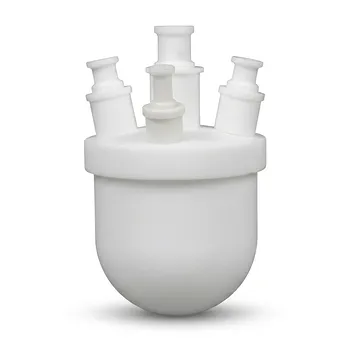
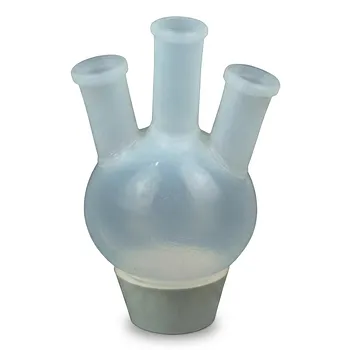
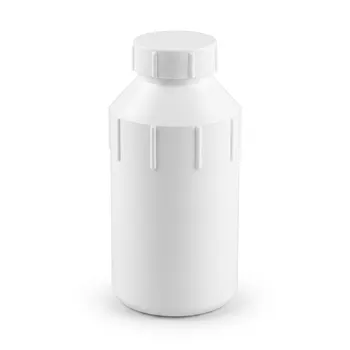
- Custom PTFE Flask 250ml High Purity Fluoropolymer Laboratory Vessel for Chemical Research
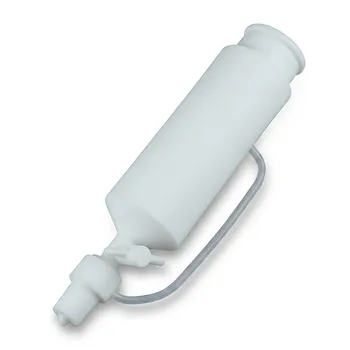
- Custom PTFE Constant Pressure Separatory Funnel 100ml Fluoropolymer Labware for Corrosive Chemical Transfer
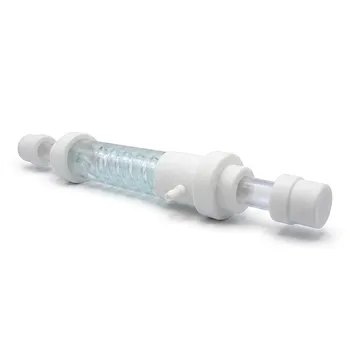
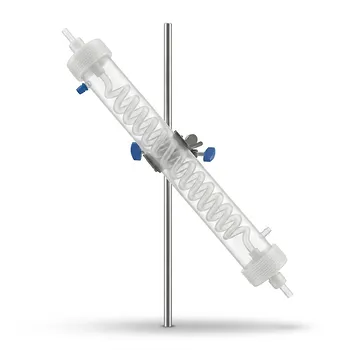
- Custom PTFE Condenser Tube 100ml Serpentine and Straight Fluoropolymer Laboratory Heat Exchanger with Flask Adapters
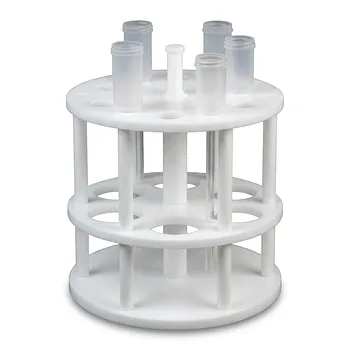
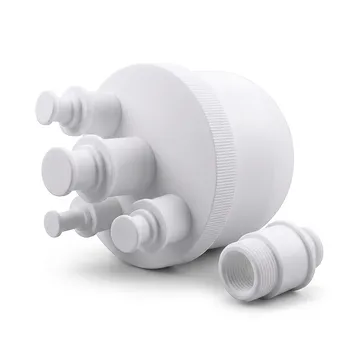
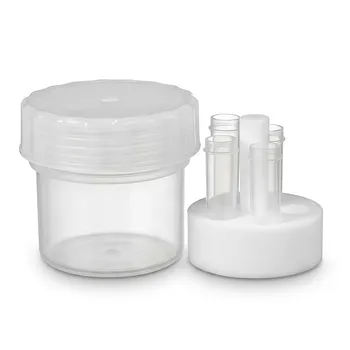
- Custom PFA Microcolumn Racks and PTFE Machined Low Background Corrosion Resistant Laboratory Fixtures
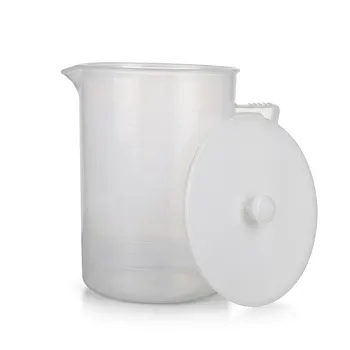
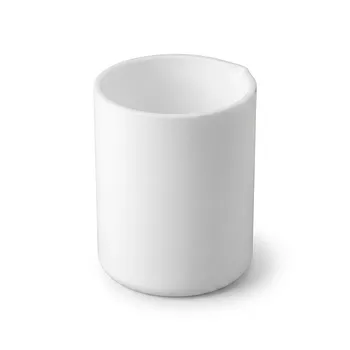
- High Purity PFA Beaker with Handle and Large Capacity Washable Soak Basket Multi Spec Teflon Laboratory Labware
People Also Ask
- What are the key steps for structural integrity in molded PTFE lab reaction vessels? Master fine powder processing.
- Why Are High-Purity Fluoropolymer Vessels and Tubing Critical for Trace Analysis? Prevent Contamination Reliably
- Why do PTFE fluoropolymer laboratory vessels and containers exhibit superior chemical resistance against harsh solvents and corrosive acids compared to standard plastic labware? Discover the molecular secrets
- How do choice of solvent and chain transfer activity affect molecular weight during vinylidene fluoride (VDF) radical polymerization? Learn Key Factors for High-MW PVDF
- Why are fluoropolymer reaction vessels essential for SnO2/rGO synthesis? The Key to High-Performance Composites