PTFE’s chemical inertness and low surface energy come from the way fluorine shields its carbon backbone. PTFE is a linear polymer in which each carbon atom is bonded to fluorine rather than hydrogen. The strong, highly polarized C–F bonds, combined with a dense outer layer of fluorine atoms, protect the carbon chain from chemical attack while presenting a chemically unreactive, weakly interacting surface to liquids.
The key structural feature is a fluorine-jacketed carbon backbone. Fluorine provides both strong covalent protection and a smooth, electron-rich outer surface with limited capacity for hydrogen bonding, dipole interactions, or other adhesive forces. That combination gives PTFE laboratory apparatus and transfer lines exceptional chemical resistance and very low surface energy.
How PTFE’s Molecular Structure Creates Chemical Inertness
A Strong Carbon–Fluorine Framework
PTFE consists of repeating fluorocarbon units with a carbon backbone surrounded by fluorine atoms. Its C–F bonds are substantially stronger than the C–H bonds found in hydrocarbon polymers, making the polymer chain difficult to break through ordinary chemical reactions.
The exact bond-energy values vary by reference and measurement convention, but the important point is the relative difference: C–F bonding is exceptionally strong.
Fluorine Forms a Protective Molecular Sheath
Fluorine atoms are larger than hydrogen atoms and densely surround the carbon backbone. This creates a continuous protective sheath that makes it difficult for reactive chemicals to reach the underlying carbon chain.
The protection is both steric and electronic. The fluorine layer physically shields the backbone, while its electron-rich surface reduces the accessibility of the carbon atoms to many reagents.
The Backbone Is Linear and Highly Stable
PTFE is a linear homopolymer rather than a polymer containing reactive side groups or easily hydrolyzed linkages. Its structure provides few chemically vulnerable sites for acids, bases, solvents, or other process chemicals to attack under normal laboratory conditions.
This is why PTFE is commonly selected for chemical storage, digestion vessels, valves, fittings, and fluid-transfer tubing.
Why the Surface Energy Is So Low
Fluorine Dominates the Exposed Surface
The surface that a liquid contacts is primarily fluorine, not carbon. This fluorinated surface has low surface energy, commonly reported at approximately 18 dynes/cm, or about 18 mN/m.
A low-energy surface has less thermodynamic incentive to interact strongly with another material. Liquids therefore tend to spread and adhere less readily than they would on higher-energy materials.
Limited Hydrogen Bonding and Polar Interactions
PTFE does not provide conventional hydrogen-bond donor sites, and its fluorinated exterior has limited ability to participate in strong adhesive interactions with many liquids. The individual C–F bonds are polar, but the regular, symmetric arrangement of the polymer produces a surface whose overall interactions are relatively weak.
This distinction matters: polar bonds do not automatically produce a high-energy, strongly adhesive surface. In PTFE, the molecular geometry and fluorine coverage largely prevent those bond dipoles from translating into strong surface attraction.
Weak Intermolecular Attraction
The fluorinated surface has low polarizability and supports relatively weak dispersion and induction interactions compared with many ordinary polymer surfaces. As a result, liquids, particles, and other materials have difficulty forming strong adhesive contacts with PTFE.
This molecular behavior produces the familiar non-stick and low-friction characteristics of the material.
What This Means for Laboratory Apparatus and Transfer Lines
Reduced Chemical Attack
Acids, bases, and many organic solvents generally do not react with PTFE under normal laboratory operating conditions. The protected backbone and strong C–F framework allow PTFE components to maintain their integrity where less resistant plastics would swell, degrade, or become contaminated.
PTFE is not universally inert. Highly reactive fluorinating agents, molten alkali metals, radiation, and sufficiently high temperatures can damage it, so compatibility must still be checked for unusual conditions.
Minimal Adhesion and Residue
Low surface energy reduces the tendency of samples to wet and cling to PTFE. In tubing, vessels, and fittings, this helps minimize retained droplets, residue, and carryover between process steps.
The benefit is especially important in trace analysis, where a small amount of retained material can affect recovery or contaminate a subsequent sample.
Lower Risk of Leaching and Contamination
Because PTFE has a chemically stable backbone and lacks many reactive or extractable structural groups, it generally contributes very little contamination to compatible process streams. This supports its use in high-purity fluid handling and analytical sample preparation.
However, performance also depends on manufacturing quality, fillers, processing aids, surface damage, and cleaning procedures. “PTFE” does not by itself guarantee that every commercial component is suitable for ultra-trace work.
Smooth Fluid Transfer
PTFE’s low surface energy contributes to low adhesion between the fluid and the tubing wall. Its low coefficient of friction also reduces resistance to sliding contact, making PTFE useful in valves, seals, stir bars, and moving interfaces.
These properties help fluid move cleanly through transfer lines and make components easier to drain and clean.
Understanding the Trade-offs
Chemical Inertness Has Operating Limits
PTFE resists most laboratory chemicals, but it is not invulnerable. Strong elemental fluorine, some fluorinating systems, molten or highly reactive alkali metals, high-energy radiation, and excessive temperatures can overcome its protective structure.
Temperature also matters because chemical resistance, mechanical strength, creep, and dimensional stability do not all change at the same rate.
Low Adhesion Does Not Mean Zero Retention
PTFE reduces wetting and adhesion, but it cannot guarantee complete sample recovery. Surface scratches, particulate contamination, textured surfaces, viscous liquids, and liquid trapped in fittings can still retain material.
Tubing geometry and connection design may therefore matter as much as the polymer’s intrinsic surface properties.
Low Surface Energy Can Complicate Bonding
The same weak adhesive interactions that make PTFE non-stick also make it difficult to paint, glue, or permanently bond. Components often require mechanical retention or specialized surface treatment when a bonded joint is needed.
Mechanical Behavior Requires Separate Evaluation
PTFE can deform under sustained load through creep and may have lower stiffness than some engineering plastics. Chemical compatibility alone is therefore insufficient when selecting pressure-bearing tubing, seals, or structural laboratory components.
How to Apply This to Your Project
PTFE’s molecular structure is most valuable when chemical purity, low carryover, and resistance to aggressive reagents matter simultaneously.
- If your primary focus is chemical compatibility: Use PTFE where the fluorine-shielded backbone must withstand acids, bases, and many organic solvents, while verifying any unusually reactive or high-temperature chemistry separately.
- If your primary focus is trace-analysis recovery: Use clean, low-extractables PTFE components to reduce wetting, residue retention, leaching, and cross-contamination, while controlling scratches, fittings, and cleaning procedures.
- If your primary focus is fluid-transfer performance: Use PTFE tubing, valves, or fittings where low adhesion and low friction support clean drainage and smooth transfer, while checking pressure, creep, temperature, and dimensional requirements.
- If your primary focus is bonding or structural stiffness: Treat PTFE’s low surface energy and creep as design constraints and consider mechanical retention, surface treatment, or another polymer where appropriate.
PTFE performs so reliably because its fluorine-covered carbon backbone protects the polymer internally while presenting liquids with one of the least interactive surfaces available in common laboratory materials.
Summary Table:
| Characteristic | Description |
|---|---|
| C-F bond strength | Exceptionally strong, protecting the backbone from chemical attack |
| Fluorine sheath | Steric and electronic protection of carbon chain |
| Surface composition | Primarily fluorine, resulting in low surface energy (~18 dynes/cm) |
| Intermolecular interactions | Weak due to low polarizability and limited hydrogen bonding |
| Chemical resistance | Resists most acids, bases, and solvents under normal conditions |
| Non-stick properties | Minimal adhesion and residue retention for clean transfer |
When you need high-purity PTFE and PFA labware and fluid handling components, KINTEK delivers the chemical inertness and low surface energy your applications demand. Our comprehensive range includes beakers, tubing, valves, and custom machined parts, all crafted from premium fluoropolymers. With end-to-end CNC machining capabilities, we provide bespoke solutions from complex parts to high-volume orders. Ensure reliable performance and minimize carryover with our laboratory equipment. Contact us today to find the right solution for your lab: #ContactForm
Related Products
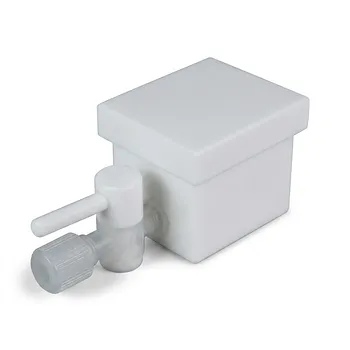
- Custom PTFE Laboratory Apparatus Corrosion Resistant Low Background Reaction Cells Precision CNC Fabrication
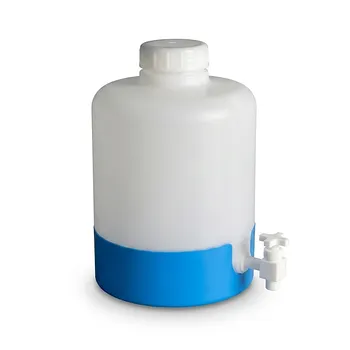
- High Corrosion Resistant PTFE Faucet Polytetrafluoroethylene Valve for Chemical Storage Drums and Fluid Transfer Systems Customizable Industrial Grade
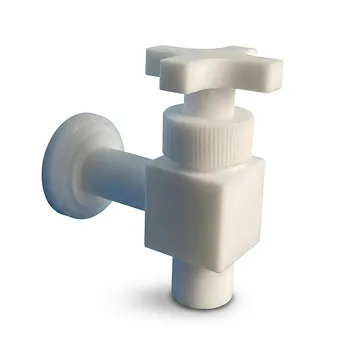
- Corrosion Resistant PTFE Polytetrafluoroethylene Valve and Customizable Laboratory Fluid Dispensing Faucet for Aggressive Chemical Handling in Industrial Storage Tanks and Plastic Drums
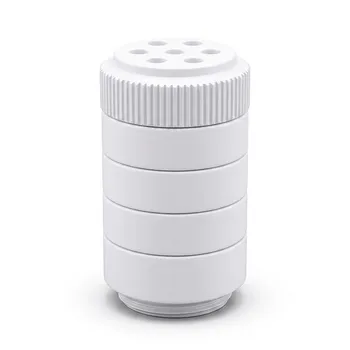
- Custom PTFE Multilayer Reaction Apparatus High Temperature Corrosion Resistant Threaded Modular Sieve System
- Large Scale PTFE Beakers and Flasks for High Temperature Corrosion Resistant Laboratory Applications with Custom CNC Fabrication
People Also Ask
- How does PTFE's melting behavior affect custom lab apparatus? Key insights for manufacturing.
- What are the primary fabrication methods for PTFE laboratory apparatus? Expert Insights into Fluoropolymer Engineering
- What is the chemical compatibility range for PTFE laboratory apparatus? Explore Near-Universal Chemical Resistance.
- Why use PTFE or PFA for modified Cu-MOF synthesis? Ensure High Purity and Exceptional Chemical Stability
- What are the primary chemical resistance properties of PTFE laboratory apparatus? Unmatched Purity and Inertness