PTFE and ePTFE are suitable because they combine very low dielectric loss with strong insulation and exceptional environmental stability. PTFE has a low dielectric constant and dissipation factor, so it stores and dissipates little electrical energy as a high-frequency signal travels through an assembly. Expanded PTFE introduces microscopic air-filled pores into the material, lowering the effective dielectric constant and loss even further, which helps preserve signal speed, reduce attenuation, and limit distortion in high-frequency cables, circuit boards, and instrumentation.
The central advantage is controlled signal propagation: low-permittivity, low-loss insulation reduces the electrical loading around a conductor, while PTFE’s thermal, chemical, moisture, and flame resistance helps maintain that performance in demanding environments.
Why Low Dielectric Loss Matters
Less Energy Dissipation
A high-frequency signal is affected by the dielectric surrounding its conductor. Materials with higher dielectric loss convert more signal energy into heat, increasing attenuation over distance.
PTFE has an exceptionally low dissipation factor, reported at below 0.0004 in the supplied references. This allows it to insulate conductors while dissipating very little of the transmitted electrical energy.
Reduced Signal Distortion
Low dielectric loss helps preserve the amplitude and waveform of fast electrical transitions. This is important in assemblies carrying microwave signals, high-speed digital data, and other broad-frequency signals.
The result is cleaner transmission with less attenuation and reduced risk of timing errors or waveform degradation.
Lower Electrical Loading
PTFE’s dielectric constant is approximately 2.1 at 1 MHz, substantially closer to air than the dielectric constants of many conventional polymers. A lower dielectric constant reduces the capacitance associated with the insulated conductor.
Lower capacitance can support faster propagation and help engineers control impedance in cables, connectors, and printed circuit board structures.
What ePTFE Adds
Air-Filled Microscopic Structure
Expanded PTFE is formed with a porous, expanded structure containing microscopic air pockets. Because air has a dielectric constant close to 1.0, these pores reduce the effective dielectric constant of the insulation.
This makes ePTFE particularly useful where minimizing dielectric loading and signal loss is a primary design objective.
Improved High-Frequency Performance
The lower effective permittivity and loss tangent of ePTFE can improve transmission performance at high frequencies. These properties are valuable in specialized coaxial cables, high-speed interconnects, microwave assemblies, and selected circuit board applications.
The material helps maintain signal integrity without requiring a thicker dielectric layer.
Potential for Compact Assemblies
A low-permittivity dielectric can support impedance and capacitance targets within a compact geometry. That gives designers greater flexibility when developing dense interconnects and miniaturized electronic instrumentation.
Miniaturization still depends on conductor geometry, mechanical design, shielding, and manufacturing tolerances; ePTFE is an enabling material rather than a complete design solution.
Why PTFE Remains Stable in Harsh Environments
Wide Temperature Capability
PTFE maintains useful electrical insulation performance across a broad temperature range. This makes it suitable for wiring and assemblies located near heat sources, engines, process equipment, or other thermally demanding environments.
Thermal stability also helps reduce changes in electrical behavior as operating temperature varies.
Chemical and Corrosion Resistance
PTFE is resistant to nearly all common solvents and aggressive chemicals. It can therefore maintain its insulation function in corrosive atmospheres and near chemical fluids that could degrade less resistant polymers.
This resistance is especially valuable in industrial, aerospace, laboratory, and high-performance instrumentation applications.
Moisture and Surface Resistance
PTFE is hydrophobic and has strong resistance to environmental degradation, including humidity and ultraviolet exposure. These characteristics help preserve insulation reliability where moisture or outdoor exposure could otherwise increase leakage or alter dielectric behavior.
Its low surface energy also limits the adhesion of contaminants, although the complete assembly must still be designed to prevent moisture ingress.
Strong Dielectric Insulation
In addition to low dielectric loss, PTFE provides high volume resistivity and strong dielectric strength. The supplied references report volume resistivity above (10^{18}) ohm-cm and dielectric strength around 19.7 kV/mm for PTFE under the cited test methods.
These properties provide electrical isolation and help prevent leakage or breakdown when the material is correctly specified and processed.
Where These Materials Are Used
High-Frequency Cables
PTFE and ePTFE can be used as cable dielectrics where low attenuation, stable impedance, and reliable insulation are required. Their thermal and chemical resistance also supports cable operation in environments that would challenge ordinary plastics.
High-Speed Interconnects
In connectors, wiring assemblies, and electronic instrumentation, low-loss fluoropolymer insulation helps control capacitance and preserve fast signal transitions. This supports consistent transmission across demanding interconnect paths.
Printed Circuit Board Substrates
Low-permittivity fluoropolymer-based materials can be used in specialized high-frequency circuit boards. They help engineers manage transmission-line impedance and reduce dielectric losses in microwave and high-speed circuits.
High-Voltage and Laboratory Equipment
PTFE and related perfluoropolymers are useful in electrically sensitive laboratory apparatus, custom electrochemical cells, transformers, motors, and insulated heating or reaction equipment. Their combination of dielectric strength, chemical resistance, and thermal stability supports reliable operation in severe conditions.
Understanding the Trade-offs
Porosity Requires Mechanical Control
The air-filled structure that improves ePTFE’s dielectric performance can also reduce mechanical strength compared with dense PTFE. Cable construction may therefore require an additional jacket, reinforcement, or carefully controlled handling.
Moisture Can Affect Cellular Materials
Air-filled pores can create pathways for moisture if the material and assembly are not properly sealed. Because water has a much higher dielectric constant than air, moisture uptake can alter impedance and increase loss.
Environmental sealing and qualification testing are important for outdoor, humid, or chemically exposed applications.
Processing Is More Specialized
PTFE has high melt viscosity and is generally processed differently from conventional thermoplastics. ePTFE adds expansion and structural-control requirements, so manufacturing quality, dimensional consistency, and attachment methods must be considered early.
Low Loss Does Not Eliminate Other Signal Problems
Crosstalk, reflections, electromagnetic interference, conductor losses, connector discontinuities, and poor impedance control can still limit system performance. A low-loss dielectric improves the transmission path, but the entire electrical architecture must be engineered as a controlled system.
Material Selection Must Match the Application
PTFE and ePTFE are not automatically the best choice for every assembly. Designers must balance dielectric performance against mechanical durability, bend requirements, temperature, voltage, moisture exposure, manufacturing process, and cost.
How to Apply This to Your Project
Select the material according to the dominant electrical and environmental requirements:
- If your primary focus is minimum signal loss: Use PTFE or ePTFE to reduce dielectric dissipation and preserve high-frequency signal energy.
- If your primary focus is high-speed data integrity: Prioritize low dielectric constant, controlled impedance, and low variation across the operating frequency and temperature range.
- If your primary focus is harsh-environment reliability: Use PTFE where thermal stability, chemical resistance, moisture resistance, and long-term insulation performance are essential.
- If your primary focus is compact high-frequency packaging: Evaluate ePTFE for its air-filled structure and lower effective dielectric constant, while accounting for sealing and mechanical reinforcement.
- If your primary focus is high-voltage insulation: Confirm dielectric strength, thickness, void control, and assembly geometry through application-specific testing.
The right fluoropolymer insulation preserves signal integrity by minimizing electrical loss while remaining stable under the thermal, chemical, mechanical, and environmental stresses of the complete assembly.
Summary Table:
| Property | PTFE | ePTFE | Benefit for High-Frequency/Harsh Environments |
|---|---|---|---|
| Dielectric Constant | ~2.1 at 1 MHz | Lower (due to air) | Reduces capacitance, supports high-speed signals |
| Dissipation Factor | <0.0004 | Lower | Minimizes energy loss and attenuation |
| Temperature Range | Broad | Broad | Maintains insulation in extreme heat |
| Chemical Resistance | Excellent | Excellent | Withstands corrosive environments |
| Moisture Resistance | Hydrophobic | Hydrophobic (sealing required) | Prevents moisture-induced signal degradation |
| Dielectric Strength | ~19.7 kV/mm | Dependent on porosity | Ensures high-voltage isolation and safety |
| Mechanical Strength | Good | Lower (due to porosity) | Requires jacketing/reinforcement in cables |
Key Takeaway: PTFE and ePTFE combine low electrical loss with high stability across temperature, chemicals, and moisture, making them ideal for high-frequency data transmission and harsh environments, provided that design handles porosity and environmental sealing.
Elevate your high-frequency data transmission with premium PTFE and ePTFE solutions from KINTEK. Our materials deliver low dielectric loss and superior signal integrity, backed by engineering support for harsh environments. Whether you need custom cables, interconnects, or specialized labware, our PTFE/PFA products ensure reliability and performance. Contact us today to discuss your project and discover how our high-purity fluoropolymer components can optimize your signal path and withstand demanding conditions. Get in touch with our specialists!
Related Products
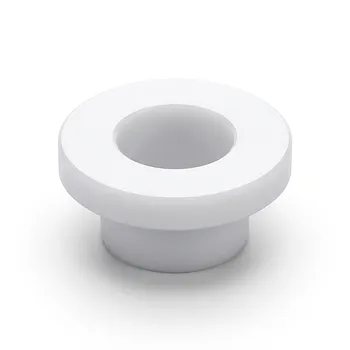
- Custom PTFE Insulating Gaskets and Corrosion Resistant Fluoropolymer Seals for Industrial Electrical Applications
- Customizable High Temperature Resistant Anti Static PTFE Insulating Gaskets Flame Retardant Corrosion Proof Industrial Seals
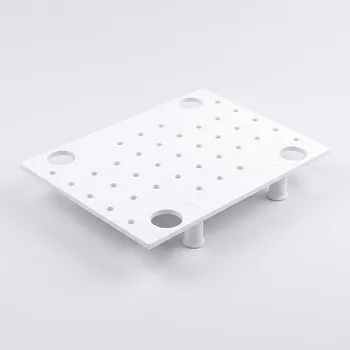
- High Temperature Resistant PTFE Thermal Insulation Board Corrosion Resistant Metal Free Fluoropolymer Stand for Ultra Clean Laboratories
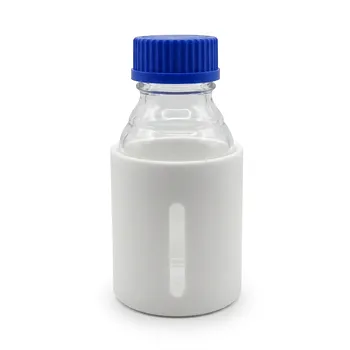
- Custom PTFE Thermal Insulation Sleeves Laboratory Vessel Condensation Jackets Virgin Fluoropolymer Machined Components
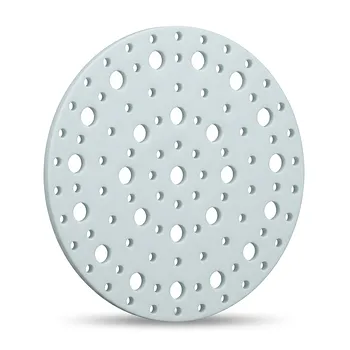
- High Temperature Resistant TFM Insulating Baffles Ultra Clean Laboratory PTFE Partitions with Customizable Pore Patterns
People Also Ask
- What are the three primary types of PTFE available for gaskets and seals? Choose the Right Material for Your Application
- Why is PTFE an ideal material choice for sealing gaskets, valves, and fluid transfer tubing exposed to extremely aggressive chemicals? Discover Its Superior Chemical Resistance and Reliability
- How is PTFE utilized in seals and gaskets? Leverage Its Chemical & Temperature Resistance
- What are the key properties of PTFE that make it suitable for seals and gaskets? Unlock Superior Sealing Performance
- How are custom PTFE parts used in the automotive sector? Enhance Vehicle Performance & Durability