A high-pressure hydrothermal synthesis reactor provides a sealed, superheated liquid environment that enables the controlled growth of Zinc Oxide (ZnO) nanostructures. This specialized environment maintains aqueous solvents in a liquid state even above their atmospheric boiling points, facilitating the oriented heteroepitaxial growth of zinc ions onto pre-existing seed layers. By precisely regulating temperature and pressure, the reactor ensures the kinetic stability required to produce nanorods with uniform diameters, lengths, and high crystallinity.
The reactor functions as a high-precision chemical environment that enhances precursor solubility and regulates supersaturation levels. This "superheated" state is the fundamental driver for transforming zinc salts into complex, high-aspect-ratio nanorod arrays with specific crystallographic orientations.
The Physical Environment: Heat and Pressure
Sealed Superheated Conditions
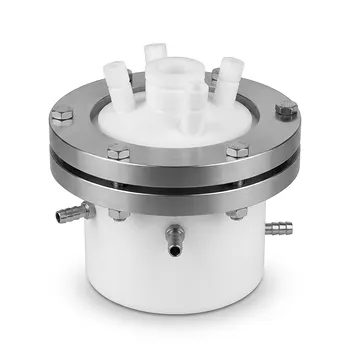
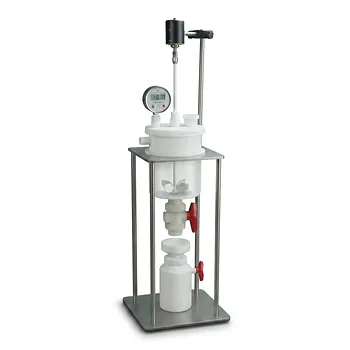
The reactor is a closed system, typically a stainless steel autoclave, that prevents the evaporation of the aqueous solvent. By heating the solution within this confined space, the internal pressure rises significantly, allowing the water to remain liquid at temperatures far exceeding 100°C.
Maintaining Thermal Stability
The primary role of the reactor is to maintain a constant temperature, often cited at 90°C for nanorod growth but capable of reaching 200°C for other nanostructures. This thermal consistency is critical for achieving kinetic stability, which prevents erratic crystal formation and ensures uniform growth across the entire substrate.
Purity and Corrosion Resistance
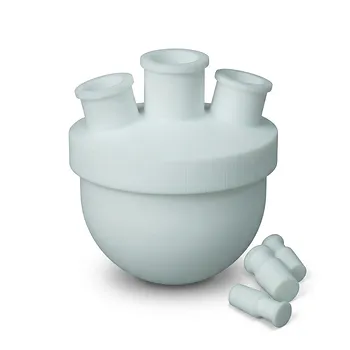
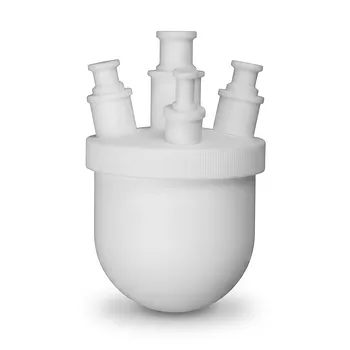
High-performance reactors utilize Polytetrafluoroethylene (PTFE) liners to house the chemical reaction. These fluoropolymer liners are essential because they withstand corrosive precursors while preventing metallic contamination from the autoclave walls, ensuring the high purity of the resulting ZnO crystals.
The Chemical Dynamics of Growth
Enhanced Solubility and Reactivity
High pressure significantly increases the solubility and diffusion rates of metal salts, such as zinc nitrate. This allows precursor ions to move more freely through the solution, facilitating the rapid formation of crystal nuclei and the subsequent growth of hierarchical structures.
Precise Supersaturation Control
The reactor environment allows for the delicate management of supersaturation, the state where the solution contains more dissolved material than it could normally hold. By adjusting the precursor concentration and reaction duration, the system drives zinc ions to precipitate in a highly controlled manner along specific crystallographic directions.
The Role of Chemical Agents
In this environment, zinc ions react with hydroxyl groups released by agents like hexamethylenetetramine (HMTA). The high-pressure conditions facilitate this chemical interaction, enabling the anisotropic growth necessary to form long, thin nanorods rather than simple spherical particles.
Mechanisms of Nanorod Formation
Oriented Heteroepitaxial Growth
ZnO nanorods do not grow randomly; they undergo oriented heteroepitaxial growth on pre-existing ZnO seed layers. The reactor provides the energy and pressure required for new zinc atoms to align perfectly with the crystal lattice of the seed layer, extending the structure outward.
Anisotropic Development
The hydrothermal environment favors the growth of the wurtzite crystal structure, which is naturally anisotropic. The reactor's conditions encourage the crystal to grow much faster along the c-axis, resulting in high-aspect-ratio nanorods and even "dandelion-like" hierarchical structures.
Dissolution-Recrystallization Process
Within the high-pressure environment, a dissolution-recrystallization process often occurs. This mechanism allows the system to "correct" defects by dissolving unstable precursor phases and recrystallizing them into high-quality ZnO crystals with superior stoichiometry.
Understanding the Trade-offs
Pressure Limits and Safety
Operating at the edge of a reactor's pressure rating increases the risk of mechanical failure or seal leakage. While higher pressures can enhance solubility, they require rigorous safety protocols and frequent inspection of the autoclave's structural integrity.
The Risk of Over-Growth
Extended reaction durations or excessive temperatures can lead to coalescence, where individual nanorods begin to merge into a solid film. This reduces the surface area-to-volume ratio, which is often detrimental to the performance of sensors or solar cells.
Contamination from Degraded Liners
While PTFE liners are durable, they can degrade over time when exposed to extreme thermal cycling. Micro-cracks in the liner can trap residual chemicals from previous experiments, leading to cross-contamination that alters the morphology of the ZnO nanorods.
How to Apply This to Your Project
Making the Right Choice for Your Goal
- If your primary focus is uniform nanorod length: Maintain a strictly constant temperature (e.g., 90°C) and use a high-quality heating mantle to ensure kinetic stability.
- If your primary focus is high aspect ratios: Adjust the reaction duration and precursor concentration to favor growth along the c-axis within a moderate supersaturation regime.
- If your primary focus is high crystallinity: Utilize higher temperatures (up to 150°C) to facilitate the dissolution-recrystallization process and eliminate lattice defects.
- If your primary focus is material purity: Always use clean PTFE liners and ensure the reactor is properly sealed to prevent the introduction of atmospheric contaminants.
By mastering the high-pressure hydrothermal environment, you can move beyond simple synthesis to achieve precise, predictable engineering of Zinc Oxide nanostructures.
Summary Table:
| Feature | Environmental Impact | Benefit for ZnO Growth |
|---|---|---|
| Superheated State | Maintains liquid solvents >100°C | Enhances precursor solubility and reactivity |
| Sealed Pressure | Prevents evaporation in closed system | Facilitates oriented heteroepitaxial growth |
| PTFE Lining | Corrosion resistance & high purity | Prevents metallic contamination in crystals |
| Thermal Stability | Consistent kinetic environment | Ensures uniform nanorod diameter and length |
| Supersaturation Control | Regulated ion concentration | Drives anisotropic growth along the c-axis |
Elevate Your Material Synthesis with KINTEK Precision
Achieving the perfect nanostructure requires more than just a process—it requires the highest quality fluoropolymer components. KINTEK specializes in manufacturing an exhaustive range of high-performance PTFE and PFA laboratory supplies designed to withstand the rigors of hydrothermal synthesis and trace analysis.
From everyday essentials like beakers, crucibles, reagent bottles, and digestion tubes to advanced hydrothermal synthesis liners, microwave digestion vessels, and custom electrochemical cells, we provide the purity and durability your research demands. Whether you need comprehensive fluid transfer components (tubing, valves, fittings), sample prep tools (filters, pipettes, tweezers), or bespoke laboratory setups crafted via end-to-end custom CNC fabrication, KINTEK is your single source for high-performance fluoropolymer excellence.
Ready to optimize your lab's performance? Contact us today to discuss your custom requirements!
References
- Chen Gu, Weihong Xing. A promising carbon fiber-based photocatalyst with hierarchical structure for dye degradation. DOI: 10.1039/c7ra02583a
This article is also based on technical information from Kintek Knowledge Base .
Related Products
- High Temperature Corrosion Resistant Hydrothermal Synthesis Reactor with TFM Inner Liner and Straight Cylinder Design
- PTFE Lined High Pressure Digestion Vessel 50ml High Temperature Hydrothermal Synthesis Tank
- High Pressure Custom TFM Reactor Stainless Steel Outer Vessel PTFE Inner Cup for Corrosive Synthesis
- High Temperature PTFE Reaction Flask 1000ml Single Neck Round and Flat Bottom Laboratory Bottle
- Custom TFM Reaction Vessel with Stainless Steel Jacket and PTFE Inner Cup for High Corrosion Resistance
People Also Ask
- What is the role of a corrosion-resistant reactor in the synthesis of lignin-based carbon dots? Ensure Maximum Purity
- What are the technical advantages of using hydrothermal synthesis reactors for advanced electronic & optical nanomaterials?
- How does a hydrothermal synthesis reactor facilitate the production of crystalline materials with tailored morphologies? Precision Crystal Growth
- Why is the sealing reliability of a hydrothermal synthesis reactor critical for 24-hour cycles? Ensure Nano-Precision
- What role do hydrothermal synthesis reactors play in CQD preparation? Achieve High-Purity Nanomaterial Synthesis