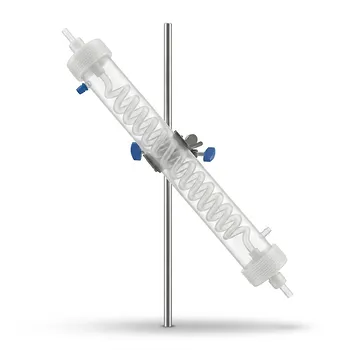
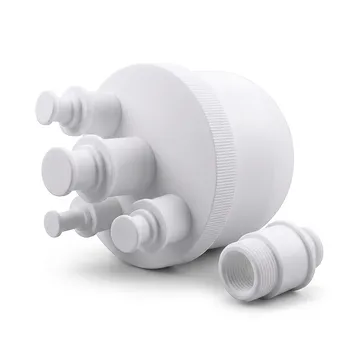
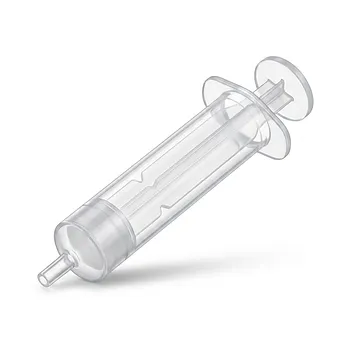
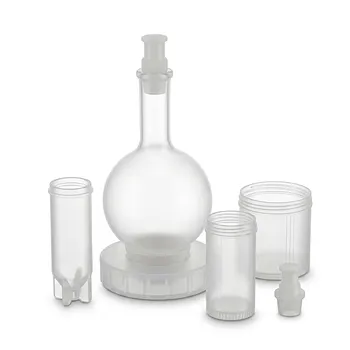
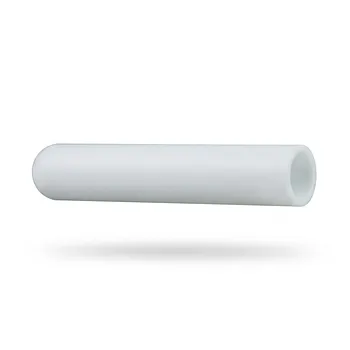
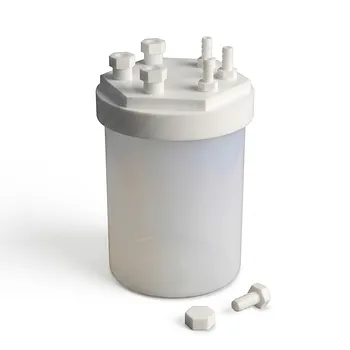
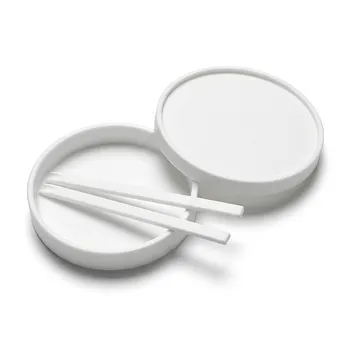
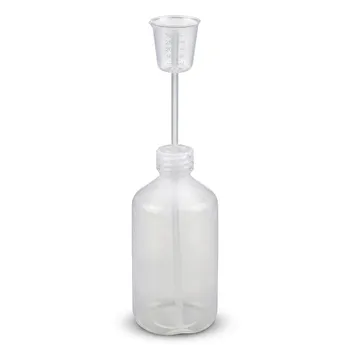
Fluoropolymers are exceptionally stable materials, but that same stability makes them difficult to manufacture. Their high chemical inertness, low surface energy, limited melt processability, poor adhesion, and resistance to chemical modification complicate molding, bonding, coating, and post-processing. As a result, specialized laboratory components often require precision machining from PTFE or PFA stock, supported by careful mechanical design and specialized high-temperature processing where applicable.
Fluoropolymers are selected for laboratory components because they resist chemicals, heat, contamination, and adhesion. However, their inertness removes many conventional manufacturing options, so producing accurate custom labware and fluid-control parts depends on specialized processing, particularly precision CNC machining.
Why Fluoropolymers Are Difficult to Manufacture
Limited Melt Processability
Many fluoropolymer grades have extremely high melt viscosity, making them difficult to force through conventional processing equipment. PTFE is particularly challenging because it is generally considered non-melt-processable under ordinary thermoplastic manufacturing conditions.
Conventional injection molding and extrusion may therefore be unsuitable or require specialized equipment with greater torque, pressure capacity, and temperature control.
High Thermal Processing Demands
Fluoropolymers require elevated processing temperatures, and manufacturing equipment may need to tolerate temperatures approaching 500°C, depending on the material and process.
Heating fluoropolymers above their processing limits can also generate corrosive volatile compounds. Equipment must consequently use corrosion-resistant construction and carefully controlled processing conditions.
Poor Surface Adhesion
Fluoropolymer surfaces have very low surface energy. This gives them valuable non-stick, hydrophobic, and low-friction properties, but it also makes adhesives, coatings, inks, and bonded interfaces difficult to apply reliably.
A laboratory fitting, vessel, or fluid-control assembly cannot always be produced as a bonded multi-part structure. Designers may need to use mechanical retention, specialized surface treatment, or a one-piece machined design instead.
Limited Cross-Linking and Chemical Modification
Fluoropolymers resist many of the chemical reactions used to modify ordinary plastics. Their limited cross-linking pathways and chemical inertness make post-manufacturing modification difficult.
This restricts options such as chemically grafting functional groups, creating strong bonded joints, or altering surface behavior after the component has been formed.
How These Limitations Change Component Manufacturing
Precision CNC Machining Becomes More Important
For non-standard laboratory parts, manufacturers can machine components directly from high-density PTFE or PFA stock. CNC machining supports custom geometries, tight mechanical interfaces, internal channels, threads, valve features, and specialized fittings without chemically altering the material.
This approach is especially useful for low-volume or highly customized parts where developing dedicated molding tooling would be inefficient or technically unsuitable.
Mechanical Design Replaces Chemical Bonding
Because adhesion and chemical modification are unreliable, component integrity often depends on mechanical fit and structural design. Threads, compression interfaces, interference fits, encapsulated inserts, and carefully designed seals can replace adhesive bonding.
The design must account for dimensional tolerances, thermal expansion, wall thickness, and the loads applied during assembly and operation.
PTFE May Require Powder-Based Processing
PTFE components can be produced through powder metallurgy methods, typically by forming a preform and then sintering it at high temperature. Paste extrusion, using a volatile lubricant, is another established route for products such as tubing and wire insulation.
These processes add steps and impose stricter controls than ordinary thermoplastic molding. They are used when the required component geometry and performance justify the additional manufacturing complexity.
Molding and Extrusion Remain Material-Dependent
Some fluoropolymers, including PFA, can be processed using specialized melt techniques such as compression molding, injection molding, extrusion, or blow molding. The correct process depends on the specific resin, geometry, volume, and required dimensional accuracy.
The material cannot be treated as a single generic plastic family. A process suitable for PFA may not be suitable for PTFE, and equipment must be matched to the polymer's melt behavior and chemical characteristics.
Why These Materials Still Suit Laboratory Components
Chemical Purity and Resistance
Fully fluorinated materials such as PTFE and PFA resist aggressive mineral acids, organic solvents, and other reactive laboratory chemicals. This makes them suitable for digestion vessels, trace-analysis containers, chemical storage, tubing, fittings, and valves.
Their resistance to absorption, leaching, and chemical attack helps protect samples and preserve component performance.
Thermal and Flame Resistance
Fluoropolymers provide broad thermal stability, low flammability, and strong resistance to degradation under demanding environmental conditions. These characteristics are valuable in laboratory workflows involving heated reactions, thermal cycling, or aggressive reagents.
The manufacturing process must preserve these benefits without introducing contamination, residual processing aids, or structural defects.
Low Friction and Non-Adhesive Surfaces
Low friction reduces flow resistance and supports reliable movement in valves, seals, and fluid-handling assemblies. Low adhesion also helps reduce sample carryover and makes some vessels easier to clean.
The same surface properties that benefit laboratory use, however, make joining and coating the finished part more difficult.
Understanding the Trade-offs
Creep Under Sustained Load
Unmodified fluoropolymers can have relatively low tensile strength and may creep when exposed to sustained mechanical stress. A threaded fitting or heavily loaded vessel may gradually deform even when it remains chemically unaffected.
Manufacturers may compensate through increased wall thickness, reduced unsupported spans, appropriate load distribution, or encapsulated metal designs.
Dimensional Stability Is Not Automatic
Fluoropolymers can withstand severe chemical and thermal environments, but dimensional accuracy still depends on material grade, crystallinity, processing history, machining conditions, and operating temperature.
Critical components require realistic tolerances and validation under actual service conditions rather than relying only on room-temperature measurements.
Complex Assemblies Are More Difficult
A conventional plastic part may be molded with integrated features and then bonded to other parts. With fluoropolymers, the combination of difficult molding, poor adhesion, and limited chemical modification can make complex assemblies more expensive and time-consuming.
Manufacturers often reduce the number of joints, machine multiple features into one part, or use mechanically retained subcomponents.
Specialized Processing Raises Cost
High-temperature equipment, corrosion-resistant machinery, powder processing, paste extrusion, precision CNC machining, and tighter process controls all increase manufacturing costs.
The added cost is justified when chemical purity, corrosion resistance, low contamination, or performance in severe conditions is more important than low unit price.
Making the Right Choice for Your Goal
The best manufacturing route depends on the component's material, geometry, production volume, loading conditions, and required purity.
- If your primary focus is chemical purity: Use a highly inert fluoropolymer such as PTFE or PFA and minimize adhesives, coatings, and potentially extractable processing aids.
- If your primary focus is a complex custom geometry: Specify precision CNC machining from fluoropolymer stock, with tolerances and inspection requirements defined around the actual operating conditions.
- If your primary focus is high-volume production: Evaluate a melt-processable grade and specialized molding or extrusion, while confirming that the polymer's melt behavior supports the required geometry.
- If your primary focus is sustained mechanical loading: Account for creep through thicker sections, mechanical reinforcement, encapsulated metal designs, or reduced unsupported spans.
- If your primary focus is reliable assembly: Prefer mechanical retention and engineered interfaces over conventional adhesive bonding unless a qualified surface-treatment and bonding process is available.
Fluoropolymers reward careful material selection and specialized fabrication: their manufacturing difficulty is the practical cost of achieving exceptional chemical purity, thermal endurance, and resistance to contamination.
Summary Table:
| Limitation | Impact on Manufacturing | Solution |
|---|---|---|
| Limited melt processability | Difficult injection molding and extrusion | Specialized equipment or CNC machining |
| High thermal processing demands | Equipment corrosion and high energy costs | Corrosion-resistant machinery and controlled processing |
| Poor surface adhesion | Bonding and coating challenges | Mechanical retention or one-piece machined designs |
| Resistance to chemical modification | Limited post-processing options | Precision machining and mechanical design |
| Creep under load | Dimensional instability in stressed parts | Thicker walls or encapsulated metal designs |
Unlock Precision Fluoropolymer Components for Your Lab
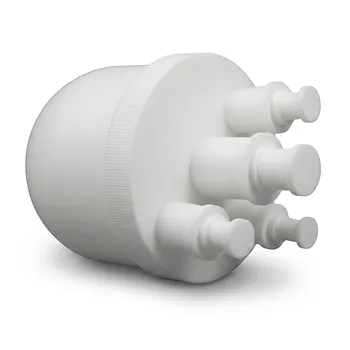
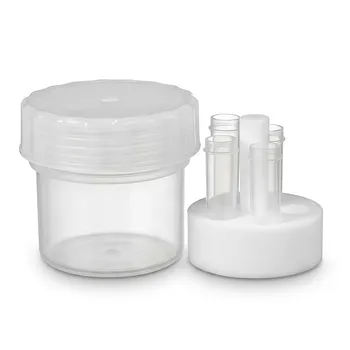
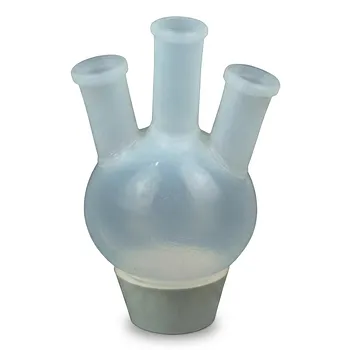
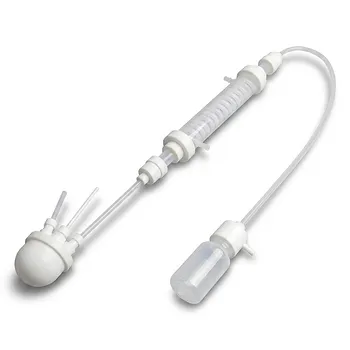
At KINTEK, we specialize in high-performance PTFE and PFA lab supplies, from basic beakers to advanced reaction apparatus. Our end-to-end CNC machining capabilities allow us to overcome fluoropolymer manufacturing challenges, delivering custom components with exceptional purity and precision. Whether you need complex non-standard parts or high-volume orders, our expertise ensures reliable, chemical-resistant solutions tailored to your requirements.
Ready to enhance your lab's performance? Contact us today to discuss your project and discover how our custom PTFE/PFA solutions can benefit you.
Related Products
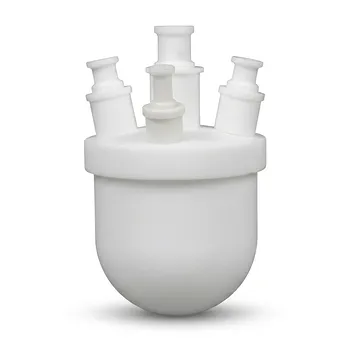
- Custom PTFE Flask 250ml High Purity Fluoropolymer Laboratory Vessel for Chemical Research
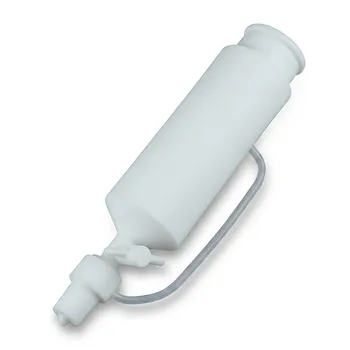
- Custom PTFE Constant Pressure Separatory Funnel 100ml Fluoropolymer Labware for Corrosive Chemical Transfer
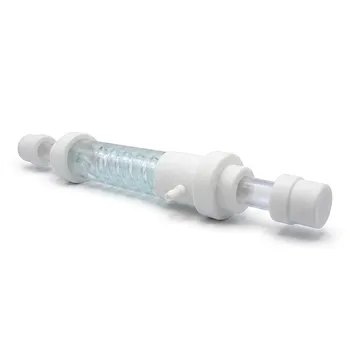
- Custom PTFE Condenser Tube 100ml Serpentine and Straight Fluoropolymer Laboratory Heat Exchanger with Flask Adapters
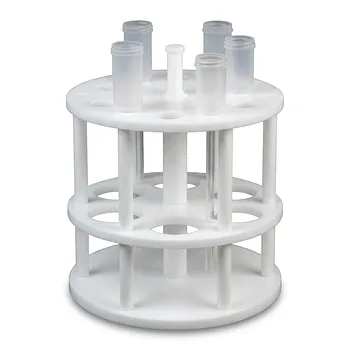
- Custom PFA Microcolumn Racks and PTFE Machined Low Background Corrosion Resistant Laboratory Fixtures
- Laboratory PTFE Three Neck Reaction Flask Corrosion Resistant 2000ml Low Background Fluoropolymer Vessel
People Also Ask
- What are the key steps for structural integrity in molded PTFE lab reaction vessels? Master fine powder processing.
- When synthesizing TFVE monomers involving reactive organometallic reagents and aggressive polar solvents, what material performance characteristics are required? Ensure purity with PTFE/PFA.
- Why Are High-Purity Fluoropolymer Vessels and Tubing Critical for Trace Analysis? Prevent Contamination Reliably
- Why do PTFE fluoropolymer laboratory vessels and containers exhibit superior chemical resistance against harsh solvents and corrosive acids compared to standard plastic labware? Discover the molecular secrets
- Why are fluoropolymer reaction vessels essential for SnO2/rGO synthesis? The Key to High-Performance Composites