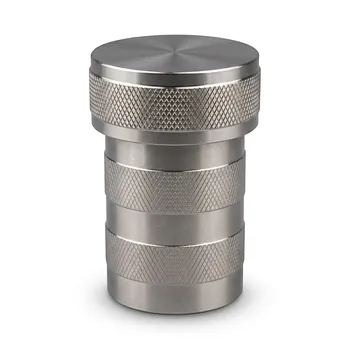
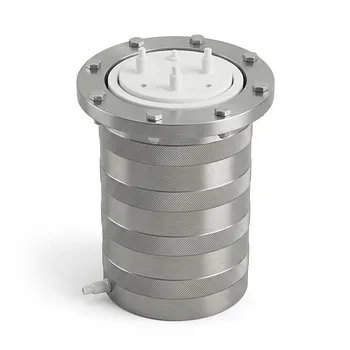
A high-pressure autoclave is the fundamental tool for creating a sealed solvothermal environment. It enables the synthesis of metal glycerates by maintaining conditions of high temperature and elevated pressure that are unattainable in open-air systems. These specific conditions allow solvent mixtures to exceed their atmospheric boiling points, which is the critical catalyst for the chemical transformation of metal salts.
The core value of an autoclave in this process is its ability to manipulate the thermodynamic and kinetic properties of the solvent. By increasing solubility and diffusion rates, the system ensures a thorough reaction that produces precise, primary nanostructures.
The Mechanics of the Solvothermal Environment
Overcoming Atmospheric Boiling Points
In an open system, the maximum temperature is limited by the boiling point of the solvent at sea level. The sealed nature of an autoclave allows solvents like isopropanol and glycerol to remain in a liquid or supercritical state well above these limits.
The Role of Internal Pressure
As the temperature rises within the sealed vessel, the internal pressure increases significantly. This high-pressure state forces the solvent into the pores of solid reactants and maintains the liquid phase of volatile components, ensuring the reaction medium remains stable.
Enhancing Reaction Kinetics and Solubility
Increasing Precursor Solubility
Many metal salts exhibit limited solubility in polyols like glycerol under standard conditions. The elevated thermal energy provided by the autoclave breaks down intermolecular forces, allowing the metal precursors to dissolve more completely into the solvent matrix.
Accelerating Molecular Diffusion
The high-energy environment significantly increases the diffusion rate of reactant molecules. This rapid movement ensures that metal ions and glycerol molecules collide more frequently and with greater energy, leading to a more thorough and uniform reaction.
Facilitating Morphology Control
The combination of high pressure and temperature is what allows for the formation of primary nanostructures. By tuning these conditions, researchers can dictate the final morphology and structural integrity of the metal glycerate precursors.
Understanding the Trade-offs and Challenges
Safety and Equipment Limitations
Operating at high pressures introduces significant safety risks and requires specialized, high-strength vessel materials. Exceeding the rated pressure or temperature of an autoclave can lead to mechanical failure or dangerous rapid decompression.
The "Black Box" Nature of the Reaction
Because the reaction occurs inside a sealed, opaque stainless steel vessel, real-time monitoring is difficult. This makes it challenging to observe intermediate stages of the synthesis or to make adjustments once the process has begun.
How to Apply These Conditions to Your Synthesis
To achieve the best results when synthesizing metal glycerate precursors, your approach should be dictated by your specific structural requirements.
- If your primary focus is morphology precision: Prioritize the precise calibration of the temperature-to-pressure ratio to control the nucleation rate of the nanostructures.
- If your primary focus is reaction yield: Ensure the solvent-to-precursor ratio accounts for the increased solubility limits provided by the high-pressure environment.
- If your primary focus is structural uniformity: Focus on the ramp-up speed of the heating cycle to ensure consistent diffusion throughout the entire volume of the autoclave.
By mastering the solvothermal conditions within the autoclave, you gain the ability to engineer metal glycerates with the exact chemical and physical properties required for advanced material applications.
Summary Table:
| Key Condition | Functional Role | Synthesis Benefit |
|---|---|---|
| High Pressure | Maintains liquid phase above boiling point | Forced penetration into solid reactant pores |
| Elevated Temp | Overcomes intermolecular forces | Increased solubility of metal salts and precursors |
| Sealed System | Creates a solvothermal environment | Accelerated molecular diffusion & reaction kinetics |
| Controlled Ramp | Manages nucleation and growth rates | Precise control over nanostructure morphology |
Elevate Your Material Synthesis with KINTEK’s Precision Fluoropolymers
Achieving the perfect solvothermal environment for metal glycerate synthesis requires equipment that can withstand extreme conditions without compromising purity. At KINTEK, we specialize in high-performance PTFE and PFA laboratory supplies designed to handle the rigorous demands of advanced chemical research.
Whether you need everyday essentials like beakers, crucibles, and reagent bottles, or specialized components like high-purity tubing, fittings, and valves, we provide the durability your lab deserves. Our expertise extends to advanced reaction apparatus, including hydrothermal synthesis liners, microwave digestion vessels, and custom electrochemical cells.
Why choose KINTEK?
- End-to-End Customization: From standard labware to complex, non-standard CNC-fabricated parts, we deliver bespoke solutions tailored to your specific research needs.
- Material Excellence: Our absolute focus on fluoropolymers ensures superior chemical resistance and thermal stability.
- Scalable Solutions: We support everything from individual research setups to high-volume industrial orders.
Ready to optimize your synthesis process? Contact KINTEK today to discuss your custom laboratory requirements and discover how our high-performance fluoropolymer solutions can enhance your results.
References
- Yuting ZHANG, Yu ZHAO. Composite Yolk-shell NiCo <sub>2</sub> V <sub>2</sub> O <sub>8</sub> @TiO <sub>2</sub> @NC Material as Anode for Lithium-ion Batteries. DOI: 10.15541/jim20240545
This article is also based on technical information from Kintek Knowledge Base .
Related Products
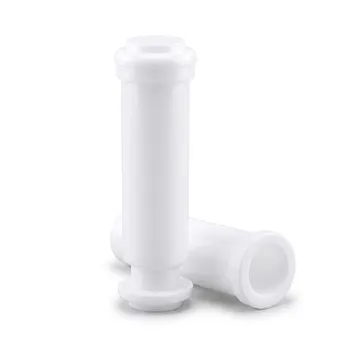
- PTFE Lined High Pressure Digestion Vessel 50ml High Temperature Hydrothermal Synthesis Tank
- High Temperature Corrosion Resistant Hydrothermal Synthesis Reactor with TFM Inner Liner and Straight Cylinder Design
- Custom TFM Reaction Vessel with Stainless Steel Jacket and PTFE Inner Cup for High Corrosion Resistance
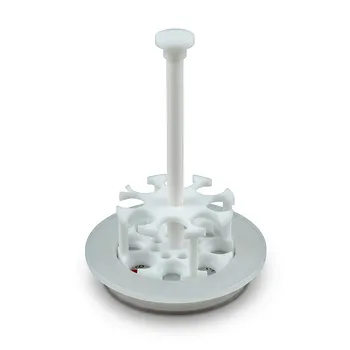
- High Performance TFM Microwave Digestion Vessel Rack 15 Position Customizable Sample Preparation Support
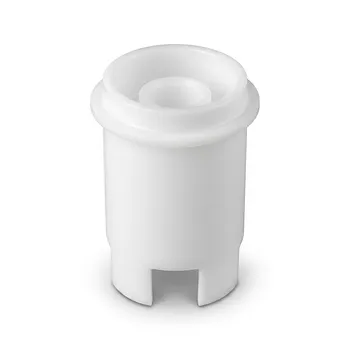
- High Pressure PTFE Digestion Vessel Inner Cup Holder Custom Corrosion Resistant Low Background Teflon
People Also Ask
- What are the benefits of using a PTFE-lined vessel for carbon-sulfur cathode treatment? Maximize Purity & Performance
- Why are PTFE-lined pressure digestion vessels required for the preparation of Ag/CeO2 catalysts? Purity & Performance
- What is the function of high-pressure PTFE digestion vessels in mineral analysis? Optimize Sample Mineralization
- What safety features are typically incorporated into high-pressure PTFE digestion vessel designs? Ensure Lab Safety
- What is the function of PTFE lined high-pressure vessels in g-C3N4 synthesis? Achieve High-Purity Material Growth