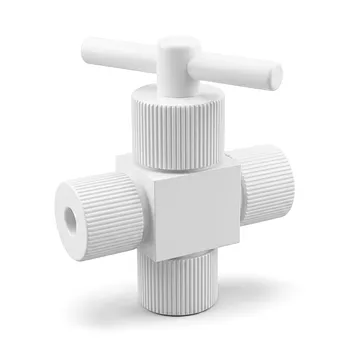
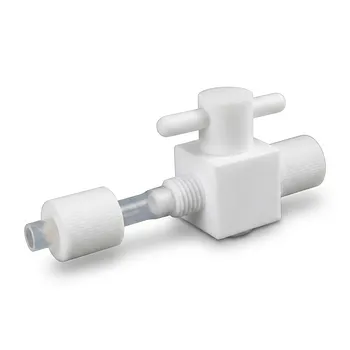
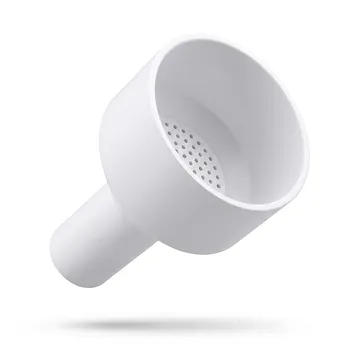
The working principle of a PTFE-lined ball valve centers on a quarter-turn rotational mechanism that uses a spherical ball to permit or block flow. When the ball's central port aligns with the pipeline, the valve is open; a 90-degree rotation turns the solid, PTFE-lined face of the ball toward the flow, creating a bubble-tight seal against the valve seats.
This valve design leverages the chemical inertness of PTFE to handle highly corrosive media while utilizing a simple mechanical rotation for reliable, low-torque operation. It is primarily used as a high-integrity shut-off solution in environments where metallic components would otherwise fail.
The Mechanics of Quarter-Turn Operation
The Open Position and Flow Path
When the valve handle or actuator is in the "open" position, the internal bore of the ball is perfectly aligned with the inlet and outlet ports. This creates a straight-through, unobstructed path that minimizes pressure drop across the valve.
The Closing Sequence
Rotating the stem by 90 degrees (a quarter-turn) drives the ball to a position where its solid PTFE-covered surface blocks the fluid path. This motion is rapid, making the ball valve an ideal choice for applications requiring quick emergency shut-off.
Bi-Directional Flow Capabilities
Because the spherical ball and the surrounding PTFE seats are symmetrical, these valves typically support bi-directional flow. This allows the process medium to enter from either side without compromising the seal's integrity or the valve's functionality.
The Critical Role of PTFE Lining
Protection Against Corrosive Media
The primary purpose of the PTFE lining is to act as a impermeable barrier between the process fluid and the valve's metallic body. This prevents chemical attacks on the valve's structural components, significantly extending the service life in chemical plants and pharmaceutical settings.
Self-Lubricating Sealing
PTFE is a naturally self-lubricating material, which ensures that the ball slides smoothly against the seats. This characteristic keeps the operating torque low even when the valve is subjected to high differential pressures.
Achieving a Bubble-Tight Seal
When closed, the ball is pressed firmly against machined PTFE seats. The slight deformation of the PTFE under pressure creates a "bubble-tight" seal, ensuring that no gas or liquid escapes past the closure point.
Understanding the Trade-offs
Limited Throttling Capabilities
While excellent for ON/OFF control, PTFE-lined ball valves are generally not recommended for precise throttling. Using the valve in a partially open position can lead to uneven wear on the PTFE lining and may cause turbulence that degrades the seats over time.
Temperature and Pressure Constraints
Although PTFE is chemically robust, it has lower mechanical strength at extreme temperatures compared to metal-seated valves. Users must ensure that the operating temperature and pressure do not exceed the specific limits of the PTFE grade used in the lining.
Potential for Cavitation
In high-velocity applications, the rapid opening and closing of a ball valve can induce cavitation. If the valve is used improperly for flow regulation, the resulting vapor bubbles can collapse and cause "pitting" or mechanical damage to the lining.
How to Apply This to Your Project
Making the Right Choice for Your Goal
- If your primary focus is handling highly corrosive chemicals: Utilize a PTFE-lined ball valve to ensure the internal metallic components are completely isolated from the media.
- If your primary focus is rapid, reliable shut-off: Leverage the quarter-turn mechanism, which allows for faster operation than multi-turn gate or globe valves.
- If your primary focus is fine flow regulation: Consider a different valve type, such as a needle or control valve, as ball valves are optimized for ON/OFF service rather than precise throttling.
- If your primary focus is minimizing maintenance costs: Rely on the self-lubricating properties of the PTFE lining to reduce the need for external lubricants and frequent seal replacements.
By understanding the mechanical simplicity and material advantages of the PTFE-lined ball valve, you can ensure a safer and more durable flow control system.
Summary Table:
| Feature | Function & Benefit | Best Use Case |
|---|---|---|
| Mechanism | 90-degree quarter-turn rotation | Rapid emergency shut-off |
| PTFE Lining | Impermeable barrier against corrosives | Chemical & pharma processing |
| Seal Type | Bubble-tight machined seats | Zero-leakage applications |
| Operation | Low-torque & self-lubricating | Maintenance-free longevity |
| Flow Path | Full-bore straight-through | Minimizing pressure drops |
Secure Your Fluid Systems with KINTEK’s Fluoropolymer Expertise
Facing challenges with aggressive chemical media? KINTEK specializes in high-performance laboratory supplies crafted with an exclusive focus on PTFE and PFA.
From essential labware like beakers and reagent bottles to complex fluid transfer components (tubing, fittings, valves) and sample prep tools, we ensure your flow control systems are built for ultimate durability. Beyond standard consumables like O-rings and stirring bars, we provide end-to-end custom CNC fabrication for non-standard machined parts, advanced electrochemical cells, and bespoke laboratory setups.
Whether you require high-volume orders or a complex, one-of-a-kind reaction apparatus, KINTEK delivers high-purity solutions that withstand the toughest environments.
Contact us today to optimize your lab’s performance!
Related Products
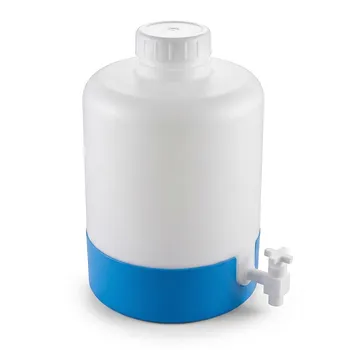
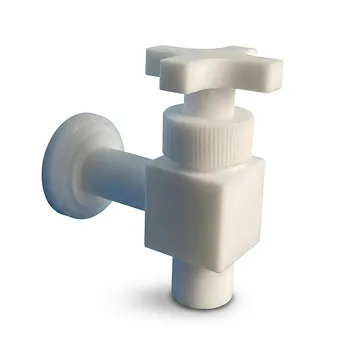
- High Purity PTFE Faucet Corrosion Resistant Polytetrafluoroethylene Drum Valve Customizable Lab Chemical Fluid Control
- Corrosion Resistant PTFE Polytetrafluoroethylene Valve and Customizable Laboratory Fluid Dispensing Faucet for Aggressive Chemical Handling in Industrial Storage Tanks and Plastic Drums
- High Corrosion Resistant PTFE Faucet Polytetrafluoroethylene Valve for Chemical Storage Drums and Fluid Transfer Systems Customizable Industrial Grade
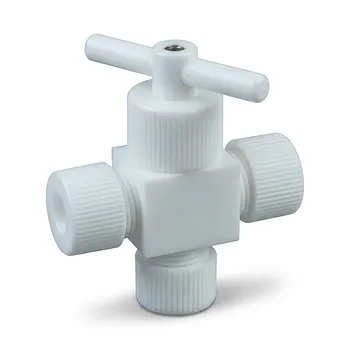
- Custom PTFE Valve 2-Way 3-Way Corrosion Resistant Low Background Virgin Fluoropolymer Industrial Fluid Control
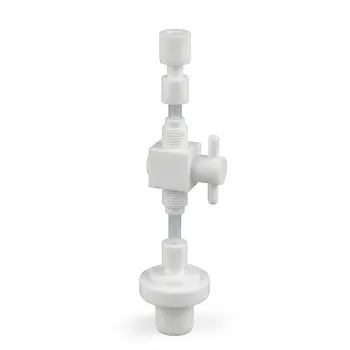
- High Purity PFA PTFE Flare Stop Valves Customizable 2-Way 3-Way Reducing Fluoropolymer Fluid Control Solutions
People Also Ask
- What are the key properties of PTFE valves? Ensure Purity, Safety, and Reliability in Demanding Processes
- What is the typical operating temperature and pressure range for PTFE valves? Key Specs for Optimal Performance
- What industries commonly use PTFE valves and components? Essential for Chemical & Purity Applications
- What specific advantages do PTFE valves offer? Unmatched Corrosion Resistance for Industrial Chemical Handling
- How do PTFE valves and components support high-purity liquid transfer? Ensure Product Integrity with Inert Materials