The PVDF swelling trend in carbonate solvents is: DMC >> PC ≈ EC > DEC. Dimethyl carbonate (DMC) is the most aggressive of the common carbonate solvents, while diethyl carbonate (DEC) generally produces the least swelling; propylene carbonate (PC) and ethylene carbonate (EC) are intermediate and broadly similar.
The practical implication is clear: PVDF is suitable for many moderate-temperature chemical-handling duties, but it should not be treated as dimensionally stable in hot or highly aggressive carbonate solvents. For heated carbonate electrolytes—especially DMC-rich systems—PTFE or PFA is usually the safer choice for wetted components and sealing surfaces.
Why Carbonate Solvents Swell PVDF
Carbonate polarity promotes polymer-chain penetration
PVDF is a partially fluorinated polymer, not a fully fluorinated one. Its molecular structure can interact with sufficiently polar aprotic solvents, allowing solvent molecules to penetrate between polymer chains and increase the material’s volume.
The result is swelling, which can reduce stiffness, alter dimensions, and weaken the fit between mating components.
DMC is the highest-risk carbonate
The reported resistance sequence is:
- DMC — most aggressive
- PC and EC — intermediate and approximately similar
- DEC — comparatively lower swelling tendency
For DMC, the reported PVDF swelling ratio is 1.2 at 40°C. This indicates substantial solvent uptake and dimensional change, although the exact interpretation should follow the test method and grade-specific data.
Temperature accelerates swelling
Swelling increases as temperature rises because solvent diffusion and polymer-chain mobility both increase. In DMC and related carbonate mixtures, PVDF can soften significantly and may undergo gelation or dissolution at sufficiently high temperatures.
The reference data indicate that DMC can induce PVDF dissolution above approximately 80°C. This should be treated as a strong warning against using PVDF in hot DMC service without validated, grade-specific compatibility testing.
How Swelling Affects Fluid-Handling Equipment
Dimensional stability can be lost
A swollen PVDF tube, fitting, valve component, or liner may no longer maintain its original dimensions. This can affect clearances, compression fits, threaded connections, and flow paths.
Even moderate dimensional changes can matter in precision fluid systems.
Seals can lose mechanical integrity
Swelling may reduce hardness and stiffness, causing components to soften or deform under pressure. In fittings and valve assemblies, this can compromise sealing force and create leakage paths.
The risk is greatest where the design depends on tight tolerances or rigid support from the PVDF component.
Mechanical performance can change during operation
PVDF normally offers useful strength, abrasion resistance, and resistance to creep compared with PTFE. However, solvent uptake can reduce those advantages by plasticizing the polymer.
A component that performs well when dry may become less rigid and less reliable after prolonged exposure to DMC, PC, EC, or heated carbonate mixtures.
Contamination and process reliability become concerns
Severe swelling or dissolution can release polymer-derived material into the process fluid. In battery-electrolyte handling, laboratory processing, and chemical synthesis, this may create contamination, altered fluid composition, or unpredictable equipment life.
Material Selection for Carbonate Service
Use PVDF for controlled, moderate conditions
PVDF can remain appropriate when carbonate exposure is limited in temperature, duration, and severity. It may also be attractive where mechanical strength, abrasion resistance, and rigidity are more important than maximum chemical inertness.
However, selection should be based on actual solvent composition, operating temperature, exposure time, pressure, and the specific PVDF grade.
Prefer PTFE or PFA for hot or aggressive carbonate solvents
Fully fluorinated polymers such as PTFE and PFA generally provide much lower solvent uptake and broader chemical compatibility than PVDF. They are therefore preferred for DMC-rich fluids, heated carbonate mixtures, and applications where dimensional stability is critical.
For wetted equipment, this can include tubing, liners, valve seats, fittings, containers, and other fluid-transfer components.
Match the material to the failure consequence
The more costly or hazardous a leak, dimensional change, or contamination event would be, the less appropriate it is to rely on PVDF without testing.
Battery electrolyte systems and high-purity chemical processes typically justify the additional conservatism of PTFE or PFA, particularly at elevated temperatures.
Understanding the Trade-offs
PVDF offers mechanical advantages
PVDF is not simply an inferior alternative to PTFE. It generally provides higher rigidity, strong abrasion resistance, and good resistance to long-term creep and fatigue under mechanical loading.
It can therefore be advantageous for structural fittings or components exposed to relatively mild chemical conditions.
PTFE and PFA offer broader chemical stability
PTFE and PFA usually provide the stronger choice for universal chemical resistance and high-temperature solvent service. Their lower solvent interaction helps preserve dimensions and sealing performance.
The trade-off is that PTFE can be less mechanically rigid and more prone to deformation or creep than PVDF, while material cost, fabrication method, and component design may also differ.
“Chemical compatibility” is not a single value
A material may resist visible degradation while still absorbing solvent, changing dimensions, or losing mechanical strength. Compatibility data must therefore consider swelling, permeation, stress, temperature, and exposure duration, not only whether the material appears chemically intact.
Grade and design details still matter
PTFE, PFA, and PVDF performance can vary with formulation, crystallinity, processing history, reinforcement, and component geometry. Elastomeric seals, gaskets, and valve diaphragms may become the limiting materials even when the main body is fluoropolymer.
The entire wetted assembly—not only the primary resin—must be reviewed.
Making the Right Choice for Your Goal
Use the solvent ranking as an initial screening tool, then validate the complete component under actual operating conditions.
- If your primary focus is moderate-temperature service and mechanical rigidity: PVDF may be suitable, provided exposure testing confirms acceptable swelling and strength retention.
- If your primary focus is hot DMC or carbonate-mixture handling: Specify PTFE or PFA for wetted components wherever practical.
- If your primary focus is leak prevention and dimensional precision: Avoid unvalidated PVDF in tight-tolerance seals, fittings, and valve parts exposed to aggressive or heated carbonates.
- If your primary focus is high-purity battery or chemical processing: Favor PTFE or PFA and evaluate leachables, permeation, seals, and the full fluid path.
- If your primary focus is cost or mechanical robustness: Consider PVDF only after measuring swelling, softening, and sealing performance at the maximum service temperature.
Selecting PVDF versus PTFE or PFA should be based not only on chemical resistance, but on whether the component can retain its dimensions, strength, and sealing function throughout the entire carbonate-solvent duty cycle.
Summary Table:
| Solvent | Swelling Tendency | Suitability of PVDF |
|---|---|---|
| DMC | Most aggressive | Avoid at >80°C; risk of dissolution |
| PC | Intermediate | Use with caution at moderate temps |
| EC | Intermediate | Similar to PC |
| DEC | Lowest | Better compatibility, but still test |
Ensure your fluid handling equipment can withstand aggressive carbonate solvents. KINTEK's PTFE and PFA components offer superior chemical resistance and dimensional stability for demanding applications. Contact us today to find the right solution for your process. Get in touch!
Related Products
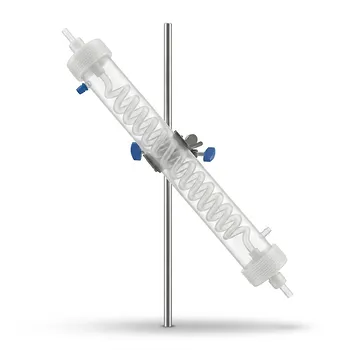
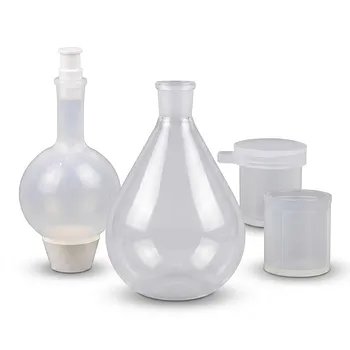
- High Purity PFA Chromatography Columns and Collection Bottles Corrosion Resistant Fluoropolymer Filtration Systems for Trace Analysis
- High Purity PFA Chromatography Column with Collection Bottle Corrosion Resistant Fluoropolymer Filtration System for Trace Analysis
- High Purity PFA PTFE Flare Stop Valves Customizable 2-Way 3-Way Reducing Fluoropolymer Fluid Control Solutions
- Custom PFA Tubing 1/4 Inch High Purity Corrosion Resistant Fluoropolymer Tube with Welding and Machining Services
- Corrosion Resistant High Purity PFA Valve and Weldable Transparent Tubing for Semiconductor Fluid Transfer
People Also Ask
- Why use high-purity PFA bottles for Carbon Quantum Dots? Ensure Ink Stability and Prevent Fluorescence Quenching
- Why is PFA often selected over traditional PTFE for manufacturing complex fluoropolymer fluid components, custom fittings, and sealed laboratory digestion vessels? Discover the key advantages for your lab.
- What are the primary functional and temperature differences between PFA and FEP when selecting melt-processible fluoropolymers for custom laboratory apparatus?
- Why is the chemical stability of polymer endgroups critical when selecting melt-processible fluoropolymers like PFA for high-purity laboratory apparatus? Choose Stable Endgroups for Reliable Performance
- What are the characteristics of PFA material? A Guide to Its High-Performance Balance