Increased fractional free volume and oxidative stability address two different failure risks in fluoropolymer components: fractional free volume influences how gases and fluids move through the polymer, while oxidative stability determines how well the material withstands chemically destructive oxidants and free radicals. Together, they help fluoropolymer tubing, fittings, valves, and filtration membranes maintain predictable transport behavior and long service life in harsh laboratory and industrial environments.
Fractional free volume improves transport-related performance but can increase permeability and outgassing, whereas oxidative stability protects the component from chemical attack. The best material choice balances these properties against the required barrier performance, mechanical strength, temperature range, and filtration selectivity.
Why Fractional Free Volume Matters
How free volume changes polymer structure
Fluorinated groups such as perfluoroalkyl, trifluoromethyl, and hexafluoroisopropylidene groups disrupt tight polymer-chain packing. Mutual electrostatic repulsion between fluorine-rich segments creates additional unoccupied space, or fractional free volume (FFV), while the polymer backbone can remain relatively rigid.
This structure gives molecules more pathways to move through the polymer. In practical terms, FFV affects permeability, diffusivity, sorption, and the rate at which gases or vapors can migrate through a component.
Significance for gas transfer
Higher FFV generally increases gas permeability and can improve permselectivity, meaning the polymer may allow some gases to pass more readily than others. The effect can be especially significant for larger penetrants, because they are more sensitive to changes in available free volume.
For specialized gas-handling systems, this can support controlled gas transport. However, it may be undesirable when the component must act as a strong gas barrier or prevent loss of a reactive gas.
Significance for tubing and fittings
In fluid-transfer assemblies, FFV can influence gas permeation, outgassing, and the stability of the fluid composition. This matters when transferring oxygen, ozone, volatile solvents, or high-purity reagents where even small levels of contamination or gas exchange can affect an experiment.
Higher FFV does not automatically mean better performance for every transfer line. Its value depends on whether the design requires controlled permeability or maximum containment.
Significance for filtration membranes
In membranes, increased FFV can improve molecular transport and support selective permeation. This may be useful for gas separation or specialized membrane processes where permeability is a primary design objective.
For aggressive liquid filtration, chemical inertness and low extractables may be more important than maximum FFV. The membrane must retain its structure and avoid chemical leaching while exposed to corrosive solvents, oxidants, or complex mixtures.
Why Oxidative Stability Matters
Protection from oxidants and radicals
Fluoropolymers benefit from the strength of the carbon-fluorine bond. This gives materials such as PTFE and PFA strong resistance to oxidative degradation caused by aggressive reagents and free radicals.
Oxidative stability slows the chemical reactions that can embrittle, crack, discolor, swell, or otherwise weaken a component.
Reliability in ozone service
Ozone-transfer systems are a clear example of the requirement. Ozone is highly reactive and can accelerate aging in less resistant tubing, fittings, and seals, potentially causing embrittlement or leakage.
Fluoropolymer components with high ozone resistance help maintain a stable oxidant supply from the generator to the reaction vessel. They also reduce the risk that degraded material will contaminate the process or compromise laboratory safety.
Stability during aggressive chemical filtration
Filtration membranes are exposed directly to the process fluid, so chemical degradation can change pore structure, permeability, strength, and separation performance. Oxidatively stable fluoropolymers are less likely to deteriorate when filtering corrosive or oxidizing media.
This preserves sample integrity, reduces extractables, and supports consistent separation over repeated operating cycles.
How the Two Properties Work Together
Transport performance and chemical durability
FFV primarily affects how readily molecules move through the polymer. Oxidative stability primarily affects whether the polymer survives the chemical environment.
A component may have excellent initial permeability but fail prematurely if the fluid attacks its backbone. Conversely, a highly stable material may provide long service life but offer insufficient transport or filtration performance for the application.
Maintaining predictable performance
Chemical degradation can alter the very free-volume structure that controls transport. Oxidation, chain scission, crosslinking, swelling, or surface damage may cause permeability and selectivity to drift over time.
Oxidative stability therefore protects not only the component's physical integrity but also the reliability of its transport characteristics.
Low friction and reduced adhesion
High fluorine content is also associated with a low coefficient of friction and low surface adhesion. In fluid-transfer components, this can promote smoother flow and reduce residue retention.
For filtration and high-purity handling, low adhesion can help limit fouling and reduce the risk that analytes, reagents, or contaminants remain attached to the surface.
Understanding the Trade-offs
Higher permeability can reduce barrier performance
More FFV generally creates more transport pathways, which may increase gas permeation or outgassing. That is useful for controlled permeation but undesirable when a tubing wall must provide a strong barrier against atmospheric gases, volatile compounds, or reactive oxidants.
Specifications should therefore distinguish between a requirement for permeability and a requirement for containment.
Mechanical properties still require evaluation
Increasing fluorine content and disrupting chain packing can produce a minor reduction in basic mechanical strength. Backbone rigidity helps preserve mechanical integrity, but pressure, flexing, vibration, and installation stresses still need to be assessed.
Material selection should include burst pressure, creep, bend radius, tensile performance, and temperature exposure rather than relying on chemical resistance alone.
Chemical resistance is application-specific
Fluoropolymers are broadly resistant to aggressive chemicals, but no material should be treated as universally inert under every combination of temperature, concentration, pressure, and exposure time.
Compatibility testing remains important for highly reactive oxidants, unusual solvent mixtures, elevated temperatures, and applications where failure would create a safety or contamination risk.
Membrane selectivity may involve a compromise
Increasing FFV can improve permeability, but greater throughput may come at the expense of selectivity or barrier efficiency depending on the polymer structure and penetrants involved. Larger molecules may experience a greater permeability increase than smaller ones.
For filtration membranes, engineers should evaluate flux, rejection, selectivity, fouling, extractables, and long-term chemical aging together.
How to Apply This to Your Project
The significance of these properties depends on whether the component's main job is to transport, contain, separate, or survive exposure to aggressive chemistry.
- If your primary focus is gas transport or selective permeation: Favor a fluoropolymer structure with increased FFV, while verifying permeability, selectivity, and outgassing for the specific gases involved.
- If your primary focus is gas containment or low permeation: Treat high FFV cautiously and prioritize barrier performance, low extractables, and validated permeation data.
- If your primary focus is ozone or oxidant transfer: Prioritize strong oxidative stability and proven compatibility to prevent embrittlement, cracking, and leakage.
- If your primary focus is aggressive chemical filtration: Prioritize oxidative and chemical stability, low leaching, structural retention, and stable pore or membrane performance.
- If your primary focus is long-term fluid-transfer reliability: Evaluate FFV, friction, thermal endurance, mechanical strength, and chemical compatibility as one integrated specification.
The right fluoropolymer is the one whose free-volume characteristics provide the required transport behavior while its oxidative stability preserves that behavior throughout the component's service life.
Summary Table:
| Property | Significance | Trade-offs/Considerations |
|---|---|---|
| Increased Fractional Free Volume | - Increases molecular transport pathways, improving permeability and permselectivity for gases and liquids. |
- Enhances membrane flux and separation performance for controlled transport applications.
- Can aid in specific gas-handling or filtration processes where high permeability is desired. | - Reduces barrier performance, increasing permeation and outgassing.
- May require careful specification for containment or low-permeation applications.
- Membrane selectivity may decrease as permeability increases for certain penetrants.
- Potential minor reduction in mechanical strength due to disrupted chain packing. | | Oxidative Stability | - Resists chemical attack by oxidants, free radicals, and aggressive reagents.
- Prevents embrittlement, cracking, swelling, and discoloration.
- Maintains structural integrity and low extractables in harsh chemical filtration.
- Preserves transport and filtration performance over time by protecting free volume structure. | - No significant trade-offs for most applications.
- Must still verify compatibility with specific chemicals, temperatures, and concentrations.
- May not address all mechanical or thermal requirements. | | Combined Effect | - Balanced selection ensures transport performance (via FFV) and chemical durability (via oxidation resistance) for reliable long-term operation.
- Prevents degradation-induced drift in permeability and selectivity. | - Unbalanced selection may lead to premature failure or insufficient performance.
- Application-specific requirements (e.g., gas containment vs. permeation) determine the ideal balance. |
Optimize Your Fluid Transfer and Filtration with KINTEK’s High-Performance Fluoropolymers
At KINTEK, we exclusively specialize in PTFE and PFA components engineered for exceptional performance in demanding environments. Our expertise ensures you get the right balance of fractional free volume and oxidative stability for your specific application—whether you need controlled gas permeation, reliable ozone transfer, or aggressive chemical filtration.
Our comprehensive product range includes:
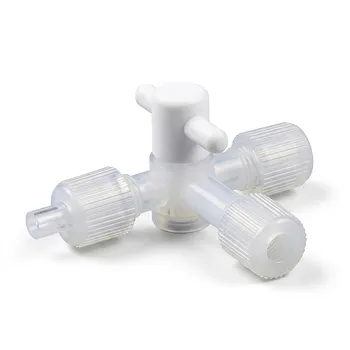
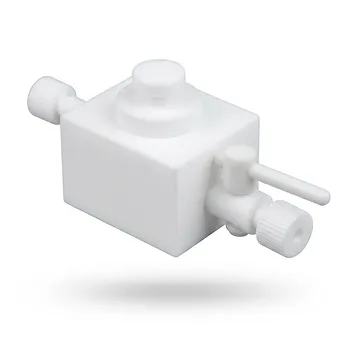
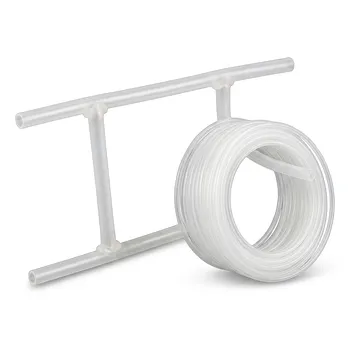
- Tubing, fittings, valves, and fluid transfer systems designed for low permeation and high purity.
- Filtration membranes optimized for flux, selectivity, and chemical resistance.
- Custom-machined parts for specialized laboratory setups, including electrochemical cells and microwave digestion vessels.
Leverage our end-to-end CNC machining capabilities for bespoke solutions, from complex non-standard parts to high-volume orders. Ensure predictable performance and extended service life in your lab or industrial process.
Contact us today to discuss your requirements and get a tailored recommendation! Request a Consultation
Related Products
- Corrosion Resistant High Purity PFA Valve and Weldable Transparent Tubing for Semiconductor Fluid Transfer
- Custom PTFE Filtration System Acid Resistant Chemical Semiconductor Fluoropolymer Filter Assembly
- PTFE PFA Vacuum Filtration System Corrosion Resistant Customizable Shatterproof Laboratory Device
- High Purity PFA Chromatography Column with Collection Bottle Corrosion Resistant Fluoropolymer Filtration System for Trace Analysis
- Corrosion Resistant PFA Tubing 1/4 Inch Custom Molded Welded Fluid Transfer Components
People Also Ask
- Why are high-purity PFA fluid transfer components preferred for battery electrolytes? Ensure Purity & Data Accuracy
- How do high-precision PFA fluid transfer components, such as tubing and fittings, affect the results of continuous-flow synthesis?
- How do PFA fluid transfer components contribute to chemical research precision? Achieve high-purity results today.
- What role do PFA tubing and valves play in high-precision laboratory fluid transfer systems? Ensure Ultra-Pure Results
- Which material characteristics of fluoropolymers are most critical for high-purity fluid transfer and labware? Key factors: chemical inertness, low extractables, thermal stability.