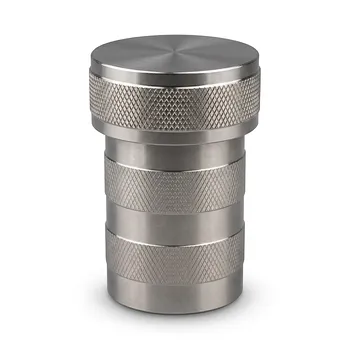
PTFE-lined autoclaves are the foundational reaction vessels required to create the specific architectural and chemical properties of Cu@In(OH)3 heterostructure catalysts. By providing a chemically inert and pressurized environment at 200 °C, these vessels allow for the precise hydrothermal growth of indium hydroxide into nanocuboids while ensuring copper nanoparticles are uniformly loaded onto their surfaces. This controlled environment is essential for establishing the ohmic contact interfaces necessary for high-performance catalysis.
Core Takeaway: The PTFE-lined autoclave enables "subcritical" synthesis conditions where solvents remain liquid far above their boiling points, facilitating the slow, oriented growth of pure nanocrystals. Its primary role is to provide chemical inertness and thermal stability, preventing contamination while allowing for the uniform assembly of the Cu@In(OH)3 heterostructure.
The Role of the Reaction Environment
Maintaining Subcritical Liquid States
The primary function of the autoclave is to create a sealed environment where the precursor solution can be heated to 200 °C without boiling away. Under these subcritical conditions, the solubility and reactivity of the reactants are significantly enhanced.
This state of supersaturation is what triggers the nucleation and controlled growth of the catalyst components. Without this pressure-cooker effect, the precursors would not reach the energy state required to form the desired crystal structures.
Chemical Inertness and Purity
The Polytetrafluoroethylene (PTFE) liner is used because it is exceptionally resistant to chemical attack, even in the corrosive environments often required for metal-oxide synthesis. It prevents the precursor solution from reacting with the stainless steel outer shell of the autoclave.
This "barrier" ensures that no foreign metal ions, such as iron or chromium from the vessel walls, leach into the solution. Maintaining this high purity is critical for the catalyst’s performance, as even trace impurities can disrupt the intended electronic properties.
Impact on Catalyst Morphology and Interface
Precision Growth of Indium Hydroxide Nanocuboids
The stable temperature and pressure provided by the PTFE liner allow indium hydroxide to grow into regular nanocuboids. The hydrothermal process promotes oriented growth, ensuring the precursors develop into specific geometric shapes rather than random aggregates.
These nanocuboids serve as the structural backbone of the catalyst. Their regular shape and defined surface area are vital for the subsequent attachment of copper nanoparticles.
Facilitating Uniform Copper Loading
The closed-system environment ensures that copper nanoparticles are deposited with high uniformity across the surfaces of the In(OH)3 nanocuboids. This uniform distribution is a direct result of the stable physicochemical conditions maintained within the vessel.
Consistent loading is the key to forming ohmic contact interfaces. These interfaces allow for efficient charge transfer between the copper and the indium hydroxide, which is the "Deep Need" that makes the catalyst effective.
Understanding the Trade-offs
Thermal and Pressure Limitations
While PTFE is prized for its inertness, it has physical limits. It is a relatively soft material that can undergo "creep" or deformation if subjected to temperatures exceeding its rated capacity (usually around 250-260 °C) for extended periods.
In the synthesis of Cu@In(OH)3 at 200 °C, the material is operating near its functional limit. Users must ensure that the autoclave’s stainless steel outer shell is in good condition to provide the structural support the PTFE liner lacks under high pressure.
Cooling and Collection Factors
The non-stick properties of PTFE facilitate the easy collection of the synthesized catalyst after the reaction. However, the cooling rate of the autoclave can significantly impact the final crystal size and morphology.
A rapid drop in temperature can cause thermal shock to the liner or lead to smaller, less defined crystals. Conversely, a controlled, slow cooling process within the insulated autoclave body often yields higher-quality, more stable heterostructures.
How to Apply This to Your Synthesis
To achieve a high-quality Cu@In(OH)3 heterostructure, the reaction vessel must be managed with precision.
- If your primary focus is crystal morphology: Ensure the autoclave remains at a constant 200 °C for the entire duration of the hydrothermal stage to promote the growth of regular nanocuboids.
- If your primary focus is catalyst purity: Inspect the PTFE liner for any signs of pitting or discoloration before use to prevent leaching from the stainless steel body.
- If your primary focus is interface efficiency: Maintain a strictly sealed environment to ensure the pressure remains consistent, which is vital for the uniform loading of Cu nanoparticles and the formation of ohmic contacts.
By mastering the high-pressure environment of the PTFE-lined autoclave, you gain the ability to engineer the precise interfaces and morphologies required for advanced heterostructure catalysts.
Summary Table:
| Feature | Role in Synthesis | Key Benefit |
|---|---|---|
| Subcritical Environment | Maintains liquids above boiling point at 200 °C | Triggers precise nucleation and crystal growth |
| PTFE Chemical Inertness | Prevents precursor reaction with outer shell | Ensures high purity by avoiding metal leaching |
| Non-Stick Properties | Simplifies post-reaction recovery | Facilitates easy collection of synthesized catalysts |
| Thermal Stability | Provides consistent heating environment | Promotes oriented growth of regular nanocuboids |
Optimize Your Research with KINTEK’s Precision Fluoropolymer Solutions
Achieving the perfect Cu@In(OH)3 heterostructure requires reaction vessels that never compromise on purity or performance. KINTEK specializes in high-performance PTFE and PFA laboratory supplies designed for the most demanding hydrothermal and chemical applications.
Our extensive range includes:
- Basic Labware: Beakers, crucibles, reagent bottles, and digestion tubes.
- Fluid Transfer: High-purity tubing, fittings, valves, and filtration tools.
- Advanced Apparatus: Hydrothermal synthesis liners, microwave digestion vessels, electrochemical cells, and microchannel reactors.
Whether you need standard consumables like stirring bars and O-rings or complex, non-standard machined parts tailored to your specific setup, our end-to-end custom CNC fabrication ensures you receive exactly what your research demands. From high-volume orders to bespoke laboratory configurations, KINTEK delivers the durability and inertness essential for advanced materials science.
Ready to elevate your lab’s capabilities? Contact our experts today to discuss your custom requirements!
References
- Zeyu Li, Guihua Yu. Stabilizing Cu0-Cuδ+ sites via ohmic contact interface engineering for ampere-level nitrate electroreduction to ammonia. DOI: 10.1038/s41467-025-63996-w
This article is also based on technical information from Kintek Knowledge Base .
Related Products
- PTFE Lined High Pressure Digestion Vessel 50ml High Temperature Hydrothermal Synthesis Tank
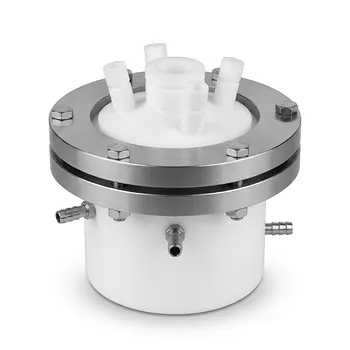
- High Temperature Corrosion Resistant Hydrothermal Synthesis Reactor with TFM Inner Liner and Straight Cylinder Design
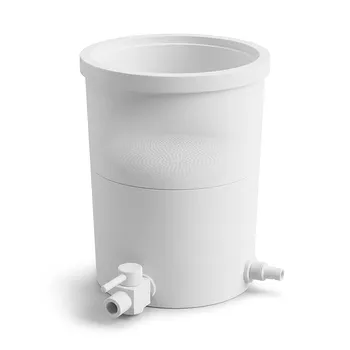
- Custom TFM Reaction Vessel with Stainless Steel Jacket and PTFE Inner Cup for High Corrosion Resistance
- High Pressure Custom TFM Reactor Stainless Steel Outer Vessel PTFE Inner Cup for Corrosive Synthesis
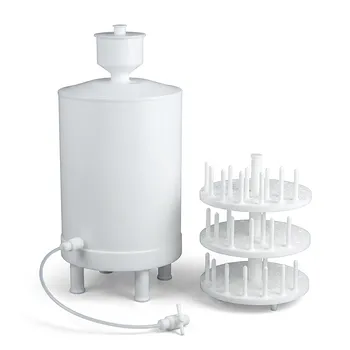
- PTFE Acid Steam Cleaning System HF Resistant Trace Analysis Beaker Digestion Tank Customizable
People Also Ask
- What are the benefits of using a PTFE-lined vessel for carbon-sulfur cathode treatment? Maximize Purity & Performance
- Why are PTFE-lined pressure digestion vessels required for the preparation of Ag/CeO2 catalysts? Purity & Performance
- What is the function of high-pressure PTFE digestion vessels in mineral analysis? Optimize Sample Mineralization
- What safety features are typically incorporated into high-pressure PTFE digestion vessel designs? Ensure Lab Safety
- What is the function of PTFE lined high-pressure vessels in g-C3N4 synthesis? Achieve High-Purity Material Growth