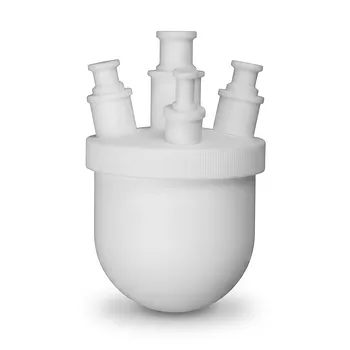
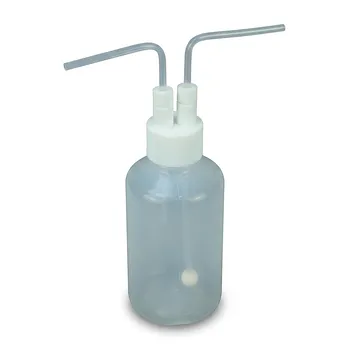
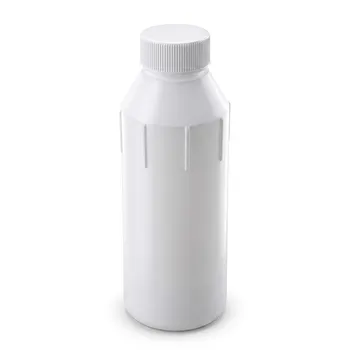
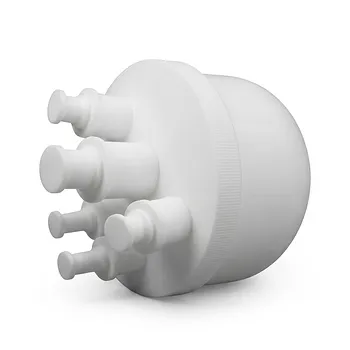
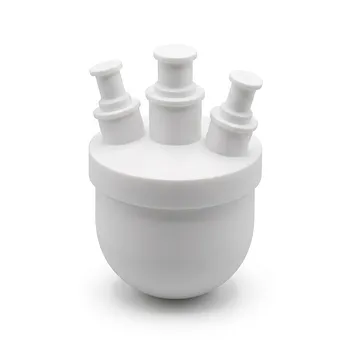
Pressure-resistant reaction bottles with screw caps are the foundational architecture for the hydrothermal synthesis of copper nanowires. They create a hermetically sealed micro-environment that allows the reaction to occur at temperatures exceeding the solvent's atmospheric boiling point—typically between 100°C and 150°C. This pressurized state is critical for maintaining liquid-phase stability and facilitating the precise, anisotropic growth required to transform copper precursors into high-quality, high-aspect-ratio nanowires.
The primary role of these vessels is to maintain a stable, pressurized, and chemically inert environment that prevents solvent evaporation and chemical drift. By sustaining internal pressure, the bottles ensure that precursors, surfactants, and reducing agents interact efficiently, enabling the controlled crystalline growth necessary for nanowire formation.
The Mechanics of the Pressurized Micro-Environment
Maintaining Liquid Phase Above Boiling Points
In hydrothermal synthesis, reactions often occur at temperatures like 125°C, which is well above the boiling point of water. The screw-cap seal creates a closed system where internal pressure rises spontaneously as the liquid is heated. This pressure prevents the solvent from boiling away, ensuring the reaction stays in the liquid phase where nanostructure growth is possible.
Facilitating Anisotropic Crystal Growth
The high-pressure environment is essential for the "anisotropic" growth of copper. This means the copper atoms attach themselves along specific crystalline axes rather than forming random clumps. The pressure helps templates like glycine or octadecylamine guide the copper precursors to form long, thin wire structures rather than simple nanoparticles.
Chemical and Structural Integrity
Prevention of Evaporation and Stoichiometric Drift
A tight seal is vital for maintaining the "stoichiometric ratio"—the exact balance of chemicals required for the reaction. If liquid components were allowed to evaporate, the concentration of copper ions would change, ruining the experimental design. The precision screw cap ensures that what you put into the bottle stays in the bottle throughout the multi-hour heating process.
Elimination of External Contaminants
Copper nanowires are highly sensitive to their environment during synthesis. The sealed nature of these bottles protects the solution from external dust, moisture, and oxygen. This isolation is critical for preventing the premature oxidation of the copper or the introduction of impurities that could interfere with the growth process.
PTFE Liners and Ion Purity
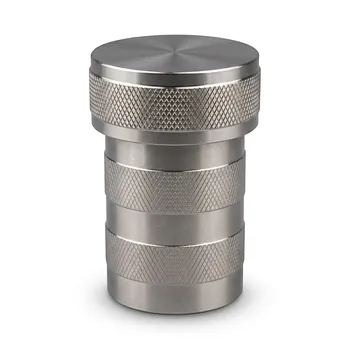
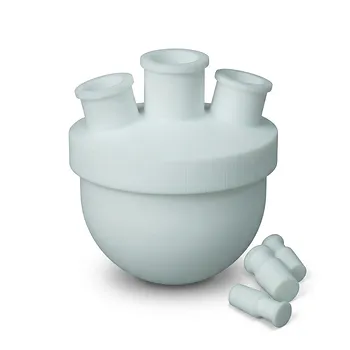
Many pressure-resistant vessels use PTFE (polytetrafluoroethylene) liners inside a stainless steel shell. PTFE is exceptionally inert and resists corrosion from the harsh reducing agents used in the synthesis. This prevents metal ions from the vessel walls from leaching into the solution and contaminating the nanowires.
Understanding the Trade-offs and Safety Risks
Spontaneous Pressure and Mechanical Failure
The primary risk of using these vessels is the "spontaneous pressure" generated during heating. If the bottle is overfilled or the temperature exceeds the vessel's rating, the internal pressure can lead to a mechanical failure or explosion. It is critical to leave adequate "headspace" (empty volume) inside the bottle to allow for liquid expansion.
Thermal Lag and Monitoring Challenges
Because these bottles are often thick-walled or encased in steel to resist pressure, there is a significant "thermal lag." The temperature inside the solution may take a long time to reach the oven's set temperature. Furthermore, it is difficult to monitor the reaction in real-time without specialized, expensive sensors that can penetrate the pressurized seal.
How to Apply This to Your Project
When selecting or using pressure-resistant vessels for copper nanowire synthesis, your choice should be dictated by your specific experimental requirements.
- If your primary focus is high purity and crystallinity: Use PTFE-lined autoclaves to ensure a completely inert environment that prevents metal ion contamination and promotes superior crystal structures.
- If your primary focus is large-scale production or environment: Hydrothermal synthesis in sealed vessels is preferable over atmospheric methods, as it avoids toxic reducing agents like hydrazine and allows for more uniform thermal control.
- If your primary focus is safety and consistency: Always use precision-threaded screw caps and never exceed 80% of the vessel's total volume to prevent dangerous over-pressurization during the heating cycle.
Selecting the right pressurized vessel is not merely a matter of containment, but a critical step in controlling the fundamental physics of nanowire growth.
Summary Table:
| Feature | Primary Role | Impact on Copper Nanowires |
|---|---|---|
| Pressure Retention | Maintains liquid phase above boiling points (100°C-150°C) | Facilitates growth environments otherwise impossible at 1atm. |
| Hermetic Sealing | Prevents evaporation and stoichiometric drift | Ensures consistent precursor concentrations and high aspect ratios. |
| Chemical Inertness | PTFE liners resist harsh reducing agents | Eliminates ion contamination to maintain high-purity crystal structures. |
| Isolation | Blocks external dust, moisture, and oxygen | Prevents premature oxidation and ensures structural integrity. |
Precision Labware for High-Performance Synthesis
Unlock the full potential of your nanomaterial research with KINTEK. We specialize in high-performance fluoropolymer solutions designed to withstand the most demanding hydrothermal environments. From everyday basic labware (beakers, measuring cylinders, crucibles, dishes, reagent/wash bottles, centrifuge and digestion tubes) to advanced derivative and reaction apparatus like PTFE/PFA hydrothermal synthesis liners, microwave digestion vessels, and custom electrochemical cells, we provide the purity and durability your science demands.
Whether you need standard consumables (stirring bars, O-rings, gaskets, seal tapes) or complex, bespoke laboratory setups, KINTEK is your partner in excellence. Backed by end-to-end custom CNC fabrication, we deliver everything from high-purity trace analysis instruments to comprehensive fluid transfer components (tubing, fittings, valves) and sample prep tools (filters, pipettes, tweezers).
Ready to upgrade your reaction environment? Contact us today to discuss your custom project or high-volume lab supply needs!
References
- Andrea Conte, Sabrina Antonello. Advanced morphological control over Cu nanowires through a design of experiments approach. DOI: 10.1039/d4ma00402g
This article is also based on technical information from Kintek Knowledge Base .
Related Products
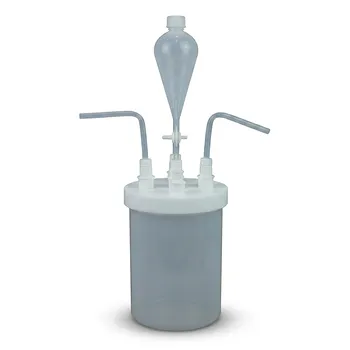
- Corrosion Resistant PFA Translucent Reaction Bottle with PTFE Screw Cap and Standard 19 24 Ground Joint Neck for High Temperature Lab Applications
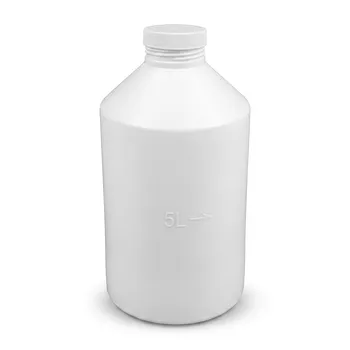
- Large Capacity 5L PTFE Storage Tank and Custom Reagent Bottle Corrosion Resistant Leakproof Screw Seal Laboratory Container with PTFE Cap
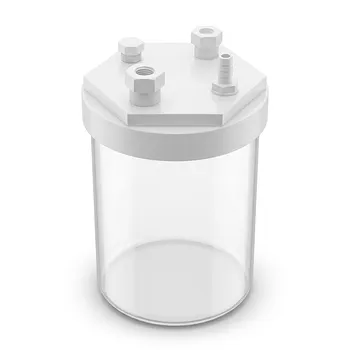
- PFA Reaction Tank 6L Customizable Fittings Corrosion Resistant Solvent Resistant PFA Reaction Bottle for New Material Synthesis
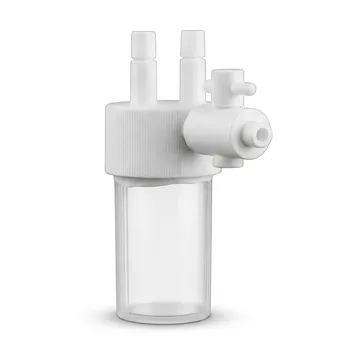
- Custom PTFE Reaction Lid with Integrated Valve and Fitting Corrosion Resistant No Leaching PFA FEP Bottle Cap System
- High Temperature Corrosion Resistant Hydrothermal Synthesis Reactor with TFM Inner Liner and Straight Cylinder Design
People Also Ask
- How do the material choice and sealing integrity of the reaction vessel affect the growth of NiFe-LDH? Optimize Synthesis
- Why is PFA preferred over FEP for high-temperature reaction vessels and fluid handling fittings in demanding chemical analysis? Explore its superior thermal stability and chemical resistance.
- Why are well-sealed reaction vessels necessary for superacid-promoted Friedel-Crafts polycondensation? Optimize Synthesis
- Role of reaction vessels in alkali treatment for oil palm waste: Achieve High-Purity Cellulose with PTFE Vessels
- Why are PTFE or PFA reaction vessels required for the selective etching process of MXene using hydrofluoric acid (HF)?