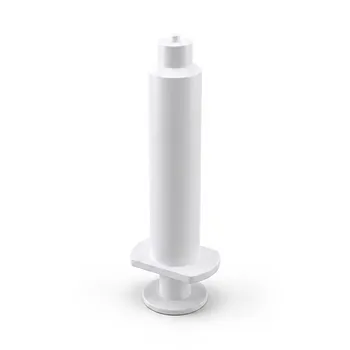
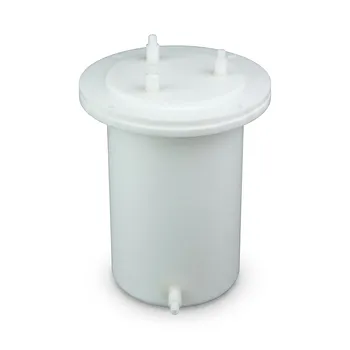
The primary role of high-purity PTFE or PFA liners is to provide a chemically inert, non-stick reaction environment that prevents contamination and equipment corrosion. During the hydrothermal synthesis of zeolites, these liners act as a critical barrier between aggressive alkaline solutions and the metal walls of the autoclave. This isolation ensures that the resulting zeolite crystals remain free from metallic impurities while facilitating easy product recovery.
High-purity liners serve as the "clean room" of the hydrothermal reactor, safeguarding the purity of the zeolite framework by eliminating metal ion leaching and resisting chemical attack from mineralizing agents.
Safeguarding Chemical Purity and Structural Integrity
Preventing Metal Ion Leaching
Hydrothermal synthesis often employs strongly alkaline environments or mineralizing agents like fluoride ions. These chemicals can react with the metal walls of a pressure vessel, leaching iron, nickel, or chromium into the solution.
The liner ensures these metallic impurities do not incorporate into the zeolite framework. This is essential for maintaining the specific catalytic or adsorptive properties of high-performance materials like GeMFI zeolites.
Resistance to Corrosive Mineralizing Agents
Many zeolite recipes require organic templates (like TPAOH) and strong bases (like NaOH) that are highly corrosive at elevated temperatures. High-purity PTFE and PFA are virtually immune to these reagents.
This chemical resistance prevents the degradation of the reaction environment over long crystallization periods. It ensures that the chemical concentration of the mother liquor remains stable throughout the synthesis.
Enhancing Product Recovery and Consistency
Facilitating Detachment via Low Surface Energy
Zeolite crystals, particularly micro- and nano-powders, can be difficult to harvest if they adhere to the vessel walls. PTFE and PFA possess extremely low surface energy, which creates a non-stick interface.
This property allows for the easy detachment and recovery of the synthesized product. It ensures higher yields and prevents the loss of specialized, expensive materials during the collection phase.
Simplifying the Cleaning Process
Because the product does not bond to the liner, the risk of "cross-batch contamination" is significantly reduced. Residual crystals from previous runs can act as unwanted seeds in subsequent experiments.
The non-stick surface allows for thorough cleaning and decontamination. This ensures that each synthesis batch is consistent and reproducible, which is vital for rigorous scientific research.
Protecting the Structural Longevity of Equipment
Shielding the Metal Autoclave
The outer metal shell of a hydrothermal autoclave provides the mechanical strength to withstand high pressures but is often vulnerable to chemical attack. The liner acts as a protective shield for the pressure vessel.
By preventing contact with corrosive media, the liner extends the operational lifespan of the autoclave. It also prevents structural weakening of the metal shell that could lead to safety failures under pressure.
Maintaining Sealing Integrity
High-purity PFA and PTFE liners are designed to work in tandem with the autoclave’s sealing mechanism. Their ability to maintain a reliable seal under prolonged exposure to heat (typically up to 170°C or 220°C) is crucial.
This containment is necessary to maintain the autogenous pressure required for crystal growth. Without a stable seal, the volatile components of the synthesis mixture would escape, halting the crystallization process.
Understanding the Trade-offs and Limitations
Temperature Constraints and Thermal Expansion
While PTFE and PFA are highly stable, they have distinct temperature limits, usually around 220°C to 250°C. Exceeding these temperatures can cause the liner to soften or deform, a phenomenon known as "creep."
If the liner deforms excessively, it may become difficult to remove from the autoclave or may lose its sealing capability. Users must carefully match the liner material to the specific temperature requirements of their zeolite synthesis.
Pressure Limitations and Vessel Support
The liners themselves are not pressure-rated; they rely on the support of the metal autoclave body. If there is a significant gap between the liner and the wall, the liner may rupture under high internal pressure.
Users must ensure the liner is properly sized for the vessel. Overfilling the liner can also lead to excessive internal pressure that exceeds the safety limits of the entire assembly.
How to Apply This to Your Synthesis Goals
Strategic Recommendations for Zeolite Synthesis
- If your primary focus is high-performance catalysis: Use high-purity PFA liners to ensure the absolute minimum of metal ion contamination, which can poison catalytic sites.
- If your primary focus is nanomaterial yield: Prioritize PTFE liners for their superior non-stick properties, ensuring maximum recovery of micro- and nano-powders.
- If your primary focus is synthesis at temperatures above 220°C: Evaluate alternative liner materials or specialized high-temperature polymers, as standard PTFE may lose structural integrity.
By choosing the correct liner material and maintaining its integrity, you ensure the purity, consistency, and safety of your hydrothermal synthesis process.
Summary Table:
| Key Feature | Benefit in Zeolite Synthesis | Why It Matters |
|---|---|---|
| Chemical Inertness | Prevents metal ion leaching | Maintains catalytic and structural integrity |
| Low Surface Energy | Non-stick interface | Facilitates easy recovery of micro/nano powders |
| Corrosion Resistance | Resists aggressive alkaline media | Protects the metal autoclave from structural decay |
| Sealing Capability | Maintains autogenous pressure | Ensures stable crystal growth environments |
| Thermal Stability | Stable up to 220°C - 250°C | Provides a reliable barrier for hydrothermal heating |
Elevate Your Synthesis Purity with KINTEK Fluoropolymer Solutions
Are you looking to eliminate contamination and protect your laboratory equipment? KINTEK is your premier partner for high-performance fluoropolymer laboratory supplies. We provide an extensive range of products crafted from premium PTFE and PFA, designed to meet the rigorous demands of hydrothermal synthesis and trace analysis.
From everyday basic labware like beakers, crucibles, and reagent bottles to specialized hydrothermal synthesis liners, microwave digestion vessels, and custom reaction apparatus, we offer everything you need for a sterile and efficient workflow. Our expertise extends to complex fluid transfer components (tubing, valves, fittings), sample prep tools, and advanced derivative setups like electrochemical cells and battery testing fixtures.
Whether you require high-volume standard consumables or bespoke non-standard parts via our end-to-end custom CNC fabrication, KINTEK delivers precision-engineered solutions with an absolute focus on material performance.
Contact our experts today to find the perfect fit for your lab!
References
- Debdas Dhabal, Valeria Molinero. Barrierless nucleation in glassy precursors drives zeolite formation. DOI: 10.1073/pnas.2506679122
This article is also based on technical information from Kintek Knowledge Base .
Related Products
- PTFE Lined High Pressure Digestion Vessel 50ml High Temperature Hydrothermal Synthesis Tank
- High Purity PFA Crucible and Corrosion Resistant PTFE Beaker for Trace Analysis and Custom Laboratory Applications
- High Purity PFA Coiled Tubing Custom PTFE Machining PFA Welding and Precision Bending Solutions
- High Purity Virgin PTFE Syringe 20ml Chemical Resistant Liquid Handling for Syringe Pumps and PFA Tubing Integration
- High Purity PTFE Microwave Digestion Vessel for Soil and Food Analysis Acid Resistant Fluoropolymer Sample Preparation Liners
People Also Ask
- What are the benefits of using a PTFE-lined vessel for carbon-sulfur cathode treatment? Maximize Purity & Performance
- Why are PTFE-lined pressure digestion vessels required for the preparation of Ag/CeO2 catalysts? Purity & Performance
- What safety features are typically incorporated into high-pressure PTFE digestion vessel designs? Ensure Lab Safety
- What is the function of high-pressure PTFE digestion vessels in mineral analysis? Optimize Sample Mineralization
- What is the function of PTFE lined high-pressure vessels in g-C3N4 synthesis? Achieve High-Purity Material Growth