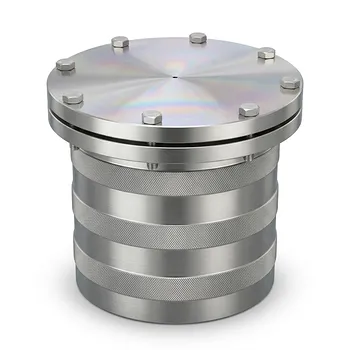
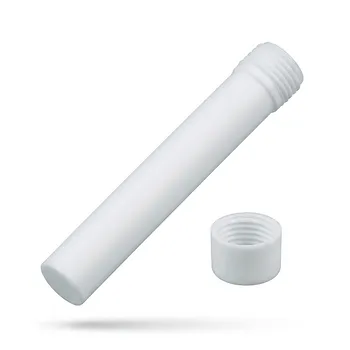
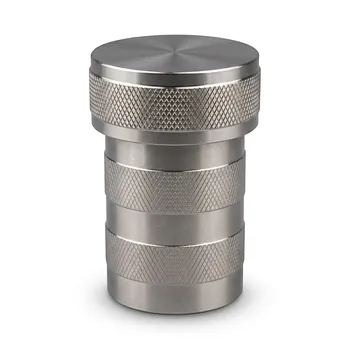
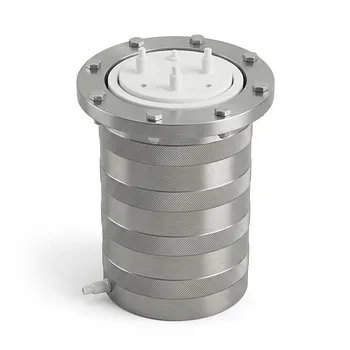
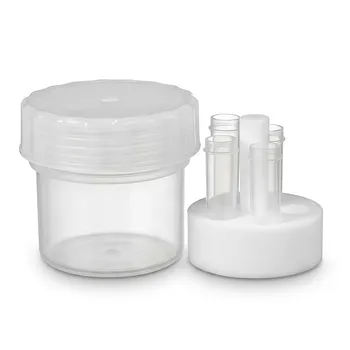
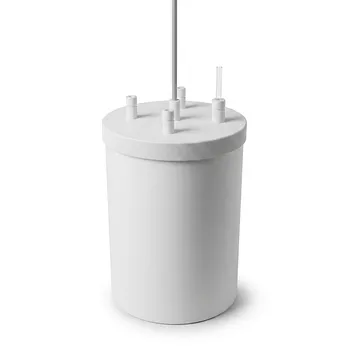
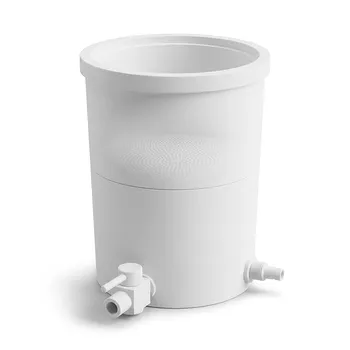
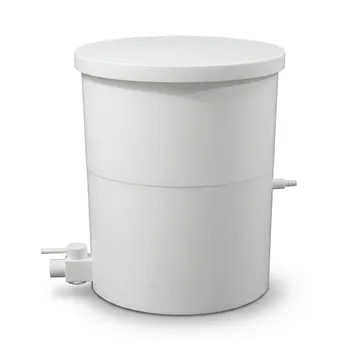
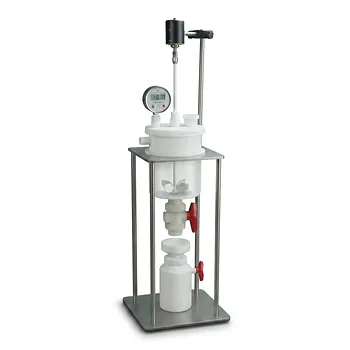
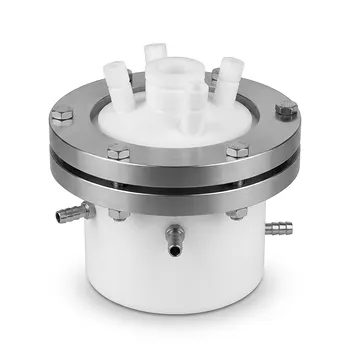
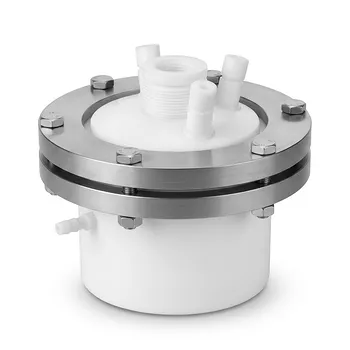
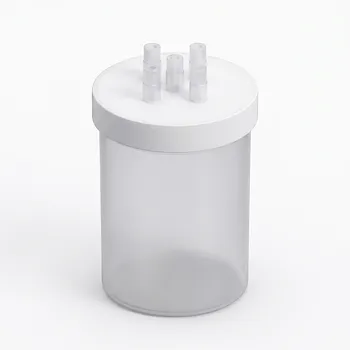
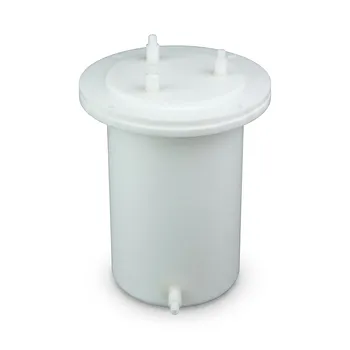
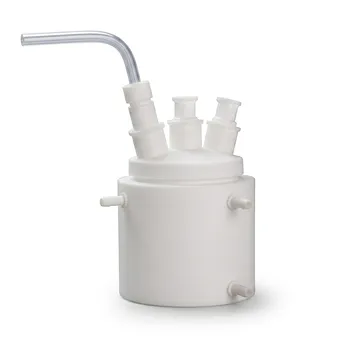
High-pressure hydrothermal reactors and their fluoropolymer liners provide the thermodynamic and chemical environment necessary to transition precursors into ordered, hierarchical structures. These reactors create a sealed, high-temperature chamber that drives surfactant molecules to self-assemble into the templates required for mesoporous frameworks. The fluoropolymer liners (typically PTFE or PFA) act as a critical barrier, preventing metal ion contamination from the reactor walls and resisting the harsh acidic or alkaline conditions often required for the synthesis.
The success of the surfactant template method depends on a "clean" high-energy environment where precursors can reorganize around micelles without interference from vessel impurities. High-pressure reactors provide the energy for this reorganization, while fluoropolymer liners ensure the chemical integrity of the resulting hierarchical material.
The Reactor: Driving Structural Self-Assembly
Facilitating Surfactant Template Formation
In the surfactant template method, molecules must self-assemble into ordered micelle structures to act as "blueprints" for the material. High-pressure hydrothermal reactors provide the sealed environment necessary to reach temperatures above the boiling point of the solvent. This elevated energy state is essential for surfactants to overcome kinetic barriers and form the precise geometric arrangements that define hierarchical pores.
Achieving Subcritical and Supercritical States
The reactor allows the reaction solution to reach subcritical or supercritical states, where the solvent's properties change significantly. In these states, precursor solubility increases, facilitating the recrystallization and reorganization of rigid chains into stable, regular mesoporous structures. This is particularly vital for materials like metal-organic frameworks (MOFs) or polyaniline (PANI) composites that require bond breaking and reforming.
Controlling Nucleation and Growth
The stable pressure and temperature inside the autoclave enable uniform nucleation of nanocrystals. By maintaining a constant, sealed environment, the reactor ensures that crystals grow directionally within the template's pores. This level of control is necessary to produce specific morphologies, such as the core-shell nanocrystals or transition metal dichalcogenides often sought in hierarchical synthesis.
The Fluoropolymer Liner: Ensuring Purity and Yield
Preventing Metal Ion Contamination
Hierarchical materials are highly sensitive to impurities that can disrupt their framework stability. Fluoropolymer liners (PTFE or PFA) are chemically inert, preventing the reaction solution from leaching metal ions like iron or chromium from the stainless steel autoclave walls. This ensures that the final product, such as mesoporous silica or covalent organic frameworks (COFs), maintains high crystallinity and purity.
Chemical Resistance in Extreme pH
The synthesis of hierarchical materials often involves strong bases or oxidizing acids that would otherwise corrode metallic vessels. Fluoropolymers exhibit exceptional resistance to these aggressive media, protecting the external reactor shell from structural damage. This allows researchers to use the specific chemical environments required for Schiff base condensation or the reduction of oxidizing salts.
Maximizing Product Recovery
Fluoropolymers possess low surface energy, resulting in a "non-stick" interior surface. This characteristic minimizes the adhesion of synthesized products to the vessel walls, which significantly improves the recovery rate of the target material. A non-stick surface also simplifies the cleaning process, reducing the risk of cross-contamination between different experimental batches.
Understanding the Trade-offs
Thermal Limitations of Liners
While fluoropolymer liners are chemically robust, they have distinct thermal thresholds. Polytetrafluoroethylene (PTFE) is generally limited to operating temperatures below 220°C–250°C; exceeding these limits can cause the liner to soften or deform, compromising the seal. For synthesis requiring higher temperatures, specialized materials like Para-polyphenylene (PPL) must be used.
Heat Transfer and Thermal Lag
The insulating properties of thick fluoropolymer liners can lead to a thermal lag between the reactor's external heating element and the internal solution. This can make it difficult to monitor the exact internal temperature in real-time unless internal sensors are utilized. Researchers must account for this delay to ensure the reaction proceeds at the intended kinetic rate.
Optimization Strategies for Your Synthesis Goal
How to Apply This to Your Project
To achieve the best results in hierarchical material synthesis, you must align your reactor components with your specific material requirements.
- If your primary focus is Maximum Framework Purity: Prioritize high-purity PFA liners, which offer lower trace-metal leaching than standard PTFE.
- If your primary focus is High-Temperature Structural Stability: Select PPL liners if your synthesis exceeds 230°C to maintain a secure seal under high pressure.
- If your primary focus is Precise Pore Morphology: Utilize a reactor with integrated pressure monitoring to ensure the surfactant micelles remain stable throughout the aging process.
- If your primary focus is High Product Yield: Ensure the use of virgin PTFE liners with high-quality surface finishes to minimize material loss due to adhesion.
By matching the thermodynamic capabilities of the reactor with the chemical inertness of the liner, you can reliably produce complex hierarchical materials with tailored pore structures.
Summary Table:
| Component | Role in Synthesis | Key Material Advantage |
|---|---|---|
| Hydrothermal Reactor | Drives surfactant self-assembly | Maintains subcritical/supercritical energy states |
| Fluoropolymer Liner | Prevents metal ion contamination | Chemical inertness against strong acids/bases |
| Non-stick Surface | Maximizes product recovery | Low surface energy reduces material adhesion |
| Thermal Control | Regulates nucleation & growth | Ensures uniform crystals and pore morphology |
Elevate Your Material Synthesis with KINTEK’s Fluoropolymer Expertise
Precision in hierarchical porous material synthesis demands a contaminant-free environment and reliable thermodynamic control. KINTEK specializes in high-performance laboratory supplies crafted exclusively from PTFE and PFA, ensuring your research remains pure and reproducible.
From essential basic labware (beakers, crucibles, and reagent bottles) and high-purity trace analysis instruments to comprehensive fluid transfer components (tubing, valves) and sample prep tools (filters, pipettes), we provide the foundations for excellence. For advanced synthesis, we offer standard and custom electrochemical cells, battery testing fixtures, and hydrothermal synthesis liners designed to withstand the most demanding chemical environments.
Why choose KINTEK?
- End-to-End Customization: Our advanced CNC fabrication delivers everything from complex non-standard machined parts to bespoke laboratory setups.
- Material Focus: Absolute focus on high-performance fluoropolymers for maximum chemical resistance.
- Scalability: We handle everything from single custom prototypes to high-volume orders with uncompromising quality.
Contact us today to discuss your custom reactor needs or labware requirements!
References
- Zhongwei Guan, Bao‐Lian Su. The Synthesis, Characteristics, and Application of Hierarchical Porous Materials in Carbon Dioxide Reduction Reactions. DOI: 10.3390/catal14120936
This article is also based on technical information from Kintek Knowledge Base .
Related Products
- Custom TFM Reaction Vessel with Stainless Steel Jacket and PTFE Inner Cup for High Corrosion Resistance
- High Purity TFM Microwave Digestion Vessels PTFE Acid Evaporation Liners Domestic GT-400 Equivalent Laboratory Reaction Containers
- PTFE Lined High Pressure Digestion Vessel 50ml High Temperature Hydrothermal Synthesis Tank
- High Temperature Corrosion Resistant Hydrothermal Synthesis Reactor with TFM Inner Liner and Straight Cylinder Design
- High Pressure Custom TFM Reactor Stainless Steel Outer Vessel PTFE Inner Cup for Corrosive Synthesis
People Also Ask
- Why are high-performance pressure-resistant reaction vessels required for oxygen-assisted hydrothermal conversion at 150 °C?
- Why are high-quality fluoropolymer-lined reaction vessels required for alk-Ti3C2Tx MXene? Ensure Purity & HF Resistance
- How do magnetic stirring and reaction vessels impact MOF-derived carbon quality? Optimize Your Composite Performance
- Why are PTFE-lined reaction vessels necessary for forced degradation studies? Ensure high-purity results and accuracy.
- Why is a high-purity PTFE lined reaction vessel required for the acidic etching of MXenes? Ensure Material Purity.