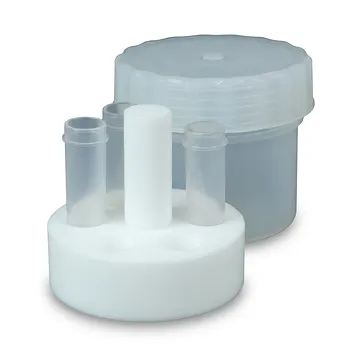
In the hydrothermal synthesis of Molybdenum Disulfide (MoS2), the Teflon-lined stainless steel autoclave serves as a specialized reactor that maintains the high-pressure, high-temperature environment necessary for chemical transformation. It acts as a dual-layered system where the stainless steel shell provides structural integrity against internal pressure, while the Teflon (PTFE) liner ensures chemical purity and corrosion resistance. This setup allows precursors like sodium molybdate and thiourea to react thoroughly, facilitating the growth of specific MoS2 crystalline structures and morphologies.
The autoclave's primary role is to provide a chemically inert, high-pressure "pressure cooker" environment that enables subcritical water reactions, allowing for the controlled nucleation and growth of high-purity MoS2 crystals and phase transitions.
The Dual-Function Reactor Design
The Strength of the Stainless Steel Shell
The outer stainless steel casing is designed to provide the mechanical strength required to withstand high autogenous pressures. These pressures are generated internally as the aqueous solution is heated to temperatures often reaching 180°C to 200°C.
Without this robust outer shell, the vessel would be unable to contain the force produced by the expanding gases and liquids under subcritical conditions. This containment is essential for maintaining the constant pressure environment required for the formation of complex structures like hollow MoS2 microspheres.
The Protection of the Teflon (PTFE) Liner
The internal liner, made of polytetrafluoroethylene (PTFE), provides extreme chemical inertness. It acts as a barrier that prevents highly corrosive reaction precursors and acidic intermediates from coming into direct contact with the metal walls of the autoclave.
This protection serves two purposes: it prevents the erosion of the expensive stainless steel equipment and ensures that the MoS2 product is not contaminated by metal impurities. The smooth, non-stick surface of the Teflon also makes it easier to collect the final powder and clean the vessel between experiments.
Facilitating Chemical and Structural Transitions
Enabling Subcritical Hydrothermal Reactions
The sealed environment allows the reaction solution to reach temperatures well above its boiling point while remaining in a liquid or vapor-saturated state. These subcritical conditions increase the solubility of precursors and accelerate the reaction kinetics between molybdenum and sulfur sources.
The high-pressure environment is critical for "deep reactions," ensuring that the precursors undergo complete chemical transformation. This is particularly important when synthesizing doped versions of the material, such as indium-oxygen-molybdenum disulfide (In-O-MoS2).
Driving Phase Transitions and Morphology
The autoclave environment provides the energy and pressure required to induce specific phase transitions in the material. For example, it facilitates the transition from the stable 2H phase to the metastable, metallic 1T phase through the in-situ intercalation of ions.
Controlled pressure and temperature also dictate the final shape of the crystals. By maintaining a stable, enclosed environment over long periods (often up to 24 hours), the autoclave allows for the successful nucleation and growth of layered double hydroxides and other nano-precursors.
Understanding the Trade-offs
Temperature Limitations of PTFE
While Teflon is highly resistant to chemicals, it has a strict thermal limit, typically around 220°C to 250°C. Exceeding these temperatures can cause the liner to soften or deform, leading to seal failure or the release of toxic fumes.
Pressure Risks and Safety
Because the pressure inside the autoclave is autogenous (generated by heat), it can be difficult to monitor precisely without integrated sensors. Overfilling the liner (typically beyond 80% capacity) can lead to dangerous pressure spikes that may compromise the safety of the stainless steel shell.
Cleaning and Cross-Contamination
Despite the non-stick properties of PTFE, microscopic residues can sometimes remain in the pores of the liner after synthesis. If not cleaned rigorously with acid or specialized solvents, these residues can act as unintended seeds for the next reaction, potentially altering the morphology of future batches.
How to Optimize Your Synthesis Results
Making the Right Choice for Your Goal
- If your primary focus is high-purity 1T-MoS2: Ensure the autoclave is perfectly sealed to facilitate the in-situ intercalation of ions required for the phase transition at 200°C.
- If your primary focus is preventing metal contamination: Always inspect the PTFE liner for scratches or thinning to ensure the precursor solution never touches the stainless steel shell.
- If your primary focus is producing hollow microspheres: Maintain a consistent temperature for the full duration of the reaction to ensure stable autogenous pressure throughout the nucleation process.
- If your primary focus is vessel longevity: Never exceed a 70-80% fill level and stay strictly within the temperature rating of your specific PTFE liner.
By masterfully balancing the mechanical strength of steel with the chemical resilience of Teflon, researchers can reliably synthesize the high-performance MoS2 structures required for advanced electronics and catalysis.
Summary Table:
| Component/Feature | Primary Role in MoS2 Synthesis | Key Benefit |
|---|---|---|
| Stainless Steel Shell | Provides structural integrity | Withstands high autogenous pressures (180°C-200°C) |
| Teflon (PTFE) Liner | Chemical inertness & protection | Prevents metal contamination and vessel corrosion |
| Sealed Environment | Enables subcritical conditions | Accelerates reaction kinetics and precursor solubility |
| Pressure Control | Drives phase/morphology transitions | Facilitates 1T-phase formation and crystal growth |
Achieve Precision in Your Hydrothermal Synthesis with KINTEK
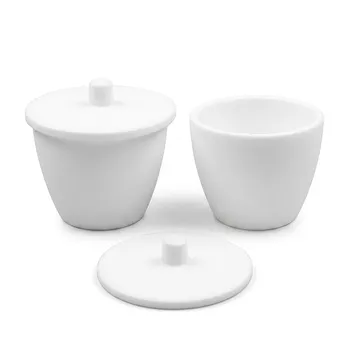
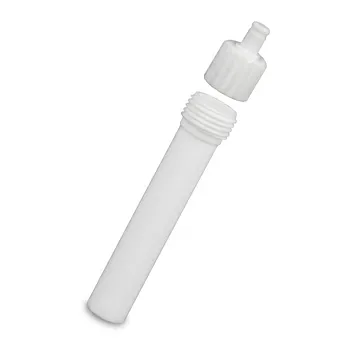
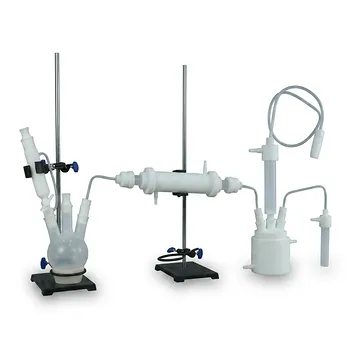
Elevate your material science research with high-performance fluoropolymer solutions. At KINTEK, we specialize in manufacturing the specialized tools required for rigorous high-pressure reactions, including the critical PTFE liners used in MoS2 synthesis and advanced reaction apparatus.
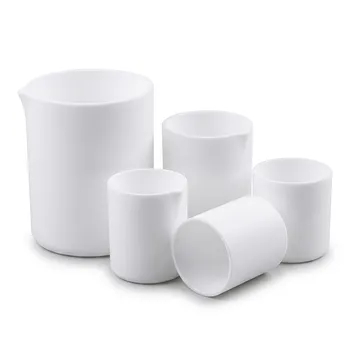
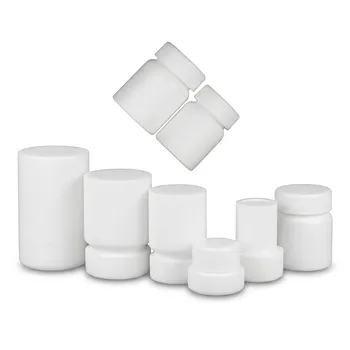
From everyday basic labware (beakers, measuring cylinders, crucibles, dishes, reagent/wash bottles, centrifuge and digestion tubes) and high-purity trace analysis instruments to comprehensive fluid transfer components (tubing, fittings, valves) and sample prep tools, KINTEK handles it all. Our expertise extends to advanced derivative and reaction apparatus like hydrothermal synthesis liners, microwave digestion vessels, and custom electrochemical cells. Backed by end-to-end custom CNC fabrication, we maintain an absolute focus on high-performance PTFE and PFA to deliver everything from complex non-standard machined parts to high-volume orders.
Ready to optimize your lab's performance with bespoke fluoropolymer solutions?
Contact KINTEK today to discuss your custom project and experience the benefits of absolute chemical purity and durability.
References
- Amal T. Mogharbel, Nashwa M. El‐Metwaly. MoS2-Fe3C composite: a dual-functional material for methylene blue adsorption and photocatalysis in sustainable energy systems. DOI: 10.1007/s44442-025-00015-z
This article is also based on technical information from Kintek Knowledge Base .
Related Products
- Custom TFM Reaction Vessel with Stainless Steel Jacket and PTFE Inner Cup for High Corrosion Resistance
- High Purity Corrosion Resistant Teflon Crucible Low Background Laboratory PTFE Vessel for Trace Analysis and Acid Digestion
- High Temperature Corrosion Resistant Hydrothermal Synthesis Reactor with TFM Inner Liner and Straight Cylinder Design
- PTFE Lined High Pressure Digestion Vessel 50ml High Temperature Hydrothermal Synthesis Tank
- High Purity PTFE Microwave Digestion Vessel Replacement Liner for Acid Sample Preparation and Trace Analysis
People Also Ask
- Why are high-performance pressure-resistant reaction vessels required for oxygen-assisted hydrothermal conversion at 150 °C?
- Why are PTFE-lined reaction vessels necessary for forced degradation studies? Ensure high-purity results and accuracy.
- Why are high-quality fluoropolymer-lined reaction vessels required for alk-Ti3C2Tx MXene? Ensure Purity & HF Resistance
- How do magnetic stirring and reaction vessels impact MOF-derived carbon quality? Optimize Your Composite Performance
- Why is a high-purity PTFE lined reaction vessel required for the acidic etching of MXenes? Ensure Material Purity.