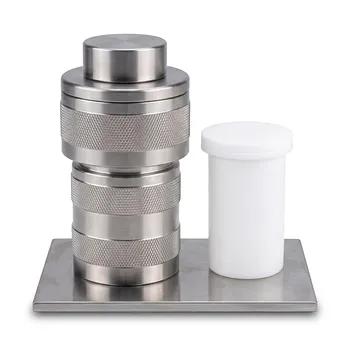
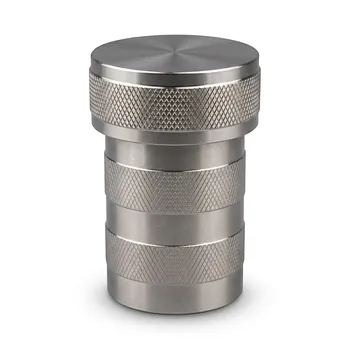
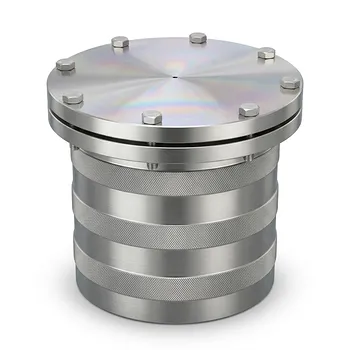
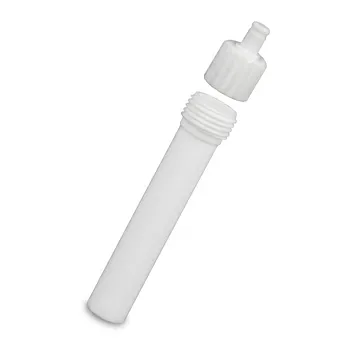
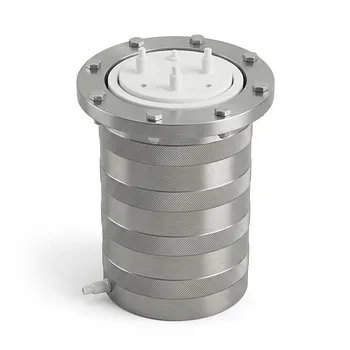
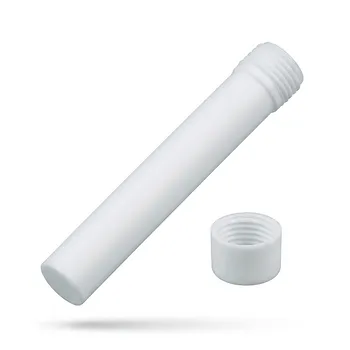
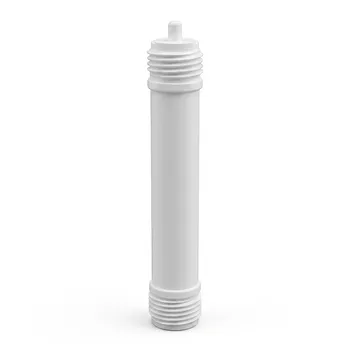
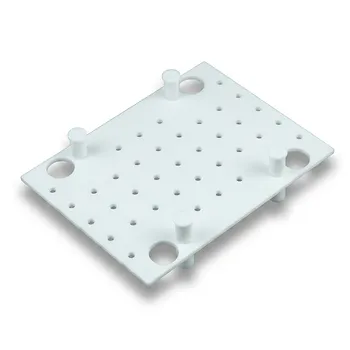
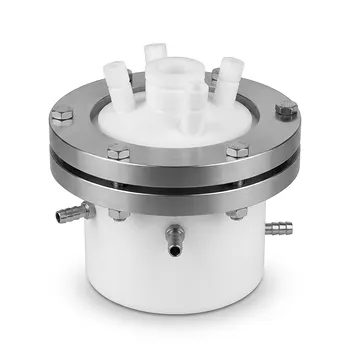
The PTFE liner serves as a chemically inert, high-pressure reaction vessel. It isolates corrosive precursors like tin tetrachloride and ammonium fluoride from the autoclave's steel walls while facilitating the high-pressure, high-temperature environment required for dissolution and recrystallization. In the specific case of nr-FTO synthesis, the liner ensures that nanorods grow with high purity and precise morphology directly onto the substrate without the need for a seed layer.
The PTFE liner acts as the "protected core" of the hydrothermal process, simultaneously preventing metallic contamination and providing the autogenous pressure necessary to drive the oriented growth of tin oxide nanostructures.
Chemical Isolation and Material Purity
Protection Against Acidic and Oxidative Precursors
Hydrothermal synthesis of nr-FTO often involves aggressive chemicals like tin tetrachloride ($SnCl_4$) and ammonium fluoride ($NH_4F$). The PTFE liner is fundamentally chemically inert, meaning it does not react with these precursors even in highly acidic or oxidative conditions.
Prevention of Metallic Contamination
Without the liner, the reaction media would directly corrode the stainless steel walls of the autoclave. This corrosion would leach chromium, nickel, and iron ions into the solution, which would contaminate the FTO nanorods and degrade their electrical and optical properties.
Maintaining a Clean Reaction Environment
By serving as a chemical protection barrier, the liner ensures that the synthesis products remain free from external interference. This high level of purity is critical for achieving the uniform anchoring of nanostructures and maintaining the integrity of the crystal growth system.
Pressure Containment and Growth Kinetics
Facilitating Autogenous Pressure
At the typical synthesis temperature of 150°C to 170°C, the solvent inside the sealed PTFE liner generates significant autogenous pressure. This pressure is essential for shifting the solvent into a subcritical state, which significantly enhances the reactivity of precursor molecules.
Driving the Dissolution-Recrystallization Process
The high-pressure environment created within the liner drives the dissolution-recrystallization mechanism. This process allows the tin precursors to dissolve and then deposit onto the substrate in a controlled manner, forming the desired nanorod structure.
Enabling In-Situ Growth
The stable, pressurized environment allows for the in-situ growth of FTO directly onto a substrate. Because the liner maintains consistent conditions, the FTO can develop into specific nanorod morphologies without the requirement of a pre-deposited seed layer.
Morphology and Structural Precision
Control of Crystal Planes
The PTFE liner provides the stable thermal and pressure conditions necessary for surface energy-driven growth. This allows researchers to precisely control the exposure ratio of specific tin oxide crystal planes, such as the (110) and (001) faces.
Oriented Nanorod Development
By providing a consistent reaction carrier, the liner promotes the oriented, regular growth of vertical arrays. This is fundamental to achieving the structural properties required for applications like solar cells or sensors, where nanorod alignment impacts performance.
Understanding the Trade-offs
Temperature Limitations
While PTFE is highly resilient, it has a functional upper limit, typically around 220°C to 250°C. Exceeding these temperatures can cause the liner to soften, deform, or even release fluorinated vapors, which compromises the experiment and safety.
Thermal Lag and Conductivity
PTFE is an effective thermal insulator, which means there is a delay in heat transfer from the autoclave’s heating mantle to the internal reaction solution. Users must account for this "thermal lag" when timing their reactions to ensure the precursors reach the required activation energy.
Pressure Sensitivity
Because PTFE expands at a different rate than the stainless steel outer shell, improper cooling or heating rates can lead to liner deformation. If the liner loses its seal, the autogenous pressure drops, halting the growth of the nanorods and potentially damaging the autoclave.
How to Apply This to Your Project
Recommendations for Optimal Synthesis
- If your primary focus is Maximum Purity: Always inspect the PTFE liner for staining or "pitting" from previous runs, as trapped contaminants can leach into your nr-FTO sample.
- If your primary focus is Morphology Control: Ensure the autoclave is filled to 60-80% of its capacity to optimize the head-space and maintain the consistent autogenous pressure required for (110) plane growth.
- If your primary focus is Scalability: Account for the thermal insulation of PTFE by using an external thermocouple or allowing extra "soak time" for the internal solution to reach the target 150°C.
The PTFE liner is not merely a container, but a functional component that enables the extreme chemical and physical states necessary to engineer high-performance nanorod Fluorine-doped Tin Oxide.
Summary Table:
| Key Role | Functional Mechanism | Impact on nr-FTO Synthesis |
|---|---|---|
| Chemical Isolation | Inert barrier against $SnCl_4$ and $NH_4F$ | Prevents metallic contamination & ensures purity |
| Pressure Containment | Facilitates autogenous pressure at 150°C-170°C | Drives dissolution-recrystallization kinetics |
| Morphology Control | Provides stable surface energy environment | Enables oriented growth of (110) & (001) planes |
| Thermal Stability | Resists deformation up to 220°C-250°C | Maintains vessel integrity during long reactions |
Maximize Your Lab's Potential with KINTEK High-Performance Fluoropolymers
Elevate your material synthesis with KINTEK, your premier manufacturer of high-purity PTFE and PFA laboratory solutions. From the essential hydrothermal synthesis liners required for precise nr-FTO growth to advanced microwave digestion vessels and microchannel reactors, we provide the chemical resilience your research demands.
Whether you require everyday basics—such as beakers, crucibles, and filtration tools—or complex, custom CNC-machined parts and bespoke reaction apparatus, KINTEK delivers unmatched quality. We support your entire workflow with fluid transfer components (tubing, valves), sample prep tools (pipettes, tweezers), and general consumables (O-rings, seal tapes), all optimized for trace analysis and aggressive chemical environments.
Ready to upgrade your laboratory setup? Contact our expert team today to discuss your custom requirements and high-volume orders.
References
- A. Hamed, Rosnah Mohd Zin. Single-step hydrothermal fabrication of nanorice-shaped fluorine-doped tin oxide for enhanced dye-sensitized solar cells. DOI: 10.58915/ijneam.v18i1.1720
This article is also based on technical information from Kintek Knowledge Base .
Related Products
- PTFE Lined High Pressure Digestion Vessel 50ml High Temperature Hydrothermal Synthesis Tank
- High Temperature Corrosion Resistant Hydrothermal Synthesis Reactor with TFM Inner Liner and Straight Cylinder Design
- Custom TFM Reaction Vessel with Stainless Steel Jacket and PTFE Inner Cup for High Corrosion Resistance
- High Purity PTFE Microwave Digestion Vessel Replacement Liner for Acid Sample Preparation and Trace Analysis
- High Pressure Custom TFM Reactor Stainless Steel Outer Vessel PTFE Inner Cup for Corrosive Synthesis
People Also Ask
- What are the benefits of using a PTFE-lined vessel for carbon-sulfur cathode treatment? Maximize Purity & Performance
- Why are PTFE-lined pressure digestion vessels required for the preparation of Ag/CeO2 catalysts? Purity & Performance
- What is the function of high-pressure PTFE digestion vessels in mineral analysis? Optimize Sample Mineralization
- What safety features are typically incorporated into high-pressure PTFE digestion vessel designs? Ensure Lab Safety
- What is the function of PTFE lined high-pressure vessels in g-C3N4 synthesis? Achieve High-Purity Material Growth