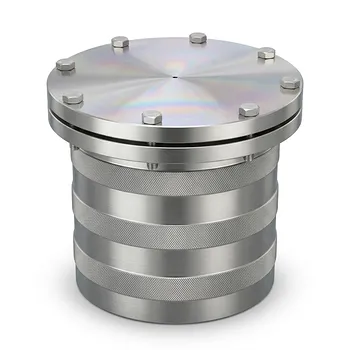
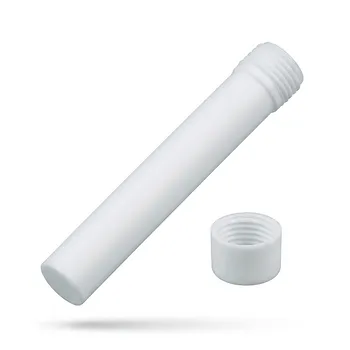
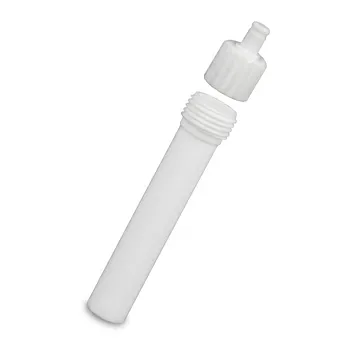
A PTFE-lined stainless steel autoclave is the essential high-pressure reactor required for the hydrothermal synthesis of spinel ferrite nanoparticles. It creates a sealed environment where aqueous precursor solutions are heated above their boiling points, generating the internal pressure necessary for crystallization. The system uses a dual-material approach to provide both the mechanical strength needed to contain extreme pressure and the chemical inertness required to ensure nanoparticle purity.
The autoclave facilitates the transformation of precursors into high-crystallinity spinel ferrites by generating autogenous pressure within a chemically isolated environment. This setup ensures that the reaction proceeds under controlled thermodynamic conditions without introducing metallic impurities from the reactor walls.
The Mechanics of the Hydrothermal Environment
Generating Autogenous Pressure
In a sealed autoclave, heating the liquid phase causes it to expand and vaporize, creating autogenous pressure. This internal pressure significantly increases the solubility of precursor materials, allowing them to react at lower temperatures than traditional solid-state methods.
Facilitating Nucleation and Growth
The high-pressure environment is the physical basis for promoting the nucleation and growth of nanocrystals. This kinetic energy is critical for achieving high-crystallinity, single-phase products like Fe3O4 or Zn-doped ferrites that require precise atomic arrangement.
The Role of the PTFE Liner
Chemical Inertness and Corrosion Resistance
The Polytetrafluoroethylene (PTFE) liner is used because of its exceptional stability against aggressive reagents. It effectively resists corrosion from strong bases (such as sodium hydroxide) and acidic metal chloride precursors that would otherwise erode the metal shell.
Maintaining High-Purity Crystallization
The liner acts as a physical barrier that prevents the precursor solution from directly contacting the stainless steel walls. This isolation is vital to prevent metal ion contamination, ensuring that foreign elements from the steel do not incorporate into the spinel crystal lattice.
Anti-Adhesive Properties
PTFE's naturally low surface energy prevents reactants and newly formed nanoparticles from adhering to the vessel walls. This ensures a higher yield of consistent morphology and makes the recovery of the synthesized powder significantly easier.
The Structural Synergy of the Reactor
The Stainless Steel Shell's Mechanical Strength
While PTFE provides chemical protection, it lacks the structural integrity to withstand high internal pressures. The stainless steel outer shell provides the necessary mechanical support to safely contain the reaction at temperatures often reaching 200 °C to 220 °C.
Achieving Thermal Stability
The combination of materials allows for steady-state heating over long durations. This stability is necessary for the precise formation of one-dimensional nanostructures and complex magnetic cores that require hours or days of constant hydrothermal treatment.
Understanding the Trade-offs
Temperature Limitations
PTFE liners have a strict upper thermal limit, typically around 250 °C, beyond which the material begins to soften or release toxic fumes. For reactions requiring higher temperatures, specialized liners like PPL (Polyphenylene polymers) must be substituted.
Thermal Lag and Heat Transfer
Because PTFE is a thermal insulator, there is a significant thermal lag between the temperature of the oven and the actual temperature of the precursor solution. Researchers must account for this delay to ensure the reaction stays within the intended kinetic window.
How to Apply This to Your Synthesis
Maximizing Results in Hydrothermal Synthesis
To achieve the best results when using a PTFE-lined autoclave for ferrite synthesis, consider your specific experimental goals:
- If your primary focus is phase purity: Ensure the PTFE liner is free of scratches or degradation to prevent any leaching of iron, nickel, or chromium from the stainless steel shell.
- If your primary focus is particle size control: Closely monitor the fill level of the liner (typically 60-80%), as this directly influences the magnitude of the autogenous pressure and the resulting nucleation rate.
- If your primary focus is equipment longevity: Avoid rapid cooling of the autoclave, as the different thermal expansion rates of PTFE and stainless steel can cause the liner to deform or crack over time.
By balancing mechanical pressure containment with chemical isolation, the PTFE-lined autoclave remains the gold standard for producing high-quality magnetic nanoparticles.
Summary Table:
| Component | Primary Function | Key Laboratory Benefit |
|---|---|---|
| PTFE Liner | Chemical Isolation | Prevents metal ion contamination; resists corrosive precursors. |
| Stainless Steel Shell | Structural Support | Safely contains high autogenous pressure at temperatures up to 250°C. |
| Sealed System | Pressure Generation | Increases solubility and promotes nucleation of nanocrystals. |
| Non-stick Surface | Anti-Adhesion | Ensures high yield and easy recovery of synthesized powders. |
Elevate Your Synthesis with Precision Fluoropolymer Engineering
Achieve uncompromising purity in your hydrothermal synthesis with high-performance laboratory solutions from KINTEK. We specialize in the absolute focus of PTFE and PFA materials, providing the chemical inertness and thermal stability your research demands.
From everyday basic labware (beakers, measuring cylinders, crucibles, reagent bottles, and digestion tubes) to specialized high-purity trace analysis instruments, KINTEK covers your entire workflow. Our extensive catalog includes:
- Fluid Transfer: Tubing, fittings, and valves.
- Sample Prep & Filtration: Separatory funnels, filters, pipettes, and tweezers.
- General Consumables: Stirring bars, O-rings, gaskets, and seal tapes.
- Advanced Apparatus: Standard and custom electrochemical cells, battery testing fixtures, microwave digestion vessels, and microchannel reactors.
Whether you require complex non-standard machined parts via our end-to-end custom CNC fabrication or high-volume orders for standard components, KINTEK is equipped to deliver absolutely everything your lab needs.
Ready to optimize your experimental setup? Contact KINTEK today to discuss your custom requirements!
References
- H.L. Andersen, Mogens Christensen. Crystal/magnetic structure and cation inversion in hydrothermally synthesized MnFe<sub>2</sub>O<sub>4</sub>, CoFe<sub>2</sub>O<sub>4</sub>, NiFe<sub>2</sub>O<sub>4</sub>, and ZnFe<sub>2</sub>O<sub>4</sub> nanoparticles: a neutron powder diffraction study. DOI: 10.1039/d4ce01001a
This article is also based on technical information from Kintek Knowledge Base .
Related Products
- Custom TFM Reaction Vessel with Stainless Steel Jacket and PTFE Inner Cup for High Corrosion Resistance
- PTFE Lined High Pressure Digestion Vessel 50ml High Temperature Hydrothermal Synthesis Tank
- High Pressure Custom TFM Reactor Stainless Steel Outer Vessel PTFE Inner Cup for Corrosive Synthesis
- High Purity TFM Microwave Digestion Vessels PTFE Acid Evaporation Liners Domestic GT-400 Equivalent Laboratory Reaction Containers
- High Purity PTFE Microwave Digestion Vessel Replacement Liner for Acid Sample Preparation and Trace Analysis
People Also Ask
- Why are high-performance pressure-resistant reaction vessels required for oxygen-assisted hydrothermal conversion at 150 °C?
- Why are high-quality fluoropolymer-lined reaction vessels required for alk-Ti3C2Tx MXene? Ensure Purity & HF Resistance
- How do magnetic stirring and reaction vessels impact MOF-derived carbon quality? Optimize Your Composite Performance
- Why are PTFE-lined reaction vessels necessary for forced degradation studies? Ensure high-purity results and accuracy.
- Why is a high-purity PTFE lined reaction vessel required for the acidic etching of MXenes? Ensure Material Purity.