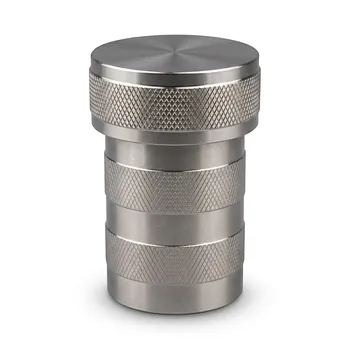
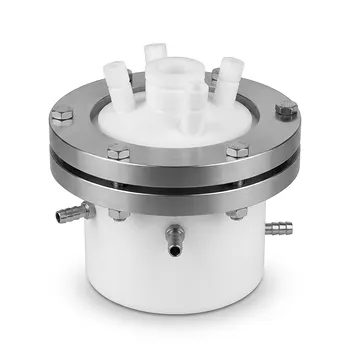
The PTFE-lined hydrothermal synthesis autoclave acts as a specialized micro-reactor that facilitates the transformation of organic precursors into fluorescent nanomaterials. It provides the sealed, high-pressure, and high-temperature environment required for the carbonization and nitrogen-doping of precursors like citric acid, urea, or biomass. By isolating the reaction within a chemically inert liner, it ensures the resulting Nitrogen-doped Carbon Quantum Dots (N-CQDs) achieve high purity and consistent optical performance.
The autoclave is essential for creating a controlled "bottom-up" synthesis environment where organic molecules can polymerize and carbonize into crystalline structures. The PTFE liner serves as a critical barrier, protecting the purity of the N-CQDs from metal contamination while shielding the steel vessel from corrosive reaction chemistry.
Facilitating the Chemical Transformation of Precursors
Driving Carbonization and Nucleation
The primary role of the autoclave is to provide the thermal energy and pressure necessary to break and reform chemical bonds in organic precursors. At temperatures typically ranging from 120°C to 180°C, precursors undergo a sequence of condensation, polymerization, and carbonization. This process leads to the nucleation of the carbon quantum dot core, a transition that cannot occur under standard atmospheric conditions.
Enabling Nitrogen Doping
The sealed environment is crucial for effective nitrogen doping, where nitrogen atoms are integrated into the carbon lattice. By maintaining high internal pressure, the autoclave prevents the loss of volatile nitrogen sources (such as urea or ammonia) during the heating process. This ensures that the resulting N-CQDs have the desired surface functional groups, such as amino and hydroxyl groups, which govern their solubility and fluorescence.
Formation of the Graphitized Core
Under the stable high-pressure conditions of the autoclave, the precursors achieve a degree of graphitization. This internal structural organization is what gives N-CQDs their unique electronic properties. The hydrothermal method allows for this crystalline growth to occur at much lower temperatures than traditional pyrolytic methods.
The Critical Functions of the PTFE Liner
Preventing Metal Ion Contamination
The Polytetrafluoroethylene (PTFE) liner is the primary defense against impurities that could quench fluorescence. Even trace amounts of metal ions from a stainless steel vessel can migrate into the reaction solution, significantly degrading the quantum yield of the dots. The liner ensures that the reaction only involves the intended precursors, maintaining the high-purity standards required for optical applications.
Resistance to Chemical Corrosion
Many N-CQD synthesis protocols involve acidic or basic solutions, such as acetic acid or concentrated nitrogen sources. PTFE is exceptionally chemically inert, meaning it will not react with or be degraded by these harsh precursors. This protects the high-strength stainless steel outer shell from corrosion, extending the life of the equipment and preventing structural failure.
Ensuring a Non-Stick Reaction Environment
PTFE's low surface energy prevents the carbonized nanomaterials from adhering to the walls of the reactor. This "non-stick" property facilitates easier recovery of the synthesized N-CQDs after the reaction is complete. It also simplifies the cleaning process, ensuring that no cross-contamination occurs between different batches of nanomaterials.
Understanding the Trade-offs and Limitations
Temperature Constraints of PTFE
While PTFE is highly inert, it has a definitive thermal ceiling, typically around 200°C to 250°C. Exceeding these temperatures can cause the liner to soften or deform, compromising the pressure seal and potentially releasing toxic vapors. For reactions requiring higher temperatures, more specialized materials like PFA or metallic alloys must be considered.
Pressure Risks and Safety
The stainless steel outer shell provides the necessary pressure-bearing capacity, but it is not indestructible. Because the internal pressure rises exponentially with temperature in a sealed vessel, users must strictly adhere to filling degree limits (usually 60-80% of volume). Overfilling the liner can lead to catastrophic pressure spikes that exceed the safety ratings of the autoclave.
How to Apply This to Your Project
Making the Right Choice for Your Goal
- If your primary focus is High Optical Purity: Ensure your PTFE liner is pristine and free of scratches, as deep grooves can harbor contaminants from previous synthesis runs.
- If your primary focus is Maximum Nitrogen Doping: Use a high-strength stainless steel shell that can safely withstand the increased pressures generated by nitrogen-rich precursors at 180°C.
- If your primary focus is Biomass Conversion: Prioritize liners that are specifically rated for acidic environments, as the breakdown of plant matter often releases corrosive organic acids.
- If your primary focus is Reproducibility: Use an autoclave with a dedicated thermowell or external temperature controller to ensure consistent heating rates across every batch.
The PTFE-lined autoclave remains the gold standard for N-CQD synthesis because it perfectly balances the physical demands of high-pressure carbonization with the chemical necessity of a contaminant-free environment.
Summary Table:
| Feature of Autoclave | Role in N-CQD Production |
|---|---|
| High-Pressure Seal | Prevents loss of volatile nitrogen sources (urea/ammonia) for effective doping. |
| Thermal Control | Drives the condensation, polymerization, and carbonization of organic precursors. |
| PTFE Liner | Eliminates metal ion contamination to maintain high fluorescence quantum yields. |
| Chemical Inertness | Resists corrosive acidic or basic precursors, protecting the stainless steel shell. |
| Non-Stick Surface | Ensures easy recovery of nanomaterials and prevents batch cross-contamination. |
Elevate Your Nanomaterial Synthesis with KINTEK
Achieve uncompromising purity and consistent results in your N-CQD research with KINTEK’s high-performance fluoropolymer solutions. Whether you are performing complex hydrothermal synthesis or routine sample prep, we provide the tools necessary to protect your experiments from contamination.
From everyday basic labware like beakers, crucibles, and reagent bottles to specialized PTFE and PFA hydrothermal synthesis liners, microwave digestion vessels, and custom reaction apparatus, KINTEK manufactures virtually every laboratory supply you need. Our capabilities extend to custom CNC fabrication, allowing us to deliver bespoke non-standard machined parts and high-volume orders tailored to your specific research parameters.
Don't let metal ions or chemical corrosion compromise your quantum yield. Contact KINTEK today to discuss your custom labware needs and leverage our expertise in high-performance materials.
References
- Fan Shen, Xiang Pu. Synthesis and properties of carbon quantum dots as an antimicrobial agent and detection of ciprofloxacin. DOI: 10.1038/s41598-025-14383-4
This article is also based on technical information from Kintek Knowledge Base .
Related Products
- PTFE Lined High Pressure Digestion Vessel 50ml High Temperature Hydrothermal Synthesis Tank
- High Temperature Corrosion Resistant Hydrothermal Synthesis Reactor with TFM Inner Liner and Straight Cylinder Design
- Custom TFM Reaction Vessel with Stainless Steel Jacket and PTFE Inner Cup for High Corrosion Resistance
- High Pressure Custom TFM Reactor Stainless Steel Outer Vessel PTFE Inner Cup for Corrosive Synthesis
- PTFE Acid Steam Cleaning System HF Resistant Trace Analysis Beaker Digestion Tank Customizable
People Also Ask
- What are the benefits of using a PTFE-lined vessel for carbon-sulfur cathode treatment? Maximize Purity & Performance
- Why are PTFE-lined pressure digestion vessels required for the preparation of Ag/CeO2 catalysts? Purity & Performance
- What safety features are typically incorporated into high-pressure PTFE digestion vessel designs? Ensure Lab Safety
- What is the function of PTFE lined high-pressure vessels in g-C3N4 synthesis? Achieve High-Purity Material Growth
- Role of High-Pressure Digestion Tanks in Perovskite Synthesis: Achieve Superior Stability and Latent Heat