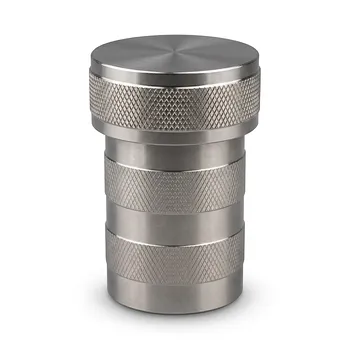
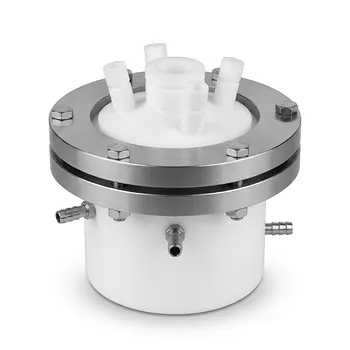
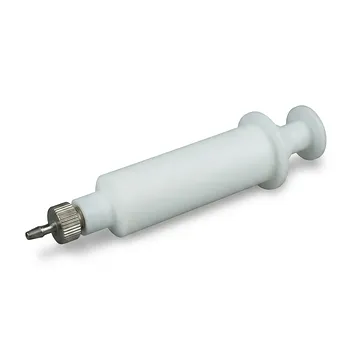
The role of a PTFE-lined hydrothermal synthesis autoclave is to provide a chemically inert, pressurized environment that facilitates the uniform growth of NiCo-LDH precursors. Specifically, the Polytetrafluoroethylene (PTFE) liner protects the reaction from metallic contamination while the sealed vessel allows for subcritical conditions that promote the nucleation of high-quality nanosheets.
A PTFE-lined autoclave acts as both a protective barrier and a specialized pressure vessel. It ensures that NiCo-LDH (Layered Double Hydroxide) crystals develop with high purity and specific morphologies by maintaining stable, high-pressure conditions without reacting with aggressive chemical precursors.
Providing a Controlled Reaction Environment
Facilitating Subcritical Solvent Conditions
The sealed nature of the autoclave allows the solvent to remain in a liquid state even when heated above its atmospheric boiling point. These subcritical conditions significantly increase the solubility and reactivity of the nickel and cobalt precursors. This high-energy environment is essential for reaching the supersaturation levels required for crystal nucleation.
Generating Autogenous Pressure
As the temperature inside the vessel rises, autogenous pressure is generated. This internal pressure promotes the oriented growth of crystals and ensures that the NiCo-LDH nanosheets distribute uniformly across substrates, such as nickel foam. Without this pressure, the resulting material might lack the structural integrity and surface area required for technical applications.
Maintaining Thermal Stability
The PTFE liner is chosen for its ability to withstand constant temperatures, often ranging from 95 °C to 160 °C, for extended periods. This thermal stability allows for long-term reactions that are necessary for the slow, controlled growth of layered structures. Consistent temperature control ensures that the electronic structure and interlayer spacing of the LDH remain uniform.
Maintaining Chemical Purity and Integrity
The Chemical Inertness of PTFE
PTFE is a fluoropolymer known for its exceptional chemical inertness, meaning it does not react with the alkaline or corrosive solutions used in LDH synthesis. By acting as a non-reactive barrier, it ensures that the synthesis environment remains stable throughout the process. This prevents side reactions that could alter the final chemical composition of the NiCo-LDH.
Preventing Metallic Contamination
Standard stainless steel autoclaves can leach metal ions into the reaction solution when exposed to aggressive salts or alkaline conditions. The PTFE liner prevents the solution from contacting the metal walls of the autoclave shell. This isolation is critical for maintaining the high purity of the NiCo-LDH precursors, as even trace metallic impurities can significantly degrade the material's performance.
Ensuring Safety in Corrosive Environments
The hydrothermal synthesis of LDHs often involves aggressive reactants or oxidizing agents that would otherwise corrode the structural steel of the pressure vessel. The liner protects the structural integrity of the autoclave, ensuring the reaction proceeds safely under high pressure. This protection extends the life of the equipment and prevents hazardous vessel failures.
Understanding the Trade-offs
Temperature Limitations of PTFE
While PTFE is highly stable, it has a definite thermal ceiling, typically around 220 °C to 250 °C. Exceeding these temperatures can lead to the deformation of the liner or the release of toxic fluorinated gases. Researchers must strictly adhere to temperature limits to avoid compromising the seal or contaminating the precursor.
Pressure Sensitivity and Sealing
The effectiveness of the PTFE liner depends entirely on its ability to maintain a hermetic seal. If the liner is improperly seated or if the cooling process is too rapid, the seal may fail, leading to a loss of internal pressure. This loss of pressure often results in poor crystallinity or inconsistent morphology in the NiCo-LDH nanosheets.
Applying This to Your Synthesis Goals
How to Apply This to Your Project
To achieve the best results when preparing NiCo-LDH precursors, tailor your autoclave use to your specific structural requirements.
- If your primary focus is high purity: Ensure the PTFE liner is free of scratches or degradation and thoroughly cleaned with acid between uses to prevent cross-contamination.
- If your primary focus is uniform nanosheet morphology: Prioritize the sealing mechanism and a slow cooling rate to maintain stable autogenous pressure throughout the growth phase.
- If your primary focus is structural integrity on substrates: Use the autoclave to maintain a constant temperature (e.g., 95 °C) for a longer duration to allow for the self-assembly of vertically aligned nanosheets.
By leveraging the chemical isolation and pressurized environment of a PTFE-lined autoclave, you can precisely control the growth and purity of NiCo-LDH nanomaterials.
Summary Table:
| Feature | Role in NiCo-LDH Synthesis | Benefit |
|---|---|---|
| Chemical Inertness | Prevents reactions with alkaline precursors | High chemical purity & no metallic leaching |
| Autogenous Pressure | Enables subcritical solvent conditions | Promotes nucleation & oriented crystal growth |
| Thermal Stability | Maintains constant heat (95°C - 160°C) | Ensures uniform nanosheet morphology |
| Hermetic Sealing | Isolates reaction from atmosphere | Consistent structural integrity on substrates |
Elevate Your Material Synthesis with KINTEK’s Precision Fluoropolymer Solutions
To achieve high-purity NiCo-LDH precursors and consistent crystal morphology, the quality of your reaction vessel is critical. KINTEK specializes in high-performance laboratory supplies crafted exclusively from PTFE and PFA, ensuring your synthesis remains free from contamination and corrosion.
Our comprehensive range supports every stage of your workflow:
- Basic Labware: Beakers, crucibles, reagent bottles, and digestion tubes.
- Fluid Transfer & Prep: Tubing, valves, separatory funnels, and filtration tools.
- Advanced Apparatus: Hydrothermal synthesis liners, electrochemical cells, microwave digestion vessels, and microchannel reactors.
Whether you need standard consumables like stirring bars and gaskets or bespoke laboratory setups via our end-to-end custom CNC fabrication, KINTEK delivers the durability and precision your research demands.
Ready to optimize your laboratory setup? Contact KINTEK today to discuss your custom requirements.
References
- Jing Xie, Feng Yu. A facile route of Ti decoration for modulating M–O–Ti (M = Ni, Co) and oxygen vacancies on NiCo-LDH electrocatalysts for efficient oxygen evolution reaction. DOI: 10.1039/d5im00007f
This article is also based on technical information from Kintek Knowledge Base .
Related Products
- PTFE Lined High Pressure Digestion Vessel 50ml High Temperature Hydrothermal Synthesis Tank
- High Temperature Corrosion Resistant Hydrothermal Synthesis Reactor with TFM Inner Liner and Straight Cylinder Design
- Custom TFM Reaction Vessel with Stainless Steel Jacket and PTFE Inner Cup for High Corrosion Resistance
- High Pressure Custom TFM Reactor Stainless Steel Outer Vessel PTFE Inner Cup for Corrosive Synthesis
- PTFE Acid Steam Cleaning System HF Resistant Trace Analysis Beaker Digestion Tank Customizable
People Also Ask
- What are the benefits of using a PTFE-lined vessel for carbon-sulfur cathode treatment? Maximize Purity & Performance
- Why are PTFE-lined pressure digestion vessels required for the preparation of Ag/CeO2 catalysts? Purity & Performance
- What safety features are typically incorporated into high-pressure PTFE digestion vessel designs? Ensure Lab Safety
- What is the function of high-pressure PTFE digestion vessels in mineral analysis? Optimize Sample Mineralization
- What is the function of PTFE lined high-pressure vessels in g-C3N4 synthesis? Achieve High-Purity Material Growth