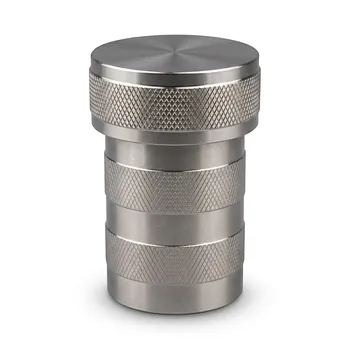
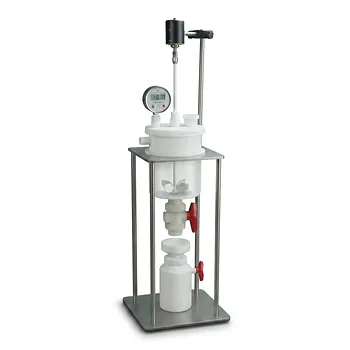
The PTFE-lined hydrothermal autoclave is the indispensable reactor vessel that provides the controlled, high-pressure, and high-temperature environment required for the synthesis of $Ni_3S_2@MoS_2/NF$ precursors. Specifically, it allows solvothermal reactions to occur at 200°C, maintaining solvents in a subcritical liquid state to facilitate the uniform growth of nanorod arrays. The PTFE liner acts as a chemical shield, ensuring that aggressive sulfur precursors do not corrode the autoclave body while preventing metallic impurities from compromising the material's purity.
The core role of the PTFE-lined autoclave is to facilitate high-energy chemical reactions under pressure while maintaining a sterile, non-reactive environment. This balance is critical for the precise self-assembly of $MoS_2$ phases and $Ni_3S_2$ nanostructures onto nickel foam substrates.
The Mechanics of the Hydrothermal Environment
Achieving Subcritical Conditions
The primary function of the autoclave is to create a sealed environment where solvents can be heated above their atmospheric boiling points. This creates subcritical conditions that significantly increase the solubility and reactivity of the $Mo$ and $S$ precursors.
This elevated energy state leads to a supersaturated solution, which is the necessary precursor for the nucleation and slow, controlled growth of high-quality crystals.
Facilitating Phase Transitions
The high-pressure environment within the autoclave is essential for the structural evolution of the catalyst. It provides the energy required to facilitate the partial phase transition of $MoS_2$ from the semiconducting 2H phase to the more metallic and conductive 1T phase.
This transition is vital for enhancing the electrochemical performance of the final $Ni_3S_2@MoS_2/NF$ heterostructure.
Protection and Purity through PTFE
Corrosion Resistance Against Sulfur Precursors
During synthesis, sulfur sources like thioacetamide (TAA) or other precursors can be highly corrosive at 200°C. The Polytetrafluoroethylene (PTFE) liner is characterized by extreme chemical inertness, protecting the stainless steel autoclave body from aggressive chemical attack.
Without this liner, the sulfur precursors would react with the vessel walls, leading to structural failure of the autoclave and experimental inconsistency.
Eliminating Metallic Contamination
Maintaining the high purity of the nanorod arrays is critical for their catalytic efficiency. The PTFE liner acts as a physical barrier that stops metallic impurities from the autoclave’s steel shell from leaching into the reaction mixture.
This ensures that the growth of $Ni_3S_2$ and $MoS_2$ on the nickel foam (NF) substrate remains uncontaminated, preserving the intended electronic properties of the catalyst.
Impact on Morphology and Growth
Controlled Nucleation and Self-Assembly
The stable temperature and pressure maintained by the autoclave allow for the self-assembly of species onto the nickel foam surface. This results in the formation of specific architectures, such as vertically aligned nanosheets or spherical microstructures.
In the case of $Ni_3S_2@MoS_2$, this environment promotes the uniform growth of $MoS_2$ layers over $Ni_3S_2$ nanorods, creating a high-surface-area framework.
Structural Consistency and Stability
Because the autoclave maintains a pressurized confined space, the nucleation of the precursors occurs uniformly across the entire substrate. This consistency is what allows for the production of cactus-like morphologies or complex heterostructures that provide a high density of active sites.
The result is a structurally stable catalyst that is grown in-situ, ensuring strong mechanical adhesion to the nickel mesh.
Understanding the Trade-offs
While PTFE-lined autoclaves are essential, they have specific thermal and operational limitations. PTFE typically has a maximum safe operating temperature of 200°C to 250°C; exceeding this can lead to the liner softening or releasing toxic fumes.
Furthermore, the sealing integrity is dependent on the cooling rate, as rapid cooling can cause the liner to contract faster than the steel shell, potentially leading to leaks or deformation. Users must also account for the filling ratio (typically 60-80%), as overfilling can cause a dangerous pressure spike that exceeds the burst strength of the assembly.
How to Apply This to Your Project
Choosing the Right Parameters for Synthesis
- If your primary focus is Phase Purity: Ensure the PTFE liner is thoroughly cleaned with aqua regia or nitric acid between runs to prevent cross-contamination of metal ions.
- If your primary focus is 1T-Phase MoS2: Maintain the temperature strictly at 200°C and ensure a tight seal to maximize the internal pressure required for the phase transition.
- If your primary focus is Morphology Control: Monitor the filling ratio of your solvent carefully, as the internal pressure directly dictates the nucleation density and the resulting "cactus-like" or nanorod structure.
The PTFE-lined autoclave is more than a container; it is a precision tool that dictates the purity, phase, and physical architecture of the $Ni_3S_2@MoS_2/NF$ catalyst.
Summary Table:
| Feature | Primary Function | Impact on Synthesis |
|---|---|---|
| High-Pressure Seal | Maintains subcritical liquid state | Enables nucleation and 1T-phase MoS2 transition |
| PTFE Liner | Chemical inertness at 200°C | Protects vessel from corrosive sulfur precursors |
| Physical Barrier | Prevents metallic leaching | Ensures high-purity nanorod and nanosheet arrays |
| Thermal Stability | Controlled temperature profile | Facilitates uniform, cactus-like self-assembly |
Elevate Your Materials Synthesis with KINTEK’s High-Performance Fluoropolymers
Precision in hydrothermal synthesis starts with the right equipment. At KINTEK, we specialize in high-quality PTFE and PFA laboratory supplies designed to withstand the aggressive chemical environments and high pressures required for advanced catalyst research.
From essential hydrothermal synthesis liners and microwave digestion vessels to everyday basic labware like beakers, crucibles, and reagent bottles, we provide the tools necessary for uncontaminated results. Our expertise extends to high-purity trace analysis instruments, comprehensive fluid transfer components (tubing, valves), and specialized sample prep tools.
Why choose KINTEK?
- End-to-End Customization: Our custom CNC fabrication delivers everything from complex non-standard machined parts to high-volume orders.
- Advanced Research Tools: We manufacture bespoke electrochemical cells, battery testing fixtures, and microchannel reactors tailored to your specifications.
- Unmatched Purity: Every product—from O-rings and gaskets to stirring bars—is crafted with an absolute focus on high-performance fluoropolymers.
Ready to optimize your synthesis workflow? Contact us today to discuss your custom project or lab supply needs!
References
- Jiabang Liang, Liangjuan Gao. Ni3S2@MoO3@Co3O4@AMO/NF core–shell heterostructure for high performance alkaline overall water splitting. DOI: 10.1186/s11671-025-04283-x
This article is also based on technical information from Kintek Knowledge Base .
Related Products
- PTFE Lined High Pressure Digestion Vessel 50ml High Temperature Hydrothermal Synthesis Tank
- Custom TFM Reaction Vessel with Stainless Steel Jacket and PTFE Inner Cup for High Corrosion Resistance
- High Temperature Corrosion Resistant Hydrothermal Synthesis Reactor with TFM Inner Liner and Straight Cylinder Design
- PTFE Acid Steam Cleaning System HF Resistant Trace Analysis Beaker Digestion Tank Customizable
- High Purity TFM Microwave Digestion Vessels PTFE Acid Evaporation Liners Domestic GT-400 Equivalent Laboratory Reaction Containers
People Also Ask
- What are the benefits of using a PTFE-lined vessel for carbon-sulfur cathode treatment? Maximize Purity & Performance
- Why are PTFE-lined pressure digestion vessels required for the preparation of Ag/CeO2 catalysts? Purity & Performance
- What is the function of high-pressure PTFE digestion vessels in mineral analysis? Optimize Sample Mineralization
- What safety features are typically incorporated into high-pressure PTFE digestion vessel designs? Ensure Lab Safety
- What is the function of PTFE lined high-pressure vessels in g-C3N4 synthesis? Achieve High-Purity Material Growth