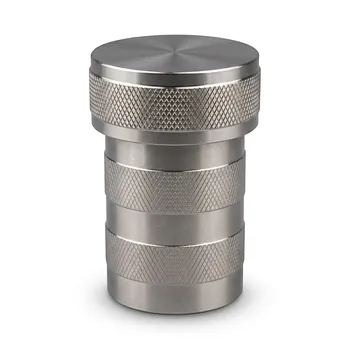
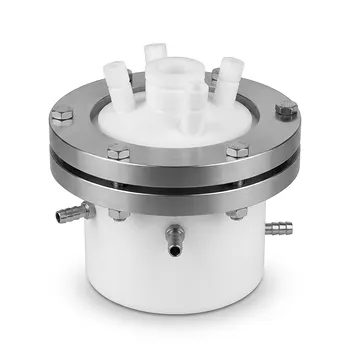
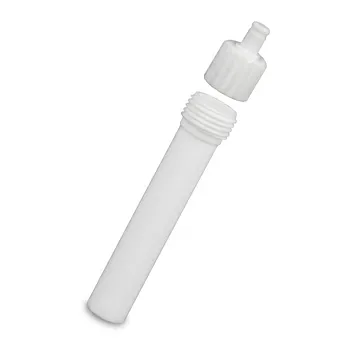
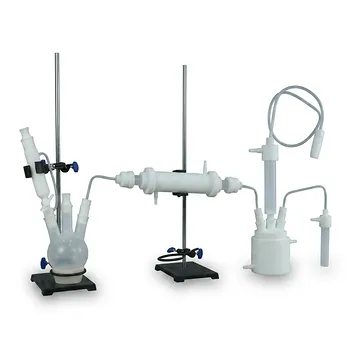
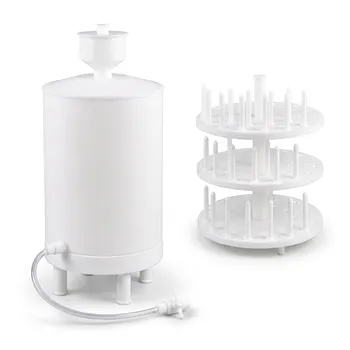
The PTFE-lined hydrothermal synthesis autoclave serves as the primary high-pressure reactor required to transform copper precursors into sophisticated CuO nanostructures. By creating a sealed, subcritical environment, the autoclave allows chemical reactions to occur at temperatures and pressures far exceeding standard atmospheric conditions. This controlled setting is essential for the slow chemical kinetics required to produce high-purity nanocatalysts with specific morphologies, such as nanoflowers or nanosheets.
The PTFE-lined autoclave provides a chemically inert, high-pressure environment that enables the controlled nucleation and growth of CuO nanocrystals while preventing metallic contamination. It acts as both a physical pressure vessel and a chemical shield, ensuring the resulting catalyst maintains the purity and surface area required for high catalytic activity.
Creating the Ideal Environment for Crystal Growth
Achieving Subcritical Fluid Conditions
The autoclave allows the solvent—usually water or an organic mixture—to be heated above its atmospheric boiling point while remaining in a liquid state. These subcritical conditions significantly increase the solubility and reactivity of copper precursors, creating a supersaturated state. This environment is the catalyst for the uniform nucleation and slow growth of high-quality CuO crystals.
Facilitating Controlled Chemical Reactions
In the synthesis of CuO nanoflowers, the autoclave maintains a constant internal temperature (typically around 115°C) to trigger the slow hydrolysis of hexamethylenetetramine (HMT). This process releases ammonia gradually, establishing the specific alkaline environment necessary for the formation of copper oxides. The sealed nature of the vessel prevents the escape of these volatile gases, ensuring a consistent chemical concentration throughout the reaction.
Promoting Anisotropic Growth
The stable pressure and temperature inside the vessel are critical for anisotropic growth, where crystals grow faster in certain directions than others. This allows for the formation of complex structures like nanowires, nanorods, or nanoflowers. Without the sustained pressure of the autoclave, these precursors would often precipitate as amorphous clumps rather than high-surface-area nanocatalysts.
Safeguarding Catalyst Purity and Integrity
The Shielding Role of the PTFE Liner
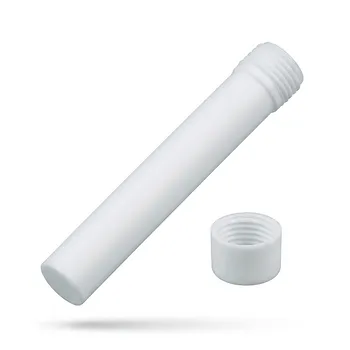
The Polytetrafluoroethylene (PTFE) liner is vital because it protects the reaction from the stainless steel outer shell of the autoclave. PTFE is exceptionally chemically inert, resisting corrosion even when exposed to strong alkaline or oxidative conditions at high temperatures. This ensures that the aggressive chemicals used in synthesis do not degrade the reactor itself.
Eliminating Metallic Contamination
If the reaction solution were to contact the metal walls of the autoclave, metal ions could leach into the catalyst. The PTFE liner prevents this cross-contamination, ensuring that the CuO nanocatalyst remains pure. This is particularly critical for catalytic applications where even trace amounts of foreign metals can significantly alter performance or poison the catalyst.
Non-Stick Properties for Product Recovery
The naturally non-stick surface of PTFE facilitates the easy collection of the synthesized CuO product after the reaction is complete. This minimizes material loss and ensures that the morphology of the delicate nanostructures is not damaged during the harvesting process. It also simplifies the cleaning of the vessel, preventing "carry-over" contamination between different synthesis batches.
Understanding the Trade-offs and Limitations
Temperature Constraints of PTFE
While PTFE is highly resistant to chemicals, it has a functional temperature limit, typically around 220°C to 250°C. Exceeding these temperatures can cause the liner to soften or undergo thermal decomposition, potentially releasing toxic fumes and ruining the sample. For reactions requiring extreme heat, more expensive materials like PFA or specialized metallic alloys may be necessary.
Heat Transfer Delays
PTFE is an excellent thermal insulator, which means there is a time lag between the temperature set on the external oven and the actual temperature reached inside the reaction solution. Researchers must account for this "ramp-up" time to ensure the reaction duration is calculated accurately. Failure to do so can lead to incomplete crystallization or inconsistent particle sizes.
Pressure Safety Risks
Hydrothermal synthesis generates immense internal pressure that increases exponentially with temperature. If the autoclave is overfilled (typically more than 80% capacity), the lack of headspace can lead to a dangerous pressure spike that may compromise the safety seals or the vessel itself.
How to Optimize Your Synthesis Process
Making the Right Choice for Your Goal
- If your primary focus is maximizing catalyst purity: Always inspect the PTFE liner for scratches or discoloration before use to ensure no metal ions can penetrate the barrier.
- If your primary focus is controlling nanostructure morphology: Use a lower filling degree (50-60%) to provide ample headspace, which helps maintain stable pressure and promotes uniform crystal orientation.
- If your primary focus is reproducibility across batches: Standardize the heating ramp rate and the cooling period to account for the thermal insulation properties of the PTFE liner.
By mastering the balance between chemical inertness and pressurized kinetics, the PTFE-lined autoclave transforms simple copper salts into high-performance nanocatalysts.
Summary Table:
| Feature | Function | Benefit for CuO Synthesis |
|---|---|---|
| High-Pressure Vessel | Creates subcritical fluid conditions | Enables uniform nucleation and anisotropic crystal growth |
| PTFE Liner | Provides chemical inertness | Prevents metallic contamination and ensures catalyst purity |
| Sealed Environment | Retains volatile gases (e.g., ammonia) | Maintains precise alkaline levels for morphology control |
| Non-Stick Surface | Facilitates easy product recovery | Minimizes material loss and protects delicate nanostructures |
Elevate Your Synthesis Precision with KINTEK
Maximize your research outcomes with KINTEK’s high-performance fluoropolymer solutions. From everyday basic labware like beakers, crucibles, and digestion tubes to advanced reaction apparatus such as custom PTFE-lined hydrothermal autoclaves, we provide the chemical resistance and purity essential for sophisticated material synthesis.
Our expertise extends to high-purity trace analysis instruments, fluid transfer components (tubing, valves), and bespoke laboratory setups. Backed by end-to-end custom CNC fabrication, KINTEK is equipped to deliver everything from complex non-standard machined parts to high-volume orders—all maintaining an absolute focus on high-performance PTFE and PFA materials.
Ready to optimize your lab's performance? Contact our experts today to discuss your custom requirements and secure the highest quality fluoropolymer supplies!
References
- Jing Zhou, Jiawei Zhang. Efficient CO<sub>2</sub> electroreduction to ethanol enabled by tip-curvature-induced local electric fields. DOI: 10.1039/d4nr01173b
This article is also based on technical information from Kintek Knowledge Base .
Related Products
- PTFE Lined High Pressure Digestion Vessel 50ml High Temperature Hydrothermal Synthesis Tank
- High Temperature Corrosion Resistant Hydrothermal Synthesis Reactor with TFM Inner Liner and Straight Cylinder Design
- Custom TFM Reaction Vessel with Stainless Steel Jacket and PTFE Inner Cup for High Corrosion Resistance
- High Pressure Custom TFM Reactor Stainless Steel Outer Vessel PTFE Inner Cup for Corrosive Synthesis
- High Purity TFM Microwave Digestion Vessels PTFE Acid Evaporation Liners Domestic GT-400 Equivalent Laboratory Reaction Containers
People Also Ask
- What are the benefits of using a PTFE-lined vessel for carbon-sulfur cathode treatment? Maximize Purity & Performance
- Why are PTFE-lined pressure digestion vessels required for the preparation of Ag/CeO2 catalysts? Purity & Performance
- What safety features are typically incorporated into high-pressure PTFE digestion vessel designs? Ensure Lab Safety
- What is the function of PTFE lined high-pressure vessels in g-C3N4 synthesis? Achieve High-Purity Material Growth
- Role of High-Pressure Digestion Tanks in Perovskite Synthesis: Achieve Superior Stability and Latent Heat