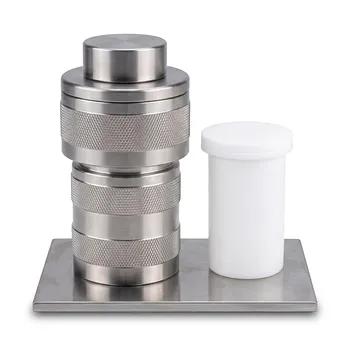
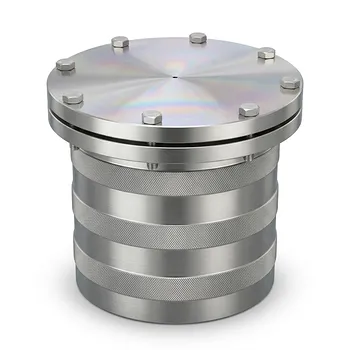
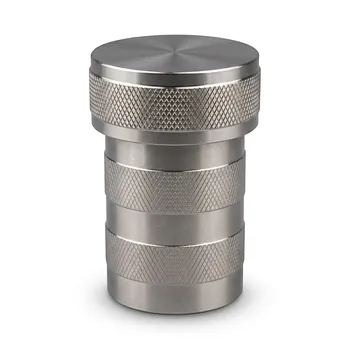
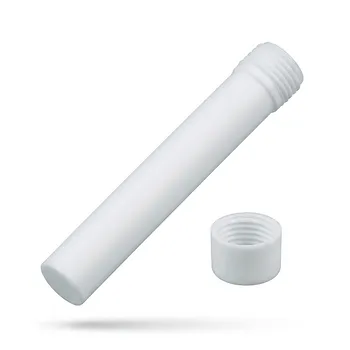
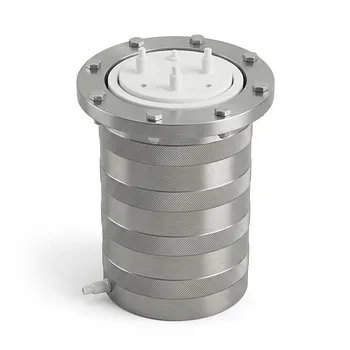
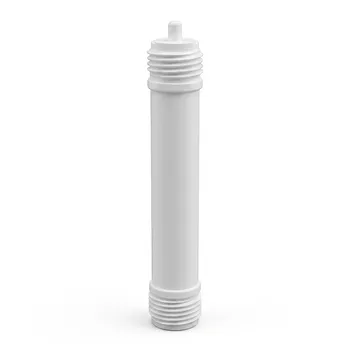
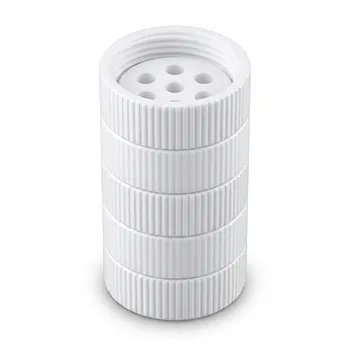
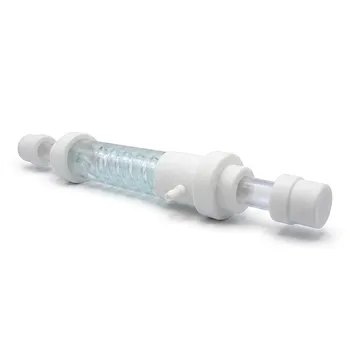
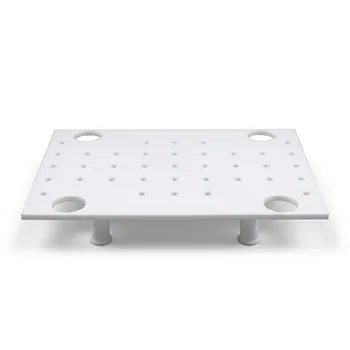
The role of a PTFE-lined hydrothermal autoclave is to provide a sealed, chemically inert environment that facilitates high-pressure Schiff base condensation. Specifically, it allows the reaction to proceed at 150 °C for extended periods (e.g., 72 hours) while protecting the purity of the TAP-POP precursors by preventing corrosive interactions between the reaction solution and the metallic autoclave body.
Core Takeaway: The PTFE liner acts as a critical protective barrier and pressurized reaction chamber, enabling the subcritical conditions necessary for high-purity Porous Organic Polymer (POP) synthesis while ensuring zero metallic contamination.
Facilitating the Solvothermal Environment
Maintaining Subcritical Conditions
The primary function of the autoclave is to create a sealed environment where solvents remain in a liquid state well above their atmospheric boiling points. These subcritical conditions significantly increase the solubility and reactivity of the TAP-POP precursors, driving the reaction toward completion.
Driving Schiff Base Condensation
The high-pressure environment within the autoclave is essential for the Schiff base condensation reaction required for TAP-POP. This pressure facilitates the necessary molecular collisions and chemical bonding that might not occur under standard reflux conditions.
Enabling Long-Duration Thermal Stability
Synthesis of high-quality porous organic polymers often requires prolonged heating, such as 72 hours at 150 °C. The autoclave maintains a constant temperature and pressure throughout this duration, ensuring the uniform growth of the polymer framework.
Protecting Material Purity and Integrity
Chemical Inertness of the PTFE Liner
Polytetrafluoroethylene (PTFE) is chosen for its exceptional chemical stability and resistance to corrosion. It prevents the reaction mixture—which may contain aggressive organic solvents or catalysts—from reacting with the vessel walls.
Prevention of Metal Contamination
Without a PTFE liner, the high-temperature reaction solution could leach metal ions from the stainless steel autoclave body. The liner ensures that no impurities are introduced, which is vital for the high-purity requirements of porous organic polymers (POPs).
Facilitating Clean Product Recovery
The non-stick nature of PTFE allows for the easy recovery of the synthesized TAP-POP precursors after the reaction is complete. This minimizes material loss and simplifies the cleaning process for subsequent synthesis cycles.
Understanding the Trade-offs and Limitations
Temperature Constraints
While PTFE is highly stable, it has a functional upper temperature limit, typically around 220 °C to 250 °C. Exceeding these temperatures can lead to the deformation of the liner (creeping) or the release of toxic fumes.
Pressure Sensitivity
The mechanical strength of the system relies on the outer metallic shell, but the PTFE liner is susceptible to pressure-induced deformation if not seated correctly. Users must ensure the cooling process is controlled to prevent vacuum-related collapses or structural stresses on the liner.
Thermal Lag
PTFE is an excellent insulator, which means there is a slight thermal lag between the oven temperature and the internal reaction temperature. Precise synthesis requires accounting for the time it takes for the internal solution to reach the target 150 °C.
How to Apply This to Your Synthesis Goals
Strategic Implementation
- If your primary focus is High Purity: Always inspect the PTFE liner for any discoloration or pitting before starting the 72-hour cycle to prevent trace metal leaching.
- If your primary focus is Morphological Control: Ensure the autoclave is filled to approximately 60-80% capacity to maintain the optimal vapor-pressure balance for consistent nucleation.
- If your primary focus is System Longevity: Utilize a programmed, slow cooling rate after the reaction to protect the physical integrity of both the PTFE liner and the synthesized crystals.
The PTFE-lined autoclave is the fundamental tool that bridges the gap between liquid-phase chemistry and high-performance solid-state material synthesis.
Summary Table:
| Feature | Functional Role | Benefit to TAP-POP Synthesis |
|---|---|---|
| Chemical Inertness | Prevents corrosive interactions | Ensures zero metallic contamination and high purity |
| Pressure Seal | Maintains subcritical conditions | Drives efficient Schiff base condensation at 150°C |
| Thermal Stability | Sustains constant heat for 72h | Promotes uniform polymer framework growth |
| Non-stick Surface | High-performance material properties | Simplifies product recovery and prevents material loss |
Elevate Your Synthesis with KINTEK’s High-Performance Fluoropolymers
Achieving high-purity TAP-POP precursors requires equipment that can withstand aggressive solvothermal environments without compromise. KINTEK specializes in manufacturing virtually all imaginable laboratory supplies crafted from high-performance PTFE and PFA.
From essential labware—including beakers, reagent bottles, and digestion tubes—to high-purity trace analysis instruments and advanced derivative apparatus like hydrothermal synthesis liners and microwave digestion vessels, we provide the chemical inertness your research demands. Our expertise extends to comprehensive fluid transfer components (tubing, fittings, valves) and custom CNC fabrication for complex, non-standard machined parts and bespoke laboratory setups.
Whether you need high-volume orders or a unique, custom-engineered solution, KINTEK maintains an absolute focus on fluoropolymer excellence to ensure your results are never contaminated.
Ready to optimize your lab’s efficiency? Contact us today to discuss your specific requirements!
References
- Eliot Petitdemange, Jesús Barrio. High‐Yield Synthesis of Fe‐NC Electrocatalysts Using Mg <sup>2+</sup> Templating and Schiff‐Base Porous Organic Polymers. DOI: 10.1002/adfm.202518944
This article is also based on technical information from Kintek Knowledge Base .
Related Products
- PTFE Lined High Pressure Digestion Vessel 50ml High Temperature Hydrothermal Synthesis Tank
- Custom TFM Reaction Vessel with Stainless Steel Jacket and PTFE Inner Cup for High Corrosion Resistance
- High Temperature Corrosion Resistant Hydrothermal Synthesis Reactor with TFM Inner Liner and Straight Cylinder Design
- PTFE Acid Steam Cleaning System HF Resistant Trace Analysis Beaker Digestion Tank Customizable
- High Purity TFM Microwave Digestion Vessels PTFE Acid Evaporation Liners Domestic GT-400 Equivalent Laboratory Reaction Containers
People Also Ask
- What are the benefits of using a PTFE-lined vessel for carbon-sulfur cathode treatment? Maximize Purity & Performance
- Why are PTFE-lined pressure digestion vessels required for the preparation of Ag/CeO2 catalysts? Purity & Performance
- What safety features are typically incorporated into high-pressure PTFE digestion vessel designs? Ensure Lab Safety
- What is the function of PTFE lined high-pressure vessels in g-C3N4 synthesis? Achieve High-Purity Material Growth
- Role of High-Pressure Digestion Tanks in Perovskite Synthesis: Achieve Superior Stability and Latent Heat