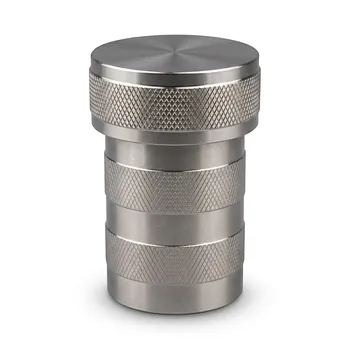
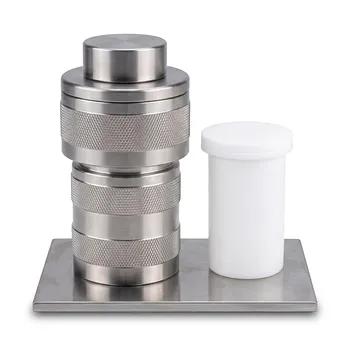
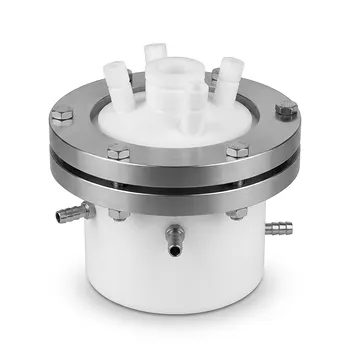
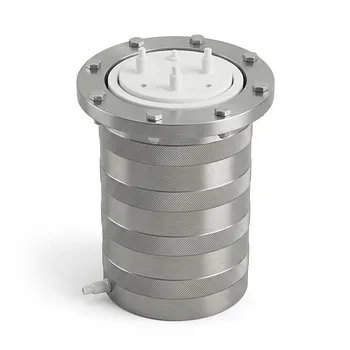
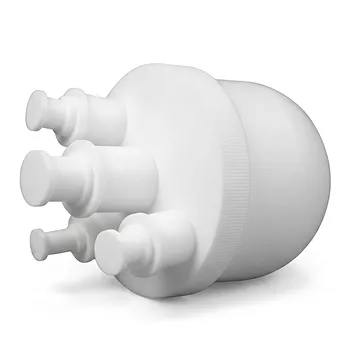
The hydrothermal synthesis reactor is the fundamental tool that enables the solvothermal reaction required for NH2-UiO-66 fabrication. It provides a sealed, high-temperature environment—typically maintained at 120°C—where zirconium ions and 2-aminoterephthalic acid ligands interact under autogenous pressure. This controlled setting is essential for transforming dissolved precursors into solid, highly crystalline, and porous metal-organic framework (MOF) structures.
The reactor acts as a pressurized environment that drives the coordination of metal nodes and organic linkers by maintaining constant heat and pressure. Without this high-pressure containment, the precise nucleation and growth required for the signature crystallinity and uniform porosity of NH2-UiO-66 would be impossible to achieve.
Creating the Necessary Reaction Environment
The Role of Autogenous Pressure
When the reactor is sealed and heated above the boiling point of the solvent (such as DMF), it generates autogenous pressure. This internal pressure environment is a prerequisite for promoting the chemical interaction between zirconium ions (Zr4+) and the amino-terephthalic acid ligands.
Maintaining Thermal Stability
The heavy-duty construction of the reactor ensures that the internal temperature remains constant at 120°C. Consistent heating is vital for achieving microscopic consistency in the MOF particles and avoiding irregular crystal formations.
Facilitating Solventothermal Reactions
Because NH2-UiO-66 synthesis often uses organic solvents rather than water, the reactor functions as a solvothermal vessel. The high-heat environment lowers solvent viscosity, which improves the diffusion of precursors and facilitates the coordination reaction.
Driving Crystal Nucleation and Growth
Promoting High Crystallinity
The reactor environment allows for the full dissolution and subsequent recrystallization of solutes. This process ensures the formation of a highly crystalline lattice, which is the defining characteristic of the UiO-66 family of materials.
Developing Microporous Structures
By maintaining a stable environment over several hours or days, the reactor allows for controlled nucleation. This results in a uniform microporous structure that provides the high surface area necessary for applications like gas storage or catalysis.
Foundation for Defect Engineering
A high-quality reactor setup produces a stable "parent" framework of NH2-UiO-66. This serves as the essential foundation for subsequent defect engineering modifications, where researchers intentionally introduce vacancies to enhance reactivity.
Ensuring Material Purity and Safety
The Critical Role of the PTFE Liner
Most reactors utilize a polytetrafluoroethylene (PTFE) liner to act as a physical and chemical barrier. This inert interface prevents corrosive reaction precursors from attacking the stainless-steel vessel and ensures the MOF remains uncontaminated by metal impurities.
Preventing Stress-Corrosion Cracking
The liner protects the outer structural shell of the reactor from oxidation and stress-corrosion cracking. This is particularly important when dealing with zirconium tetrachloride, which can be highly reactive at elevated temperatures.
Isolation from External Contaminants
The sealed nature of the reactor protects the sensitive synthesis process from atmospheric moisture or oxygen. This isolation is critical for maintaining the chemical integrity of the amino-functionalized groups within the framework.
Understanding the Trade-offs
Scalability vs. Uniformity
While hydrothermal reactors are excellent for precision at the laboratory scale, they are batch vessels with limited volume. Increasing the size of the reactor can lead to thermal gradients, where the center of the vessel is cooler than the walls, potentially resulting in non-uniform crystal sizes.
Safety Risks of Overfilling
A common pitfall is overfilling the reactor liner beyond its recommended capacity (usually 60-80%). Overfilling can lead to excessive pressure buildup that exceeds the safety limits of the stainless-steel shell, creating a significant explosion hazard.
Cooling Rate Sensitivities
The reactor’s high thermal mass means it cools down slowly. If the cooling process is not controlled, it can lead to unwanted secondary crystallization or changes in the surface morphology of the NH2-UiO-66 particles.
How to Apply This to Your Project
Recommendations for Synthesis Goals
- If your primary focus is maximizing crystallinity: Ensure the reactor is kept in a high-precision oven to maintain a rock-steady 120°C throughout the entire dwell time.
- If your primary focus is preventing contamination: Always inspect the PTFE liner for staining or pitting before use, as trapped residues from previous experiments can act as "seeds" that ruin your MOF purity.
- If your primary focus is structural defect control: Experiment with the cooling rate of the reactor after the heating cycle, as rapid vs. slow cooling can impact the density of defects in the MOF lattice.
By providing a stable, high-pressure, and inert environment, the hydrothermal reactor transforms simple chemical precursors into the sophisticated, porous architecture of NH2-UiO-66.
Summary Table:
| Feature | Function in NH2-UiO-66 Synthesis | Key Benefit |
|---|---|---|
| Autogenous Pressure | Drives Zr4+ and ligand interaction | Ensures uniform crystal lattice |
| Thermal Stability | Maintains constant 120°C environment | Prevents irregular crystal growth |
| PTFE Liner | Chemical barrier against precursors | Ensures high material purity |
| Sealed Vessel | Isolates reaction from atmosphere | Protects sensitive amino groups |
Elevate Your MOF Synthesis with KINTEK’s High-Performance Labware
Precision in NH2-UiO-66 fabrication starts with the quality of your equipment. KINTEK specializes in high-performance fluoropolymer materials, offering an unparalleled range of products from everyday basic labware (beakers, measuring cylinders, crucibles, reagent bottles) to advanced hydrothermal synthesis liners and custom-machined reactor components.
Our end-to-end custom CNC fabrication allows us to deliver everything from high-volume standard consumables like stirring bars and O-rings to complex, non-standard bespoke laboratory setups. Whether you need high-purity trace analysis instruments, fluid transfer components (tubing, valves), or specialized sample prep tools (filters, pipettes), our absolute focus on PTFE and PFA ensures zero contamination and maximum chemical resistance.
Ready to optimize your laboratory efficiency? Contact us today to discover how KINTEK’s precision-engineered solutions can support your next breakthrough in material science.
References
- Seungju Kim, Sandra E. Kentish. Electrospun Membranes of Hydrophobic Polyimide and <scp>NH<sub>2</sub></scp>‐<scp>UiO</scp>‐66 Nanocomposite for Desalination. DOI: 10.1002/eem2.12841
This article is also based on technical information from Kintek Knowledge Base .
Related Products
- High Temperature Corrosion Resistant Hydrothermal Synthesis Reactor with TFM Inner Liner and Straight Cylinder Design
- PTFE Lined High Pressure Digestion Vessel 50ml High Temperature Hydrothermal Synthesis Tank
- Custom PTFE Reaction System with Hose Barb Fittings Corrosion Resistant High Sealing 2L 4L Lab Reactor with Separatory Funnel
- High Pressure Custom TFM Reactor Stainless Steel Outer Vessel PTFE Inner Cup for Corrosive Synthesis
- High Purity PFA Reaction Vessel for Biopharmaceutical Synthesis and Corrosive Chemical Fluid Handling with Customizable Tube Fittings
People Also Ask
- What is the role of a corrosion-resistant reactor in the synthesis of lignin-based carbon dots? Ensure Maximum Purity
- What are the technical advantages of using hydrothermal synthesis reactors for advanced electronic & optical nanomaterials?
- How does a hydrothermal synthesis reactor facilitate the production of crystalline materials with tailored morphologies? Precision Crystal Growth
- Why is the sealing reliability of a hydrothermal synthesis reactor critical for 24-hour cycles? Ensure Nano-Precision
- What role do hydrothermal synthesis reactors play in CQD preparation? Achieve High-Purity Nanomaterial Synthesis