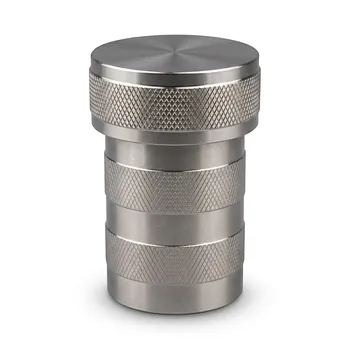
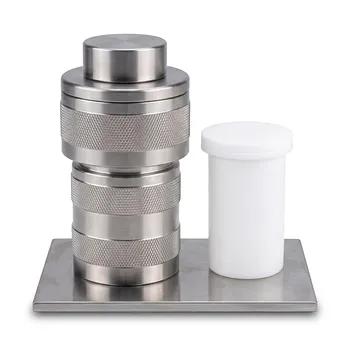
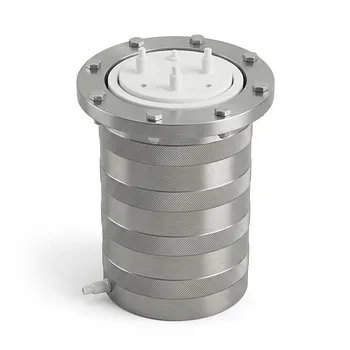
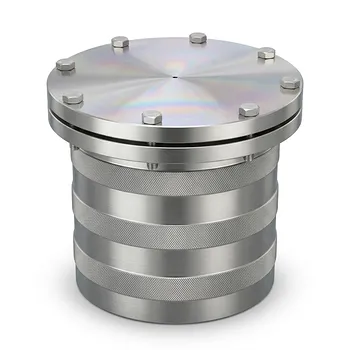
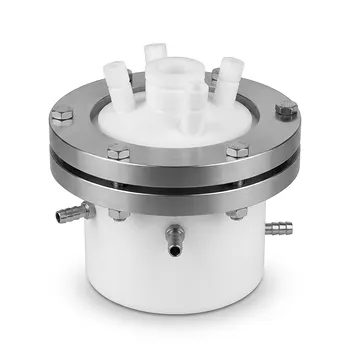
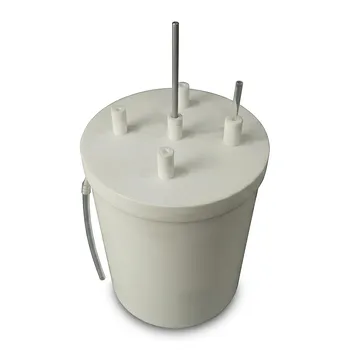
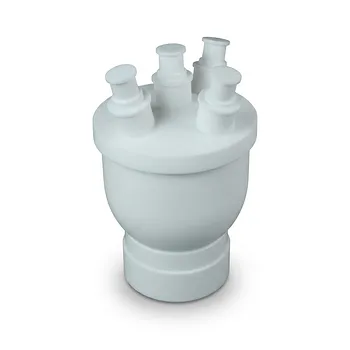
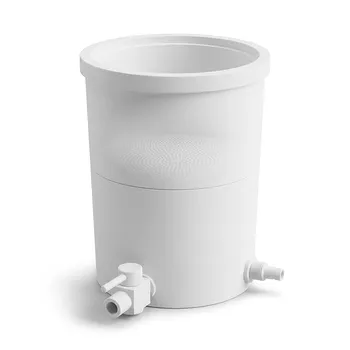
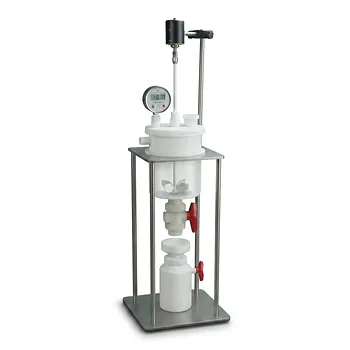
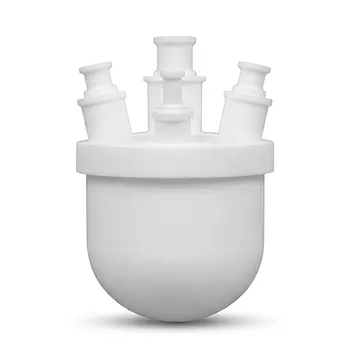
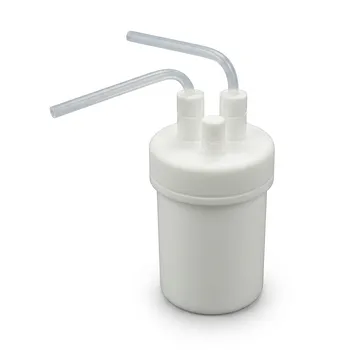
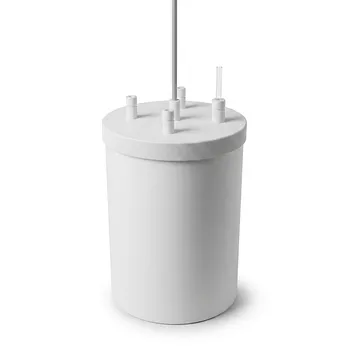
The hydrothermal synthesis reactor with a PTFE liner is the critical vessel that enables the chemical transformation of precursors into high-purity nanocomposites. In the synthesis of SnO2@g-C3N4, the reactor provides a sealed, high-pressure, and high-temperature environment necessary for the complete hydrolysis of tin tetrachloride (SnCl4) and its subsequent crystallization into a tetragona rutile-structured tin dioxide (SnO2). The PTFE liner specifically acts as a chemically inert barrier, preventing the corrosive reaction mixture from leaching metal impurities from the stainless steel autoclave.
Core Takeaway: The PTFE-lined reactor serves two vital functions: it creates the extreme physical conditions required to force the crystallization of SnO2 onto the g-C3N4 framework and ensures the resulting nanocomposite remains free of metallic contamination through its superior chemical resistance.
Facilitating the Hydrothermal Reaction Environment
Driving the Hydrolysis of SnCl4
The primary role of the reactor is to maintain a sealed environment where temperatures can exceed the boiling point of the solvent. This high-energy state is essential to drive the hydrolysis of tin tetrachloride, ensuring the precursor fully reacts to form the desired oxide.
Promoting Controlled Crystallization
Under high-pressure conditions, the solubility of the precursors changes, allowing for the controlled growth of nanocrystals. This environment specifically promotes the formation of the tetragonal rutile structure of SnO2, which is critical for the material's performance in electronic and catalytic applications.
Enhancing Phase Compatibility
The constant-pressure environment within the reactor promotes effective molecular interaction. This ensures that the SnO2 nanoparticles are successfully deposited and integrated onto the graphitic carbon nitride (g-C3N4) sheets, creating a stable nanocomposite.
The Critical Role of the PTFE Liner
Preventing Metallic Contamination
The PTFE (polytetrafluoroethylene) liner is chosen for its exceptional chemical inertness. It prevents the reaction solution—which is often acidic or basic—from coming into contact with the stainless steel outer shell, which would otherwise introduce unwanted metal ions into the product.
Resilience to Corrosive Precursors
Synthesis involving tin salts like SnCl4 can create corrosive conditions that would damage standard metal vessels. The PTFE liner resists erosion from strong acids and alkalis, protecting the structural integrity of the external autoclave while maintaining a high-purity reaction zone.
Thermal Stability and Material Collection
PTFE can typically withstand temperatures up to 220°C, covering the standard range for most hydrothermal syntheses. Additionally, its non-stick properties make it easier for researchers to collect the final nanocomposite powder without losing material to the vessel walls.
Understanding the Trade-offs and Limitations
Temperature Constraints
While PTFE is highly resistant to chemicals, it has a rigid thermal ceiling, usually around 220°C to 250°C. Exceeding these temperatures can cause the liner to deform (creep) or release toxic fumes, limiting the reactor's use for ultra-high-temperature synthesis.
Pressure Sensitivity and Safety
Hydrothermal reactions generate significant internal pressure, which requires a precise balance between the filling degree of the liner and the temperature. Overfilling the liner can lead to mechanical failure or "leaking" of the solution between the liner and the stainless steel shell.
Heat Transfer Delays
PTFE is an insulator, meaning it does not conduct heat as efficiently as the outer metal shell. This can lead to a lag between the oven temperature and the actual internal reaction temperature, requiring careful calibration of heating times.
How to Apply This to Your Synthesis Project
When preparing SnO2@g-C3N4 or similar nanocomposites, your choice of equipment parameters should align with your specific material requirements.
- If your primary focus is maximum purity: Always use a high-purity PTFE or PFA liner and ensure it is thoroughly cleaned with acid between runs to eliminate residual metal ions.
- If your primary focus is specific crystal morphology: Focus on the "filling degree" of the reactor (usually 60-80%) to control the internal pressure, which directly influences the growth rate of the SnO2 rutile structure.
- If your primary focus is high-temperature synthesis (>220°C): Consider switching from a PTFE liner to a PPL (polyphenylene polymers) liner, which can withstand temperatures up to 280°C while maintaining similar chemical inertness.
The PTFE-lined hydrothermal reactor is the fundamental tool that bridges the gap between liquid precursors and high-performance, crystalline nanocomposites.
Summary Table:
| Feature | Role in SnO2@g-C3N4 Synthesis | Key Benefit |
|---|---|---|
| High-Pressure Seal | Drives hydrolysis of tin tetrachloride (SnCl4) | Complete chemical transformation |
| Thermal Regulation | Promotes controlled crystallization of SnO2 | Consistent tetragonal rutile structure |
| PTFE Inertness | Acts as a barrier against corrosive reaction mixtures | Prevents metallic impurity leaching |
| Non-stick Surface | Facilitates easy powder collection from walls | Maximizes final product yield |
Elevate Your Nanomaterial Synthesis with KINTEK
Precision in hydrothermal synthesis begins with the quality of your reaction vessels. KINTEK specializes in high-performance fluoropolymer solutions, providing researchers with the ultra-pure environment required for advanced materials like SnO2@g-C3N4.
From everyday basic labware (beakers, crucibles, reagent bottles) and high-purity trace analysis instruments to complex hydrothermal synthesis liners, microwave digestion vessels, and custom electrochemical cells, we manufacture virtually all imaginable laboratory supplies from PTFE and PFA.
Why choose KINTEK?
- Unmatched Material Purity: We focus exclusively on high-performance fluoropolymers to eliminate contamination.
- Bespoke Engineering: Our end-to-end custom CNC fabrication allows us to deliver everything from complex non-standard machined parts to high-volume orders tailored to your specific research needs.
- Comprehensive Range: We provide everything from fluid transfer components (tubing, fittings, valves) to sample prep tools (filters, pipettes, tweezers).
Ready to optimize your lab's performance? Contact us today to discuss your custom project or volume requirements and discover how KINTEK’s fluoropolymer expertise can advance your next discovery!
References
- Vaibhav Salve, Paresh More. Enhanced photocatalytic activity of SnO <sub>2</sub> @g-C <sub>3</sub> N <sub>4</sub> heterojunctions for methylene blue and bisphenol-A degradation: effect of interface structure and porous nature. DOI: 10.1039/d5ra01762a
This article is also based on technical information from Kintek Knowledge Base .
Related Products
- High Temperature Corrosion Resistant Hydrothermal Synthesis Reactor with TFM Inner Liner and Straight Cylinder Design
- PTFE Lined High Pressure Digestion Vessel 50ml High Temperature Hydrothermal Synthesis Tank
- High Pressure Custom TFM Reactor Stainless Steel Outer Vessel PTFE Inner Cup for Corrosive Synthesis
- Custom TFM Reaction Vessel with Stainless Steel Jacket and PTFE Inner Cup for High Corrosion Resistance
- Custom PTFE Reaction System with Hose Barb Fittings Corrosion Resistant High Sealing 2L 4L Lab Reactor with Separatory Funnel
People Also Ask
- What is the role of a corrosion-resistant reactor in the synthesis of lignin-based carbon dots? Ensure Maximum Purity
- What are the technical advantages of using hydrothermal synthesis reactors for advanced electronic & optical nanomaterials?
- How does a hydrothermal synthesis reactor facilitate the production of crystalline materials with tailored morphologies? Precision Crystal Growth
- Why is the sealing reliability of a hydrothermal synthesis reactor critical for 24-hour cycles? Ensure Nano-Precision
- What role do hydrothermal synthesis reactors play in CQD preparation? Achieve High-Purity Nanomaterial Synthesis