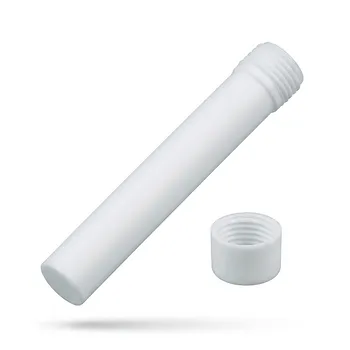
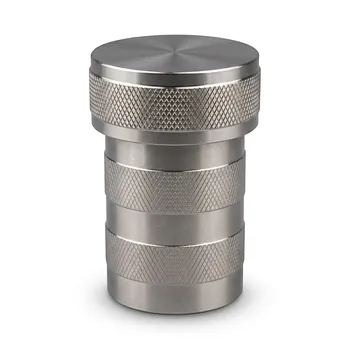
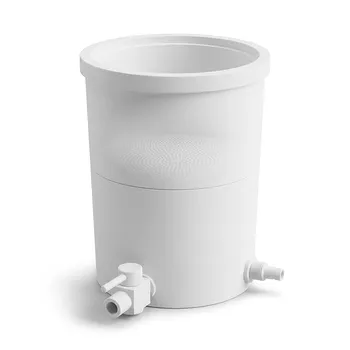
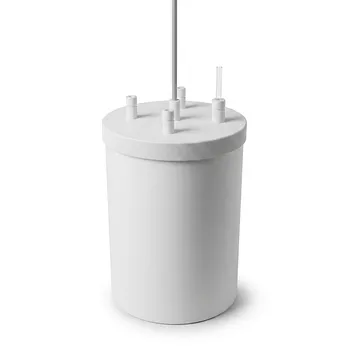
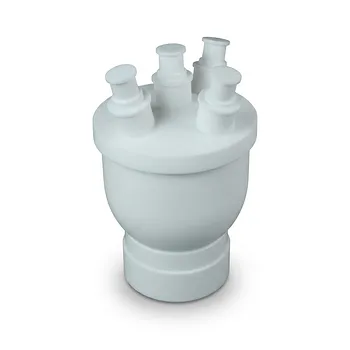
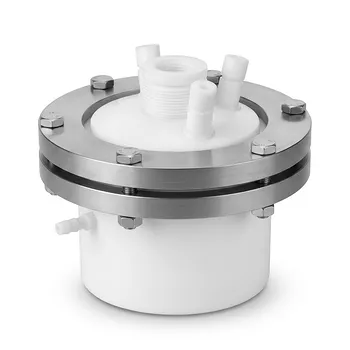
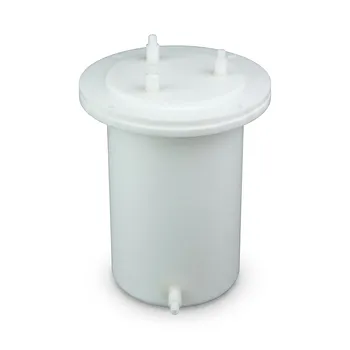
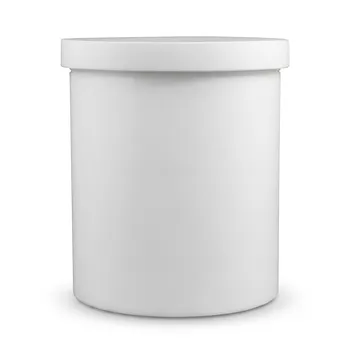
The primary role of a PTFE liner in hydrothermal synthesis is to provide a chemically inert, corrosion-resistant barrier that isolates sensitive reaction precursors from the metal walls of the reactor. In the synthesis of materials like cerium stannate, the liner ensures the high purity of the resulting crystals by preventing the introduction of metal impurities and resisting degradation from strong alkaline solutions at temperatures up to 180–220 °C.
Core Takeaway: The PTFE liner acts as the "inner sanctum" of a high-pressure autoclave, simultaneously protecting the structural integrity of the stainless steel vessel from corrosive media and safeguarding the chemical purity of the synthesized nanomaterials.
Ensuring Material Purity and Integrity
Prevention of Metal Ion Contamination
During the synthesis of cerium stannate, maintaining the elemental ratio is critical for the material’s functional properties. A PTFE liner effectively blocks the leaching of chromium, nickel, or iron from the stainless steel reactor body into the sample. This isolation ensures that the final nanoclusters or powders are free from metal impurity interference.
Resistance to Corrosive Precursors
Hydrothermal reactions often involve aggressive chemical environments, including strong acids or alkaline solutions with pH levels of 8–9. Polytetrafluoroethylene (PTFE) is chosen for its exceptional chemical inertness, which allows it to withstand these precursors without degrading. This resistance is vital for maintaining a stable environment where nucleation and crystal growth can occur consistently.
Thermal and Pressure Stability
While the outer metal shell provides the mechanical strength to withstand high pressures, the PTFE liner maintains its physical stability at temperatures typically reaching 180 °C to 220 °C. This allows the reaction to proceed under solvothermal conditions that would otherwise be impossible in an open or unlined vessel. The liner’s ability to remain stable under these stressors ensures the synthesis process remains controlled and repeatable.
Optimizing Post-Synthesis Recovery
Excellent Non-Stick Properties
The "non-stick" nature of PTFE is a significant advantage when working with micro- and nano-powders. It prevents the synthesized cerium stannate from adhering to the container walls, which maximizes product yield. This characteristic is particularly important when synthesizing high-value functional materials where every milligram counts.
Ease of Cleaning and Reuse
Because precursors and products do not bond to the PTFE surface, the cleaning process between experiments is greatly simplified. This reduces the risk of cross-contamination between different synthesis batches. A clean, smooth liner surface is essential for achieving the uniform nucleation required for high-quality crystal growth.
Understanding the Trade-offs and Limitations
Temperature Ceiling Constraints
The most significant limitation of PTFE is its maximum operating temperature, which generally should not exceed 220 °C. Beyond this point, the material can begin to soften or release toxic vapors, potentially leading to a seal failure or "creeping." For synthesis requiring higher temperatures, researchers must pivot to more expensive materials like PPL (Para-polyphenylene).
Differential Thermal Expansion
PTFE has a much higher coefficient of thermal expansion than the stainless steel that surrounds it. If the reactor is heated or cooled too rapidly, the liner can deform or lose its seal, leading to leaks that may corrode the outer shell. Controlled heating and cooling rates are mandatory to preserve the liner’s lifespan.
Structural Sensitivity to Mechanical Damage
While chemically robust, PTFE is physically soft and easily scratched by metal spatulas or abrasive cleaning agents. Surface scratches can become traps for contaminants, making it harder to ensure 100% purity in subsequent reactions. Users must employ plastic or wood tools to maintain the integrity of the inner surface.
How to Apply This to Your Project
When selecting or maintaining a liner for your hydrothermal reactor, consider your specific material goals and chemical environment.
- If your primary focus is Maximum Purity: Ensure you use high-purity, virgin PTFE liners and avoid any that show signs of discoloration or internal cracking.
- If your primary focus is Alkaline Synthesis (pH 8-10): Standard PTFE is ideal as it is nearly immune to caustic embrittlement that would destroy metal vessels.
- If your primary focus is High-Temperature Reactions (>220 °C): Transition from a PTFE liner to a PPL liner, which offers higher thermal stability while maintaining similar chemical resistance.
The PTFE liner is the silent guardian of the hydrothermal process, turning a simple pressure vessel into a precision instrument for material science.
Summary Table:
| Feature | Benefit in Hydrothermal Synthesis | Operating Constraint |
|---|---|---|
| Chemical Inertness | Prevents metal ion leaching (Cr, Ni, Fe) into samples. | Best for pH 1-14; avoid alkali metals. |
| Non-Stick Surface | Maximizes product yield of nanoclusters/powders. | Requires non-metal tools to prevent scratches. |
| Thermal Stability | Maintains integrity under high pressure (180–220°C). | Maximum temperature ceiling is 220°C. |
| Corrosion Resistance | Protects stainless steel vessel from acidic/alkaline media. | Subject to differential thermal expansion. |
Elevate Your Synthesis Precision with KINTEK Fluoropolymer Solutions
Achieving high-purity materials like cerium stannate requires labware that never compromises. KINTEK specializes in high-performance PTFE and PFA manufacturing, offering everything from everyday basic labware (beakers, crucibles, and reagent bottles) to advanced hydrothermal synthesis liners and microwave digestion vessels.
Our end-to-end custom CNC fabrication ensures that whether you need standard high-purity trace analysis instruments or complex, bespoke reaction apparatus and fluid transfer components (tubing, valves, and fittings), we deliver with absolute precision. Don't let metal contamination or vessel corrosion stall your research.
Ready to optimize your hydrothermal setup? Contact us today to discuss your custom requirements and discover how our specialized fluoropolymer expertise can safeguard your material integrity.
References
- A. I. Aparnev, A.A. Shishin. Ce <sub>2</sub> Sn <sub>2</sub> O <sub>7</sub> /CNFs composite as a material for gas sensors and supercapacitors. DOI: 10.15826/chimtech.9052
This article is also based on technical information from Kintek Knowledge Base .
Related Products
- PTFE Lined High Pressure Digestion Vessel 50ml High Temperature Hydrothermal Synthesis Tank
- Custom TFM Reaction Vessel with Stainless Steel Jacket and PTFE Inner Cup for High Corrosion Resistance
- High Pressure Custom TFM Reactor Stainless Steel Outer Vessel PTFE Inner Cup for Corrosive Synthesis
- High Purity TFM Microwave Digestion Vessels PTFE Acid Evaporation Liners Domestic GT-400 Equivalent Laboratory Reaction Containers
- High Temperature Corrosion Resistant Hydrothermal Synthesis Reactor with TFM Inner Liner and Straight Cylinder Design
People Also Ask
- What are the benefits of using a PTFE-lined vessel for carbon-sulfur cathode treatment? Maximize Purity & Performance
- Why are PTFE-lined pressure digestion vessels required for the preparation of Ag/CeO2 catalysts? Purity & Performance
- What safety features are typically incorporated into high-pressure PTFE digestion vessel designs? Ensure Lab Safety
- What is the function of high-pressure PTFE digestion vessels in mineral analysis? Optimize Sample Mineralization
- What is the function of PTFE lined high-pressure vessels in g-C3N4 synthesis? Achieve High-Purity Material Growth