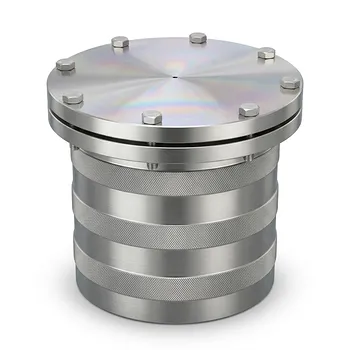
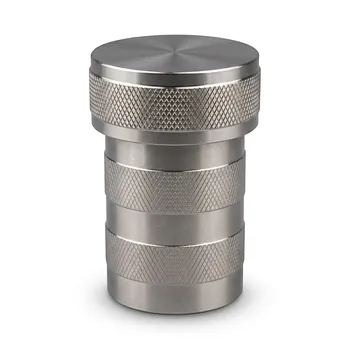
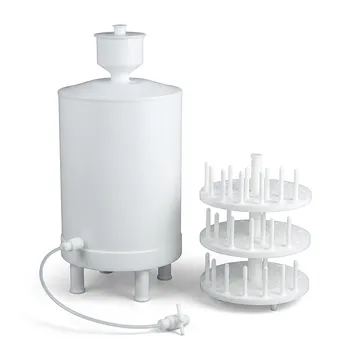
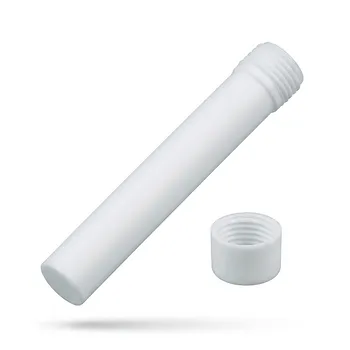
The PTFE-lined hydrothermal autoclave serves as a chemically shielded, high-pressure reaction vessel essential for the clean synthesis of N,W-Ni3S2 catalysts. It provides a stable environment where thioacetamide (TAA) and metal precursors can react at temperatures such as 130°C without corroding the autoclave’s stainless steel body. This setup ensures that the resulting catalyst grows in-situ on nickel mesh substrates with high purity, accurate stoichiometry, and structural integrity.
The primary function of the PTFE lining is to provide absolute chemical inertness and corrosion resistance within a sealed, high-pressure environment. This prevents the leaching of metallic impurities into the reaction while facilitating the subcritical conditions necessary for controlled crystal growth.
The Role of Chemical Inertness in Catalyst Purity
Preventing Corrosion from Reactive Precursors
In the synthesis of N,W-Ni3S2, sulfur sources like thioacetamide (TAA) and various metal precursor solutions are highly reactive.
Without the Polytetrafluoroethylene (PTFE) liner, these chemicals would directly attack the internal stainless steel walls of the autoclave at elevated temperatures.
The PTFE material acts as a robust barrier, resisting chemical degradation and ensuring the reaction environment remains contained and uncontaminated.
Eliminating Impurity Leaching
High-temperature hydrothermal environments can cause metal ions from the pressure vessel (such as iron, chromium, or nickel) to leach into the precursor solution.
The chemical inertia of the PTFE lining prevents these unwanted ions from entering the system and incorporating into the catalyst lattice.
This isolation is critical for maintaining the purity and structural stability of the N,W-Ni3S2 as it forms on the nickel mesh substrate.
Creating the Hydrothermal Reaction Environment
Maintaining Subcritical Fluid States
The sealed nature of the autoclave allows the solvent to remain in a liquid state even when heated above its atmospheric boiling point.
These subcritical conditions significantly enhance the solubility and reactivity of the N and W precursors.
By increasing the kinetic energy and solubility within the vessel, the autoclave facilitates a supersaturated state that is necessary for the nucleation of high-quality crystals.
Facilitating Uniform In-Situ Growth
The stable, high-pressure environment ensures that the active materials grow uniformly across the nickel mesh or foam substrate.
This pressure-driven process allows the catalyst to develop specific nanostructures with high specific surface areas.
Consistent temperature and pressure regulation provided by the vessel are vital for achieving the accurate stoichiometry required for optimized electrocatalytic performance.
Understanding the Trade-offs and Limitations
Temperature Constraints of PTFE
While PTFE is exceptionally resistant to chemicals, it has a lower thermal threshold than the steel vessel surrounding it.
Most PTFE liners are rated for continuous use up to approximately 220°C to 250°C; exceeding these limits can cause the liner to soften or deform.
For the synthesis of N,W-Ni3S2 at 130°C, the material is well within its safety margin, but higher-temperature solvothermal reactions require careful monitoring.
Heat Transfer Inefficiency
PTFE is an effective thermal insulator, which means there is a lag between the oven temperature and the internal solution temperature.
Researchers must account for this thermal lag to ensure the precursors reach the target reaction temperature for the required duration.
Inconsistent heating rates can lead to variations in crystal morphology or incomplete decomposition of the sulfur source.
How to Apply This to Your Project
Making the Right Choice for Your Goal
The success of N,W-Ni3S2 synthesis depends on balancing the chemical environment with the physical pressures of the hydrothermal process.
- If your primary focus is Maximum Catalyst Purity: Ensure the PTFE liner is free of scratches or degradation to prevent any contact between the solution and the steel shell.
- If your primary focus is Structural Consistency: Use a consistent filling degree (typically 60-80%) to maintain reproducible autogenous pressure and growth kinetics.
- If your primary focus is High-Temperature Synthesis: Verify that your target temperature does not approach the PTFE deformation point to avoid vessel failure or contamination.
By effectively utilizing the PTFE-lined autoclave, you provide the high-energy, high-purity environment necessary to engineer sophisticated, high-performance electrocatalysts.
Summary Table:
| Feature | Function in Synthesis | Benefit for Catalyst |
|---|---|---|
| PTFE Lining | Provides chemical inertness and corrosion resistance | Prevents leaching of metallic impurities |
| Sealed Steel Vessel | Maintains high autogenous pressure | Enables subcritical fluid states for solubility |
| Stable Thermal Env. | Supports controlled heating (up to 220°C) | Ensures accurate stoichiometry and growth |
| In-Situ Growth | Facilitates reactions on nickel substrates | Promotes high surface area nanostructures |
Elevate Your Catalyst Synthesis with KINTEK Precision Fluoropolymers
Achieving high-purity N,W-Ni3S2 catalysts requires reaction vessels that provide absolute chemical inertness. KINTEK specializes in manufacturing a comprehensive range of laboratory supplies crafted exclusively from high-performance PTFE and PFA.
Whether you need standard PTFE-lined hydrothermal synthesis liners, microwave digestion vessels, or complex, custom CNC-machined reaction apparatus, we deliver the reliability your research demands. Our expertise extends from everyday labware like beakers and reagent bottles to advanced tools like electrochemical cells, battery testing fixtures, and fluid transfer components.
Ready to optimize your hydrothermal processes? Contact us today to discuss your custom laboratory setups, bespoke machined parts, and high-volume fluoropolymer needs. Let KINTEK support your high-performance material requirements with end-to-end fabrication excellence.
References
- Cheng‐Feng Yi, Zhi‐Gang Liu. N,W‐Cooperative Modulation of Ni <sub>3</sub> S <sub>2</sub> for Efficient Electrocatalytic Oxidation of 5‐Hydroxymethylfurfural to 2,5‐Furandicarboxylic Acid. DOI: 10.1002/rar2.70061
This article is also based on technical information from Kintek Knowledge Base .
Related Products
- PTFE Lined High Pressure Digestion Vessel 50ml High Temperature Hydrothermal Synthesis Tank
- Custom TFM Reaction Vessel with Stainless Steel Jacket and PTFE Inner Cup for High Corrosion Resistance
- High Temperature Corrosion Resistant Hydrothermal Synthesis Reactor with TFM Inner Liner and Straight Cylinder Design
- PTFE Acid Steam Cleaning System HF Resistant Trace Analysis Beaker Digestion Tank Customizable
- High Purity TFM Microwave Digestion Vessels PTFE Acid Evaporation Liners Domestic GT-400 Equivalent Laboratory Reaction Containers
People Also Ask
- What are the benefits of using a PTFE-lined vessel for carbon-sulfur cathode treatment? Maximize Purity & Performance
- Why are PTFE-lined pressure digestion vessels required for the preparation of Ag/CeO2 catalysts? Purity & Performance
- What safety features are typically incorporated into high-pressure PTFE digestion vessel designs? Ensure Lab Safety
- What is the function of high-pressure PTFE digestion vessels in mineral analysis? Optimize Sample Mineralization
- What is the function of PTFE lined high-pressure vessels in g-C3N4 synthesis? Achieve High-Purity Material Growth