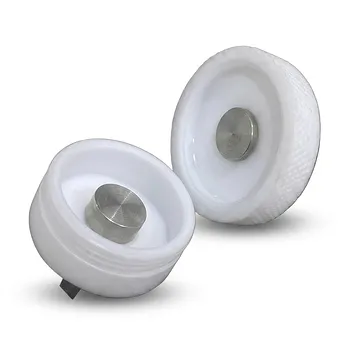
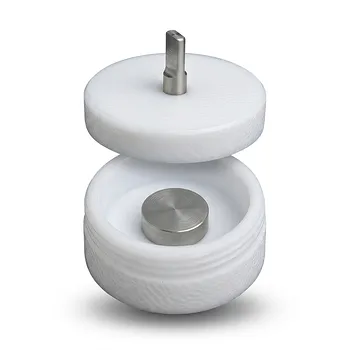
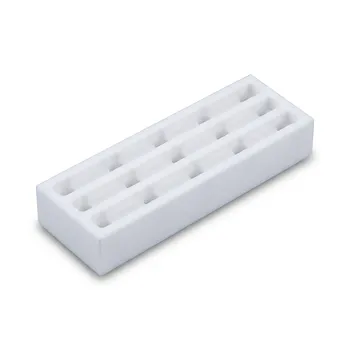
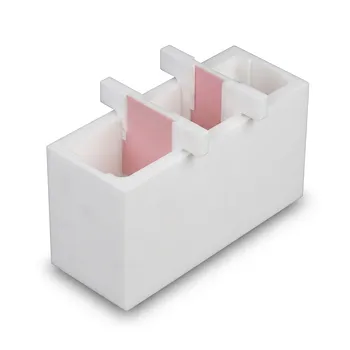
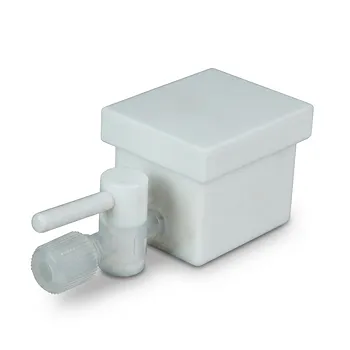
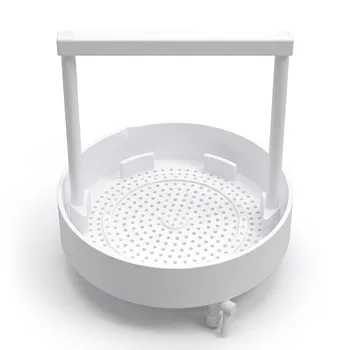
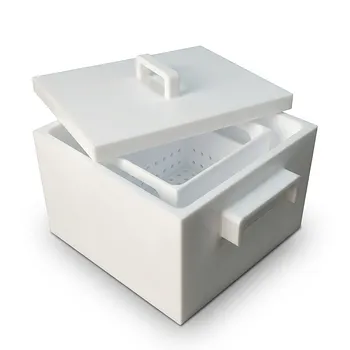
The primary function of a PTFE battery clamp is to securely position electrodes while providing stable electrical contact during electrochemical experiments. It serves as a specialized interface within battery cells—such as H-cells or three-electrode configurations—to facilitate the testing of active materials and electrolytes. By holding the electrode in a fixed location, the clamp ensures that measurements like cyclic voltammetry (CV) and galvanostatic charge-discharge (GCD) are both accurate and reproducible.
The PTFE battery clamp acts as a chemically inert "anchor" that prevents electrode movement and contamination during testing. Its central value lies in its ability to maintain mechanical integrity and electrical insulation in the presence of highly corrosive electrolytes and extreme temperatures.
The Role of PTFE Clamps in Electrochemical Assemblies
Precision Positioning and Electrical Continuity
In electrochemical research, any movement of the electrode can result in "noise" or inconsistent data. The PTFE clamp locks the electrode into a specific orientation, ensuring a consistent surface area is exposed to the electrolyte.
Simultaneously, the clamp provides the necessary electrical terminal connection. It bridges the gap between the external potentiostat leads and the internal electrode material, allowing for the precise flow of current.
Universal Compatibility with Advanced Testing Methods
These clamps are designed to withstand the rigorous demands of Electrochemical Impedance Spectroscopy (EIS). Because the clamp is non-reactive, it does not contribute "parasitic" signals that would otherwise distort the impedance data.
They are also essential for long-term cycling studies. The structural stability of the clamp ensures that electrical contact remains constant throughout hundreds of charge and discharge cycles.
Why Polytetrafluoroethylene (PTFE) is the Material of Choice
Chemical Inertness in Aggressive Electrolytes
Battery research often involves harsh environments, including acidic or highly alkaline electrolytes. Polytetrafluoroethylene (PTFE) is virtually non-reactive, ensuring the clamp does not leach impurities into the cell or corrode over time.
This inertness is critical for maintaining the purity of the electrochemical system. It allows researchers to attribute all observed chemical reactions to the electrode materials rather than the testing hardware.
Extreme Thermal and Electrical Insulation
PTFE remains stable across a massive temperature range, from -200 °C to 260 °C. This makes these clamps indispensable for thermal runaway studies and testing batteries under extreme environmental conditions.
The material also provides excellent electrical insulation. By shielding the internal conductors, the clamp ensures that electrochemical reactions occur exclusively at the intended active tip of the electrode.
Understanding the Trade-offs
Mechanical Limits and "Cold Flow"
While PTFE is chemically superior, it is a relatively soft plastic. Under high mechanical pressure, it can experience "creep" or cold flow, where the material slowly deforms over time.
To mitigate this, high-end clamps often feature PEEK or metal cores. These hybrid designs provide the necessary structural rigidity while maintaining the chemical protection of a PTFE exterior.
Cleaning and Maintenance Requirements
PTFE is porous at a microscopic level, meaning it can occasionally "trap" trace amounts of chemicals. Researchers must use rigorous cleaning protocols between experiments to prevent cross-contamination of different electrolyte systems.
How to Apply This to Your Project
Recommendations for Experimental Success
- If your primary focus is corrosive electrolyte testing: Prioritize high-purity PTFE clamps to ensure no chemical interference occurs during long-duration experiments.
- If your primary focus is high-temperature or thermal studies: Ensure your clamp is rated for continuous service at 260 °C to prevent deformation or outgassing during the test.
- If your primary focus is mechanical stability and longevity: Select a clamp with a PEEK or stainless steel internal reinforcement to prevent the PTFE from deforming under repeated use.
By selecting a high-quality PTFE battery clamp, you ensure that your electrochemical data is a true reflection of your materials rather than a byproduct of your testing hardware.
Summary Table:
| Key Feature | Functional Benefit | Research Application |
|---|---|---|
| Chemical Inertness | Prevents contamination & corrosion | Harsh electrolyte testing (Acidic/Alkaline) |
| Thermal Stability | Reliable from -200°C to 260°C | Thermal runaway & extreme temp studies |
| Electrical Insulation | Eliminates parasitic signals & noise | EIS, CV, and GCD measurements |
| Precision Positioning | Maintains consistent surface area | Long-term cycling & reproducibility |
Elevate Your Electrochemical Research with KINTEK
Ensure your data integrity with high-performance laboratory supplies from KINTEK. We specialize in high-purity fluoropolymer solutions, offering everything from everyday basic labware (beakers, crucibles, and reagent bottles) to advanced reaction apparatus like custom electrochemical cells, battery testing fixtures, and hydrothermal synthesis liners.
Whether you need standard PTFE battery clamps or complex non-standard machined parts via our end-to-end custom CNC fabrication, KINTEK delivers the precision your research demands. Our range covers everything from fluid transfer components (tubing, valves) and sample prep tools to high-volume consumables like stirring bars and gaskets, all crafted from premium PTFE and PFA.
Ready to optimize your experimental setup? Contact us today to discuss your bespoke laboratory requirements!
Related Products
- Corrosion Resistant PTFE Coin Cell Battery Testing Clamps and Acid Proof Custom Fluoropolymer Battery Fixtures
- Acid Resistant PTFE Button Cell Battery Test Fixture Customizable Machining High Purity Electrochemical Testing Clamp
- PTFE Filter Membrane Holder for Hydrogen Chloride and Water Filtration 90mm Environmental Sampling Clamp Customizable
- Custom PTFE Reaction Lid with Integrated Valve and Fitting Corrosion Resistant No Leaching PFA FEP Bottle Cap System
- White PTFE Electrolytic Cell with Movable Slider and Insulated Lid for Fluorine Corrosion Resistance
People Also Ask
- What is the thermal operating range for PTFE battery clamps in electrochemical research? Stability from -200°C to +260°C
- What are the primary functions and material compositions of PTFE battery clamps? Ensure Precision & Chemical Resistance
- How do coin cell testing fixtures evaluate ZIF-derived LCO cycling stability? Ensure Battery Research Precision
- What are the electrical insulation and signal integrity advantages of using PTFE battery clamps? Ensure Data Accuracy
- How does the chemical inertness of PTFE benefit laboratory-scale battery testing? Ensure high-purity research results.