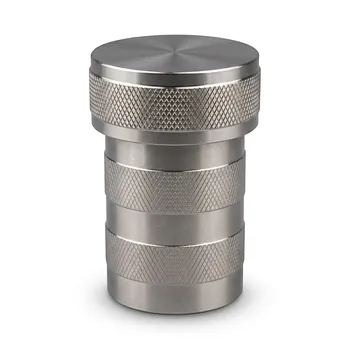
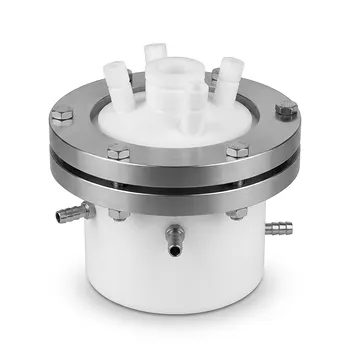
The primary function of a Hydrothermal Autoclave Reactor is to provide a sealed, high-temperature, and high-pressure environment that facilitates the synthesis of metal sulfide semiconductors. By heating precursors in an aqueous solution within a confined space, the reactor generates internal pressure far exceeding atmospheric levels. This unique state allows for the complete dissolution, nucleation, and precise crystal growth of nanomaterials, resulting in specific morphologies and high crystallinity that are unattainable through standard atmospheric processing.
Core Takeaway: The Hydrothermal Autoclave Reactor acts as a high-energy "pressure cooker" for chemistry, using extreme physical conditions to force insoluble precursors into a liquid phase to achieve superior crystal purity and structural control.
Driving Synthesis Through Extreme Conditions
Overcoming Solubility Barriers
The reactor utilizes a process called dissolution-precipitation to handle precursors that are often insoluble at room temperature. By raising the temperature of the solvent (usually water) above its boiling point while keeping it liquid under pressure, the reactor significantly increases the solvating power of the medium.
Accelerating Reaction Kinetics
The high-temperature environment provides the necessary thermal energy to overcome the activation barriers of chemical reactions. In the synthesis of transition metal sulfides like cobalt disulfide (CoS2) or vanadium disulfide (VS2), these conditions ensure that the precursors react completely and uniformly throughout the liquid phase.
Utilizing Autogenous Pressure
As the liquid inside the stainless steel shell is heated, it expands and generates autogenous pressure. This pressure is critical for stabilizing the liquid phase at temperatures where the solvent would normally evaporate, allowing for sustained, steady-state crystal growth over hours or days.
Precision Control of Semiconductor Morphology
Engineering Specific Nanostructures
The hydrothermal method is prized for its ability to produce semiconductors with diverse architectures, such as nanosheets, nanowires, or porous structures. By tuning the temperature and pressure within the autoclave, researchers can influence the growth kinetics to favor one crystal plane over another.
Achieving High Crystallinity
Because the growth occurs in a controlled, sealed liquid environment, the resulting metal sulfides exhibit a high degree of structural order. This crystallinity is vital for semiconductor performance, as it reduces defects that would otherwise trap charge carriers and degrade electronic or catalytic efficiency.
Facilitating Self-Assembly
The high-pressure environment promotes the self-assembly of complex structures, such as metal-organic frameworks (MOFs) or layered sulfides. The reactor provides the physical stability needed for these delicate coordination reactions to occur without interference from external atmospheric fluctuations.
The Role of the Internal Environment
Protecting Purity with Inert Liners
To prevent the corrosive sulfide precursors from reacting with the stainless steel shell, the reactor employs an internal liner, typically made of Polytetrafluoroethylene (PTFE) or Para-polyphenylene (PPL). These liners act as a chemical barrier, ensuring that no metallic impurities from the autoclave itself contaminate the semiconductor product.
Isolation from Contaminants
The sealed nature of the "digestion bomb" ensures that the reaction remains a closed system. This prevents the oxidation of metal sulfides—which are often sensitive to air—and ensures that the final material maintains its intended chemical composition and phase purity.
Understanding the Trade-offs and Safety Constraints
Temperature Limitations of Liners
While the stainless steel exterior is robust, the internal liners have strict thermal limits. PTFE liners are generally limited to 200°C, while PPL liners can handle up to 280°C; exceeding these temperatures can cause the liner to deform or release toxic fumes, compromising the experiment.
The "Black Box" Nature of Reactions
A significant challenge of hydrothermal synthesis is that the reaction cannot be observed in real-time. Because the vessel is a thick-walled metal cylinder, researchers must rely on post-reaction analysis to determine if the desired morphology was achieved, making the process highly dependent on precise initial calibration.
Safety and Pressure Risks
Operating at high pressure carries inherent risks of explosive decompression if the vessel is overfilled or if the heating rate is too aggressive. It is critical to never fill the liner beyond 60-80% of its capacity to allow for the thermal expansion of the liquid.
How to Apply This to Your Synthesis Goals
Strategic Implementation
- If your primary focus is Morphology Control: Prioritize precise temperature ramping and the use of specific surfactants within the autoclave to direct the growth of crystal planes.
- If your primary focus is High Phase Purity: Ensure the use of a high-quality PTFE or PPL liner to prevent ion leaching from the steel walls and maintain a strictly sealed environment.
- If your primary focus is Scalability: Focus on calculating the exact fill-ratio (degree of filling) to ensure pressure consistency across different reactor volumes.
By mastering the high-pressure dynamics of the hydrothermal autoclave, you can unlock the ability to engineer metal sulfide semiconductors with the exact physical and electronic properties required for advanced technological applications.
Summary Table:
| Feature | Function | Benefit to Synthesis |
|---|---|---|
| High-Pressure Environment | Generates autogenous pressure via heating | Dissolves insoluble precursors and stabilizes liquid phase |
| Controlled Thermal Energy | Overcomes chemical activation barriers | Accelerates reaction kinetics for complete precursor conversion |
| PTFE/PPL Inert Liners | Provides a chemical barrier for precursors | Prevents contamination and protects vessel from corrosive sulfides |
| Sealed System | Isolates reaction from the atmosphere | Prevents oxidation and ensures high phase purity and crystallinity |
| Morphology Tuning | Adjusts growth kinetics of crystal planes | Enables engineering of nanosheets, nanowires, and porous structures |
Elevate Your Material Synthesis with KINTEK’s Precision Engineering
To achieve superior crystallinity and precise morphology in metal sulfide semiconductors, your laboratory requires equipment that stands up to extreme chemical and thermal stress. KINTEK specializes in high-performance fluoropolymer materials, offering an unparalleled range of products designed for the most demanding hydrothermal applications. From high-purity PTFE and PFA liners and microwave digestion vessels to custom-machined electrochemical cells and fluid transfer components, our equipment ensures zero contamination and absolute chemical inertness.
Whether you need standard laboratory consumables like beakers and centrifuge tubes or bespoke, non-standard machined parts crafted through our end-to-end custom CNC fabrication, KINTEK provides the reliability your research demands. Backed by an exclusive focus on high-performance fluoropolymers, we deliver everything from high-volume orders to complex, one-off laboratory setups.
Ready to optimize your synthesis process? Contact our experts today to discuss your specific requirements and see how KINTEK can enhance your lab’s performance.
References
- Ümit Bayram, Erkan Yılmaz. Comparison of Photocatalytic and Adsorption Properties of ZnS@ZnO, CdS@ZnO, and PbS@ZnO Nanocomposites to Select the Best Material for the Bifunctional Removal of Methylene Blue. DOI: 10.1021/acsomega.4c07910
This article is also based on technical information from Kintek Knowledge Base .
Related Products
- High Temperature Corrosion Resistant Hydrothermal Synthesis Reactor with TFM Inner Liner and Straight Cylinder Design
- Custom TFM Reaction Vessel with Stainless Steel Jacket and PTFE Inner Cup for High Corrosion Resistance
- PTFE Lined High Pressure Digestion Vessel 50ml High Temperature Hydrothermal Synthesis Tank
- PTFE Distillation Condensation Apparatus High Temperature Hydrofluoric Acid Resistant Fluorination Reaction Flask
- High Temperature Teflon Continuous Reaction System and HF Resistant Three Neck Flask for Petrochemical Processing
People Also Ask
- What is the role of a corrosion-resistant reactor in the synthesis of lignin-based carbon dots? Ensure Maximum Purity
- What are the technical advantages of using hydrothermal synthesis reactors for advanced electronic & optical nanomaterials?
- How does a hydrothermal synthesis reactor facilitate the production of crystalline materials with tailored morphologies? Precision Crystal Growth
- Why is the sealing reliability of a hydrothermal synthesis reactor critical for 24-hour cycles? Ensure Nano-Precision
- What role do hydrothermal synthesis reactors play in CQD preparation? Achieve High-Purity Nanomaterial Synthesis