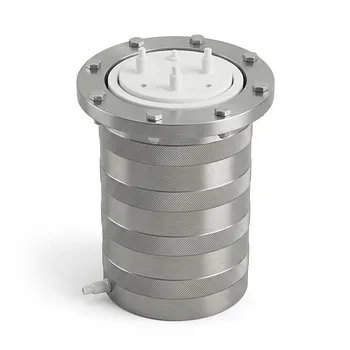
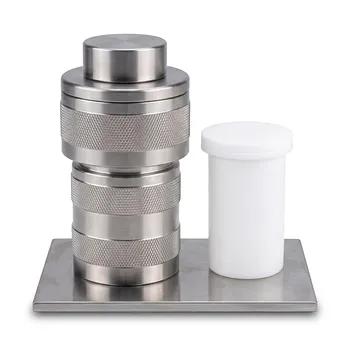
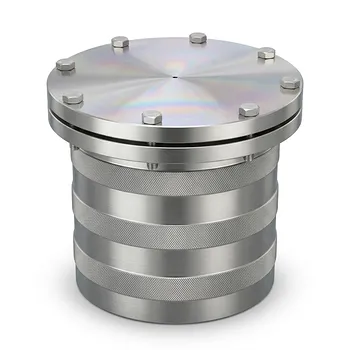
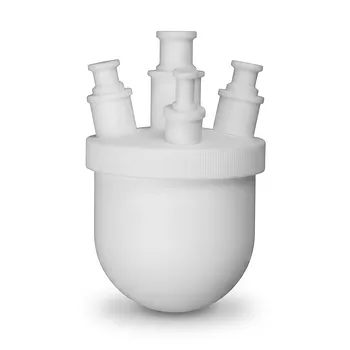
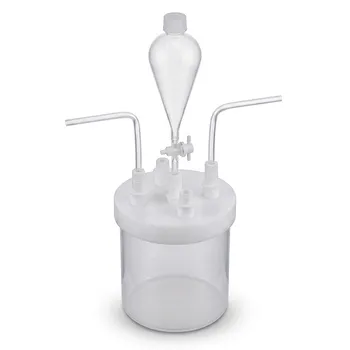
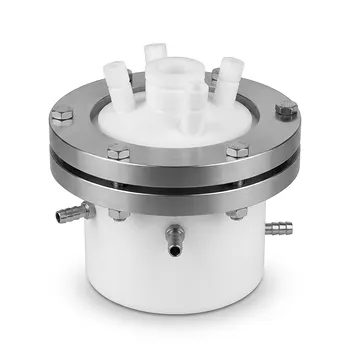
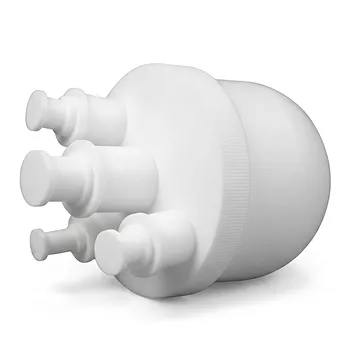
The high-pressure hydrothermal reactor is the foundational tool for synthesizing ZnO@MnO2-montmorillonite nanocomposites. Its primary function is to provide a sealed environment where elevated temperatures and autogenous pressure significantly increase the solubility and diffusion rates of chemical precursors. This controlled state facilitates the uniform nucleation and growth of zinc oxide (ZnO) and manganese dioxide (MnO2) directly within the layers or on the surface of the montmorillonite clay.
Core Takeaway: The reactor acts as a specialized "chemical pressure cooker" that enables the synthesis of high-crystallinity nanocomposites by manipulating subcritical water properties to drive precise crystal growth and material integration.
The Physics of the Hydrothermal Environment
Enhancing Precursor Solubility
Under high pressure, the solvent—usually water—reaches temperatures well above its standard boiling point. This state significantly increases the solubility of metal precursors, allowing reactant ions to dissolve into the liquid phase at concentrations that would be impossible under atmospheric conditions.
Accelerating Ion Diffusion
The high-pressure environment enhances the diffusion rates of these dissolved ions. This rapid movement is critical for ensuring that the zinc and manganese sources can penetrate the complex, layered structure of the montmorillonite clay.
Creating Autogenous Pressure
As the reactor is heated, the solvent expands to create autogenous pressure. This internal force acts as a catalyst for chemical transformation, driving the reactants to overcome energy barriers required for the formation of the solid nanocomposite.
Driving Nucleation and Growth
Achieving Moderate Supersaturation
The reactor facilitates a state of moderate supersaturation within the chemical solution. This is a critical threshold where ions begin to transition from a dissolved state into solid crystals in a controlled, uniform manner.
Facilitating In-Situ Growth
The hydrothermal process enables in-situ growth, meaning the ZnO and MnO2 crystals form directly on the montmorillonite matrix. This ensures a tight, high-quality integration between the metal oxides and the clay, resulting in a more stable and effective composite.
Inducing Specific Crystallographic Directions
By precisely controlling the temperature and reaction duration, the reactor can induce growth along specific crystallographic directions. This allows researchers to dictate whether the resulting ZnO or MnO2 will take the form of nanoparticles, nanorods, or other high-aspect-ratio morphologies.
Structural Integrity and Crystallinity
Promoting High Crystallinity
The stable, high-energy environment inside the autoclave promotes recrystallization. This process removes structural defects, leading to nanomaterials with high crystallinity, which is essential for their performance in electronic or catalytic applications.
Formation of Heterojunction Interfaces
The sealed environment ensures the efficient coupling of different nanoparticles at the heterojunction interface. In ZnO@MnO2-montmorillonite, this allows for better electron transfer and synergetic effects between the components.
Uniformity and Stoichiometry
The reactor's ability to maintain a constant, sealed environment allows for the production of nanomaterials with specific stoichiometry. This ensures that the final product has a consistent chemical composition and fine particle size across the entire batch.
Understanding the Trade-offs
Material Compatibility and Corrosion
Hydrothermal synthesis often involves aggressive precursors that can corrode the reactor walls. To mitigate this, PTFE (Teflon) liners are typically used; however, these liners have temperature limits (usually around 200-250°C) that can restrict the synthesis of certain high-temperature phases.
Safety and Pressure Management
Operating a sealed vessel at high temperatures carries inherent pressure hazards. Precise temperature control is mandatory, as even small fluctuations can lead to exponential increases in pressure that may exceed the safety ratings of the stainless steel autoclave.
Scaling and Reaction Time
While hydrothermal synthesis produces high-quality materials, it often requires long reaction times (from hours to days). Scaling this process for industrial production is more complex and energy-intensive compared to open-air chemical methods.
How to Apply This to Your Synthesis Goals
Recommendations Based on Project Focus
- If your primary focus is high aspect ratio nanostructures: Prioritize precise control over reaction duration and precursor concentration to maintain moderate supersaturation.
- If your primary focus is maximum material integration: Focus on optimizing the heating ramp rate to ensure precursors diffuse deeply into the montmorillonite layers before nucleation begins.
- If your primary focus is chemical purity and crystallinity: Use higher temperatures (within the limits of your PTFE liner) to facilitate thorough recrystallization and eliminate structural defects.
By leveraging the unique subcritical environment of the hydrothermal reactor, you can transform simple precursors into highly structured, high-performance nanocomposites.
Summary Table:
| Mechanism | Synthesis Benefit | Impact on Nanocomposite |
|---|---|---|
| Elevated Temp/Pressure | Increased Precursor Solubility | Facilitates uniform nucleation and reactant dissolution. |
| Autogenous Pressure | Overcomes Energy Barriers | Drives in-situ growth directly onto the clay matrix. |
| Subcritical Water State | Accelerated Ion Diffusion | Ensures deep penetration into montmorillonite layers. |
| Sealed Environment | Controlled Stoichiometry | Produces consistent chemical composition and high purity. |
| Thermal Stability | Recrystallization | Eliminates structural defects for high crystallinity. |
Elevate Your Material Synthesis with KINTEK’s High-Performance Fluoropolymers
Precision in hydrothermal synthesis demands equipment that can withstand extreme chemical environments without compromising purity. At KINTEK, we specialize in manufacturing high-performance PTFE and PFA laboratory supplies tailored for advanced material research.
From hydrothermal synthesis liners and microwave digestion vessels that ensure perfect crystal growth, to a vast range of everyday labware—including beakers, reagent bottles, and centrifuge tubes—we provide the tools necessary for synthesizing high-crystallinity nanocomposites. Whether you need standard fluid transfer components like tubing and valves or bespoke laboratory setups produced through our custom CNC fabrication, KINTEK delivers end-to-end solutions for high-volume orders and complex research needs.
Ready to optimize your lab’s efficiency and material quality? Contact KINTEK today to discuss your custom requirements!
References
- Edilane Bezerra, Ramón Raudel Peña Garcia. Hydrothermal Synthesis of ZnO@MnO<sub>2</sub>-Montmorillonite Nanocomposites: Influence of Molarity on Structural, Optical, and Photocatalytic Performance toward Ciprofloxacin Degradation under Variable Conditions. DOI: 10.1021/acsomega.5c06454
This article is also based on technical information from Kintek Knowledge Base .
Related Products
- High Temperature Corrosion Resistant Hydrothermal Synthesis Reactor with TFM Inner Liner and Straight Cylinder Design
- High Pressure Custom TFM Reactor Stainless Steel Outer Vessel PTFE Inner Cup for Corrosive Synthesis
- PTFE Lined High Pressure Digestion Vessel 50ml High Temperature Hydrothermal Synthesis Tank
- Custom TFM Reaction Vessel with Stainless Steel Jacket and PTFE Inner Cup for High Corrosion Resistance
- High Purity PFA Constant Pressure Condensation Reaction System Acid Resistant High Temperature Customizable Teflon Labware
People Also Ask
- What is the role of a corrosion-resistant reactor in the synthesis of lignin-based carbon dots? Ensure Maximum Purity
- What are the technical advantages of using hydrothermal synthesis reactors for advanced electronic & optical nanomaterials?
- How does a hydrothermal synthesis reactor facilitate the production of crystalline materials with tailored morphologies? Precision Crystal Growth
- Why is the sealing reliability of a hydrothermal synthesis reactor critical for 24-hour cycles? Ensure Nano-Precision
- What role do hydrothermal synthesis reactors play in CQD preparation? Achieve High-Purity Nanomaterial Synthesis