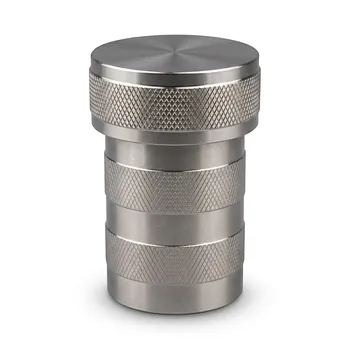
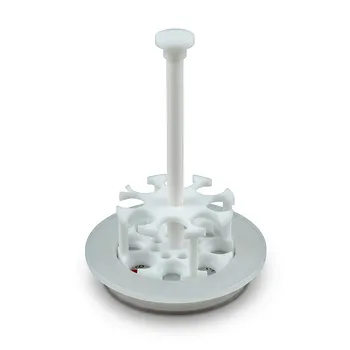
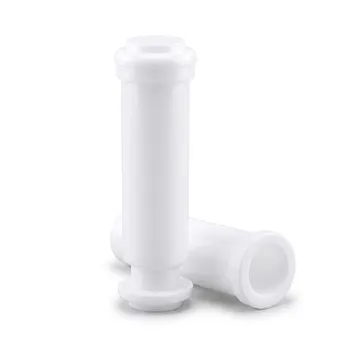
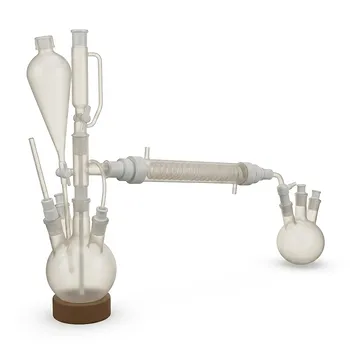
The primary function of a high-pressure hydrothermal autoclave is to create a controlled, subcritical environment that enables the hydrolysis and polycondensation reactions required to synthesize $Ti^{3+}$ doped titanium dioxide. By maintaining elevated temperatures (typically 170°C) and high internal pressures over several hours, the autoclave facilitates the precise molecular assembly and doping of nanoparticles that cannot be achieved under standard atmospheric conditions.
The autoclave acts as a specialized pressure vessel that drives the reaction of titanium precursors and reducing agents into a crystalline state. This process is essential for achieving the specific morphology and unique electronic structures—specifically the $Ti^{3+}$ doping—required for advanced photocatalytic applications.
The Mechanics of Subcritical Synthesis
Facilitating High-Temperature Reactions
The autoclave allows the reaction solution to reach temperatures well above the boiling point of the solvent while remaining in a liquid or subcritical state. For $Ti^{3+}$ doped $TiO_2$, maintaining a constant temperature of 170°C for approximately 8 hours provides the thermal energy necessary for precursor molecules to overcome activation barriers.
Promoting Hydrolysis and Polycondensation
Under these high-pressure conditions, the hydrolysis and polycondensation of titanium precursors are significantly accelerated. This controlled environment ensures that the glucose solutions and titanium sources react effectively to integrate $Ti^{3+}$ ions into the anatase crystal lattice.
Enhancing Solubility and Reaction Rates
High pressure increases the solubility of solid precursors, ensuring a homogenous reaction medium. This increased solubility leads to higher supersaturation levels, which are critical for the uniform nucleation and growth of nanoparticles.
Driving Material Excellence
Achieving High Crystallinity
The hydrothermal method is superior to atmospheric methods because it promotes the growth of highly crystalline anatase structures. The stable, high-energy environment within the autoclave minimizes structural defects and ensures a robust crystal framework.
Precision Morphology Control
By acting as a "micro-reactor," the autoclave allows for morphological engineering. The pressure and temperature parameters dictate whether the $TiO_2$ forms as nanoparticles, nanowires, or specific crystal facets, which directly impacts the material's surface area and reactivity.
Engineering Electronic Structures
The specific conditions inside the autoclave are vital for creating unique electronic structures, such as the oxygen vacancies associated with $Ti^{3+}$ doping. This doping alters the bandgap of the $TiO_2$, making it more efficient for applications like solar energy conversion and water purification.
Maintaining Chemical Integrity
Preventing Metallic Contamination
Most high-pressure autoclaves utilize a PTFE (polytetrafluoroethylene) liner. This liner is chemically inert and prevents the reaction solution from coming into contact with the stainless steel walls of the vessel, which would otherwise introduce metallic impurities.
Resisting Corrosive Environments
The synthesis of $TiO_2$ often involves acidic precursors or the decomposition of agents like hypophosphorous acid. The autoclave’s liner provides essential corrosion resistance, ensuring the stability of the reaction even in the presence of aggressive chemical species.
Ensuring a Sealed System
The hermetically sealed nature of the autoclave prevents the loss of volatile components and maintains stoichiometric precision. This is crucial for ensuring that the ratio of titanium to dopant remains consistent throughout the 8-hour synthesis period.
Understanding the Trade-offs
Equipment Limitations and Safety
While hydrothermal synthesis offers superior material quality, it requires specialized heavy-duty equipment capable of withstanding extreme internal pressures. Failure to follow strict safety protocols regarding filling ratios and temperature limits can lead to vessel failure.
Scalability and Time Constraints
Hydrothermal processes are typically batch-oriented and time-intensive, often requiring several hours or days for a single cycle. This makes high-volume production more challenging compared to continuous flow processes or atmospheric spray pyrolysis.
Energy Consumption
Maintaining high temperatures for extended periods within a pressurized vessel is energy-intensive. Researchers must weigh the improved performance of $Ti^{3+}$ doped nanoparticles against the higher operational costs associated with autoclave synthesis.
How to Apply This to Your Project
Recommendations for Synthesis Goals
- If your primary focus is Maximum Photocatalytic Activity: Prioritize the use of a PTFE-lined autoclave at 170°C to ensure stable $Ti^{3+}$ doping and high crystallinity.
- If your primary focus is Morphological Uniformity: Use the autoclave to strictly control the pressure-temperature ramp-up phase, as this dictates the initial nucleation rate.
- If your primary focus is Material Purity: Ensure your autoclave liner is thoroughly cleaned and free of scratches to prevent the leaching of metal ions from the outer shell.
The high-pressure hydrothermal autoclave remains the definitive tool for researchers seeking to unlock the advanced electronic and structural properties of $Ti^{3+}$ doped titanium dioxide.
Summary Table:
| Feature | Role in Synthesis | Benefit for Ti3+ Doped TiO2 |
|---|---|---|
| Subcritical Heat (170°C) | Overcomes activation barriers for hydrolysis | Promotes crystalline anatase growth |
| High Internal Pressure | Increases precursor solubility/supersaturation | Ensures uniform nucleation and doping |
| PTFE/PFA Liners | Provides a chemically inert environment | Prevents metallic contamination/corrosion |
| Sealed Vessel | Prevents loss of volatile components | Maintains precise stoichiometry and purity |
Elevate Your Synthesis Precision with KINTEK
Achieving the perfect crystalline structure and electronic doping in $Ti^{3+}$ doped $TiO_2$ requires equipment that can withstand extreme conditions without compromising purity. At KINTEK, we specialize in high-performance fluoropolymer solutions tailored for advanced laboratory environments.
Whether you need hydrothermal synthesis liners, microwave digestion vessels, or high-purity trace analysis instruments, our products are designed to prevent contamination and resist the most corrosive chemical precursors. From everyday essentials like beakers, reagent bottles, and centrifuge tubes to custom CNC-fabricated non-standard parts, we provide everything needed for a seamless fluid transfer and sample preparation workflow.
Why choose KINTEK?
- Absolute Purity: Specialized focus on high-performance PTFE and PFA materials.
- End-to-End Customization: Bespoke laboratory setups and custom-machined components.
- Comprehensive Range: From simple stirring bars and o-rings to advanced electrochemical cells and reaction apparatus.
Don't let equipment limitations hinder your research breakthroughs. Contact KINTEK today to find the perfect high-purity tools for your next synthesis project!
References
- Shahid Ali Khan, Rukhsanda Aziz. Nanocellulose based titanium dioxide nanocomposites for the wastewater treatment of textile industry. DOI: 10.3389/fenvs.2025.1560070
This article is also based on technical information from Kintek Knowledge Base .
Related Products
- High Temperature Corrosion Resistant Hydrothermal Synthesis Reactor with TFM Inner Liner and Straight Cylinder Design
- PTFE Lined High Pressure Digestion Vessel 50ml High Temperature Hydrothermal Synthesis Tank
- Custom TFM Reaction Vessel with Stainless Steel Jacket and PTFE Inner Cup for High Corrosion Resistance
- High Performance TFM Microwave Digestion Vessel Rack 15 Position Customizable Sample Preparation Support
- High Pressure Custom TFM Reactor Stainless Steel Outer Vessel PTFE Inner Cup for Corrosive Synthesis
People Also Ask
- What is the role of a corrosion-resistant reactor in the synthesis of lignin-based carbon dots? Ensure Maximum Purity
- What are the technical advantages of using hydrothermal synthesis reactors for advanced electronic & optical nanomaterials?
- How does a hydrothermal synthesis reactor facilitate the production of crystalline materials with tailored morphologies? Precision Crystal Growth
- Why is the sealing reliability of a hydrothermal synthesis reactor critical for 24-hour cycles? Ensure Nano-Precision
- What role do hydrothermal synthesis reactors play in CQD preparation? Achieve High-Purity Nanomaterial Synthesis