PTFE capillary tubing is engineered for extreme thermal environments, offering a standard continuous operating range of -200°C to +260°C (-328°F to +500°F). While it can withstand short-term exposure to temperatures as high as 350°C before decomposition begins, its primary value lies in its ability to maintain mechanical stability across this massive 460-degree delta. Unlike many polymers, it does not become brittle at cryogenic temperatures or lose its structural shape at high heat.
Core Takeaway: PTFE capillary tubing provides a wide functional window from -200°C to +260°C, maintained by high molecular bond strength and an exceptional melt viscosity that prevents the material from flowing even past its melting point.
The Science of Thermal Stability
High-Energy Carbon-Fluorine Bonds
The stability of PTFE stems from the incredibly strong C–F (Carbon-Fluorine) bonds. These bonds are among the strongest in organic chemistry, effectively shielding the carbon backbone from thermal degradation and chemical attack.
This molecular "armor" prevents chain scission, the process where polymer chains break down, until the material reaches its decomposition threshold near 350°C.
The Cryogenic Advantage
In cryogenic applications, most plastics reach their "glass transition temperature" and become as brittle as glass. PTFE remains unique because it retains flexibility and impact resistance down to -200°C and even lower in specific controlled environments.
This makes it an essential material for handling liquid nitrogen or operating in the vacuum of space where traditional elastomers would shatter under stress.
Behavior at Thermal Extremes
The 260°C Continuous Limit
While PTFE can technically survive higher temperatures, 260°C (500°F) is the industry-accepted limit for long-term, continuous service. At this temperature, the material retains its full suite of chemical resistance and mechanical properties without significant aging.
Exceeding this limit for extended periods can lead to a gradual loss of tensile strength, even if the tubing appears visually intact.
The Gel Phase vs. Melting
PTFE does not "melt" in the traditional sense like polyethylene or nylon. While it has a crystalline melting point of 327°C, its melt viscosity is so high that it does not flow as a liquid.
Instead, it transitions into a translucent gel-like state. This high viscosity allows the tubing to maintain its dimensional stability and shape during brief thermal spikes, provided it is not under heavy mechanical load.
Understanding the Trade-offs
Thermal Expansion and Pressure
As temperatures rise, PTFE's coefficient of thermal expansion must be considered. In tight laboratory fittings, the tubing may expand, potentially leading to leaks if the connectors are not rated for the same thermal cycle.
Furthermore, the burst pressure rating of capillary tubing drops significantly as it approaches the 260°C limit. You cannot operate at maximum pressure and maximum temperature simultaneously without risking failure.
The Risk of Off-Gassing
When PTFE is heated above 350°C, it undergoes thermal decomposition. This process releases polymer fume fever-inducing particulates and toxic gases, such as hydrofluoric acid.
In industrial settings, ensuring that the tubing never reaches the onset of decomposition is critical for operator safety and preventing the corrosion of nearby metal components.
How to Apply This to Your Project
Recommendations Based on Application
- If your primary focus is cryogenic fluid handling: Utilize PTFE for its resistance to embrittlement, but ensure fittings are designed to compensate for material contraction at -200°C.
- If your primary focus is high-temperature chemical chromatography: Stay within the 260°C limit to ensure the tubing maintains a consistent internal diameter and prevents trace off-gassing from affecting your results.
- If your primary focus is high-pressure industrial processing: De-rate your maximum allowable working pressure (MAWP) by at least 50% if operating consistently above 150°C.
PTFE remains the gold standard for capillary tubing whenever a project demands a material that stays chemically inert and mechanically stable across the most hostile thermal gradients in science and industry.
Summary Table:
| Thermal Parameter | Temperature Range | Performance Characteristics |
|---|---|---|
| Continuous Service | -200°C to +260°C | Full mechanical stability and chemical resistance |
| Crystalline Melting Point | 327°C (621°F) | Transitions to high-viscosity gel; does not flow |
| Decomposition Limit | Above 350°C (662°F) | Risk of toxic off-gassing and material breakdown |
| Cryogenic Performance | Down to -200°C | Maintains flexibility without becoming brittle |
Elevate Your Lab Performance with KINTEK’s Fluoropolymer Expertise
Need high-performance solutions for demanding thermal environments? KINTEK specializes in the manufacture of premium laboratory supplies crafted exclusively from PTFE and PFA. From everyday essentials like beakers, reagent bottles, and centrifuge tubes to precision fluid transfer components (tubing, fittings, valves) and advanced reaction apparatus like electrochemical cells and hydrothermal synthesis liners, we provide the durability your research demands.
Whether you need standard consumables—such as stirring bars, filters, and pipettes—or complex, non-standard machined parts, our end-to-end custom CNC fabrication ensures every component meets your exact specifications. From trace analysis instruments to high-volume industrial orders, KINTEK delivers absolute focus on high-performance materials.
Contact KINTEK Today to discuss your custom lab setup or high-volume supply needs and ensure your project stays stable at any temperature!
Related Products
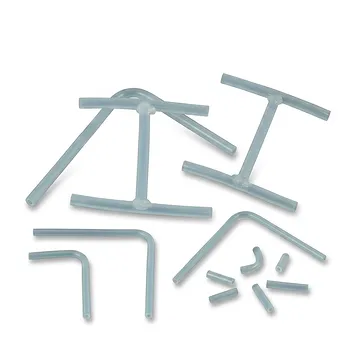
- High Performance PFA Coiled Spring Tubing and Custom PTFE Fabrication Services with Welded Fittings and Precision Bent Components
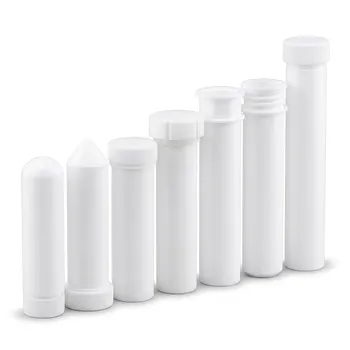
- Custom High Purity PTFE Digestion Tubes and Centrifuge Tubes for Trace Metal Analysis
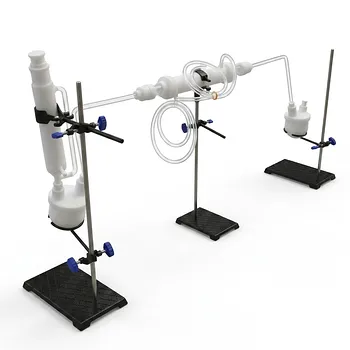
- Custom PTFE Condenser Tube Hydrofluoric Acid Resistant Reflux Device Constant Pressure Separatory Funnel
- High Purity PTFE Digestion Tubes and Custom Centrifuge Tubes 100ml for Trace Analysis and Chemical Digestion
- Custom PTFE Condenser Tube Reflux Reaction Condensation Purification Device Semiconductor Chemical Lab Equipment
People Also Ask
- What are the technical advantages of high-precision PFA tubing in MXene production? Maximize Purity and Yield.
- What technical advantages do PFA tubing and fittings offer? Master Precision Fluid Transfer and Flow Chemistry
- What are the technical advantages of high-quality PFA tubing? Achieve Ultimate Purity and Precision in Fluid Handling
- What are the key benefits of PTFE in custom fabrication? Unlock Performance in Extreme Conditions
- What fabrication services are available for PTFE? Shearing, Stamping, Laser Cutting, Molding & Machining