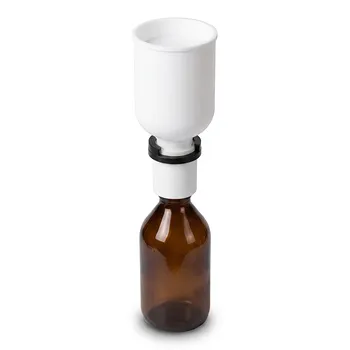
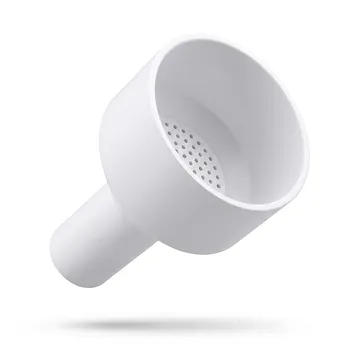
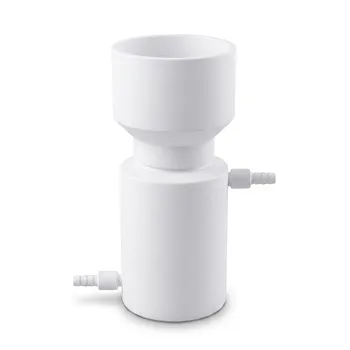
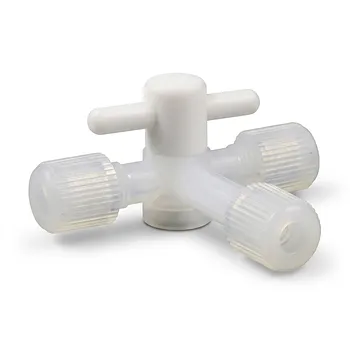
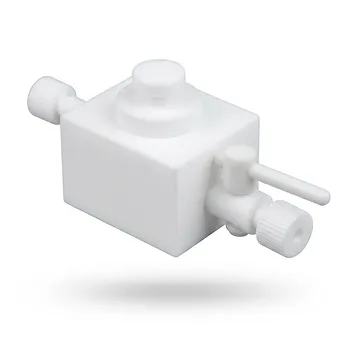
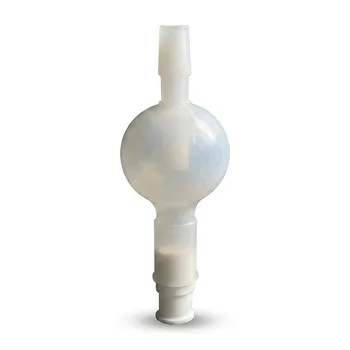
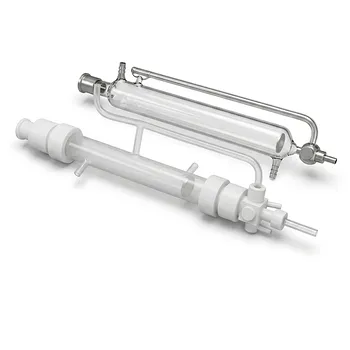
Vacuum filtration systems serve as the mechanical engine for the bottom-up assembly of MXene-based architectures. By leveraging pressure differentials, these systems drive solvent through microporous membranes to organize nanosheets into precise, layered structures. This process transforms a liquid suspension into a solid film or composite with tunable thickness and highly controlled electrical conductivity.
Core Takeaway: Beyond simple liquid-solid separation, vacuum filtration is a precision manufacturing tool that dictates the nanostructure of MXene composites. It enables the creation of dense, layered, or gradient structures by controlling the rate of deposition, fluid chemistry, and spatial orientation during the assembly process.
The Role of Pressure Differentials in Structural Assembly
Driving Self-Assembly and Alignment
Vacuum filtration uses negative pressure to force an MXene nanosheet suspension through a microporous membrane, such as an Anodic Aluminum Oxide (AAO) template. This downward force induces the horizontal alignment of the nanosheets against the substrate surface.
The resulting structure is a dense, uniform lamellar (layered) network. This specific orientation is critical for establishing the continuous electron-conducting networks required for high-performance lithium-ion batteries and electronic devices.
Facilitating Gradient Layered Structures
By applying controlled vacuum levels, researchers can deposit different materials in a specific sequence onto support layers like aramid nanofibers (ANF). This creates a tightly interlocked composite where conductive layers and flexible support layers are integrated.
This method allows for the construction of gradient structures, where the composition of the film changes through its thickness. Such gradients are essential for optimizing electromagnetic interference (EMI) shielding and mechanical durability.
Precision Control via Fluid Transfer and Vacuum Management
Thickness Tuning through Volume and Concentration
The functional thickness of an MXene film is directly proportional to the slurry concentration and the volume of the filtered solution. By precisely measuring these inputs, the thickness of the film can be adjusted to optimize ion transport pathways.
Accurate fluid transfer components ensure that the exact amount of material reaches the membrane. This level of control is necessary to produce everything from flexible self-supporting films to thin, transparent coatings.
Managing Interlayer Spacing and Purity
Processes like cation preintercalation involve soaking MXenes in metal halide solutions (such as Zn2+ or Mg2+) before filtration. This step modifies the interlayer spacing of the MXene nanosheets, which is driven by osmotic pressure during the filtration process.
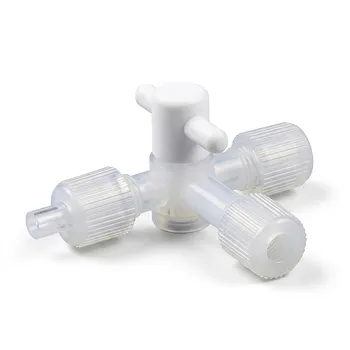
To maintain the integrity of this process, fluid transfer components like PFA (perfluoroalkoxy) tubing and fittings must be used. These materials provide high chemical purity and corrosion resistance, preventing solvent contamination that could disrupt the sensitive ion exchange.
Inducing Asymmetry and Functional Geometry
Creating Thickness Gradients via Tilt Angles
The physical configuration of the filtration setup can fundamentally change the properties of the resulting film. For example, configuring the apparatus at a tilt angle (e.g., 12 degrees) introduces the influence of gravity alongside the pressure gradient.
As the liquid passes through, solid components accumulate more heavily toward the lower region of the membrane. This creates a thickness gradient along the length of the film, rather than a uniform layer.
Enabling Unidirectional Deformation
The asymmetry produced by tilted filtration imparts unique physical characteristics to the material. These films often exhibit diode-like unidirectional deformation, making them ideal for use in soft actuators.
Such structural complexity would be difficult to achieve with standard casting methods. The vacuum filtration system thus acts as a spatial controller for the deposition of nanomaterials.
Understanding the Trade-offs and Constraints
Deposition Speed vs. Structural Uniformity
High vacuum levels can accelerate the production process but may lead to structural defects or "clogging" at the membrane interface. If the solvent is removed too quickly, nanosheets may trap air or fail to align into the desired lamellar structure.
Conversely, very slow filtration can lead to sedimentation issues, where heavier particles settle prematurely. Finding the balance between pressure and concentration is vital for a defect-free film.
Chemical Compatibility and Material Waste
Not all filter membranes are compatible with the solvents used in MXene processing (such as strong acids or organic solvents). Selecting the wrong microporous membrane can result in membrane degradation or the introduction of impurities into the composite.
Additionally, vacuum filtration is often a "lossy" process where a small percentage of nanosheets may remain trapped in the membrane or the transfer tubing. This makes the choice of low-friction, high-purity fluid components essential for cost-effective manufacturing.
Selecting the Right Filtration Parameters for Your Goal
How to Apply This to Your Project
- If your primary focus is High Conductivity: Utilize high-concentration MXene slurries and AAO templates to ensure the most dense, horizontally aligned lamellar structure possible.
- If your primary focus is Flexible Energy Storage: Focus on controlling the volume of the filtered solution to achieve a self-supporting film thickness that balances mechanical flexibility with ion transport.
- If your primary focus is Chemical Sensors or Actuators: Incorporate cation preintercalation and use PFA fluid components to ensure high chemical purity and precise control over interlayer spacing.
- If your primary focus is Directional Motion or Asymmetry: Implement a tilted filtration setup to induce a thickness gradient during the deposition process.
By viewing the vacuum filtration system as a structural architect rather than a simple filter, researchers can unlock the full potential of MXene-based composite materials.
Summary Table:
| Feature/Process | Function in MXene Preparation | Impact on Final Product |
|---|---|---|
| Pressure Differentials | Induces horizontal nanosheet alignment | Creates dense, conductive lamellar networks |
| Fluid Transfer (PFA) | Precise volume and purity control | Optimizes thickness and prevents contamination |
| Variable Tilt Angles | Introduces gravity-driven deposition | Produces asymmetric and thickness-gradient films |
| Cation Preintercalation | Modifies interlayer spacing via osmosis | Enhances ion transport and sensor sensitivity |
| Vacuum Management | Controls deposition rate vs. sedimentation | Ensures structural uniformity and defect-free films |
Elevate Your Material Research with KINTEK
Precision in MXene synthesis requires more than just a technique—it demands high-performance equipment that stands up to demanding chemical environments. KINTEK specializes in the manufacturing of high-performance fluoropolymer laboratory supplies, offering an exhaustive range of solutions crafted from PTFE and PFA.
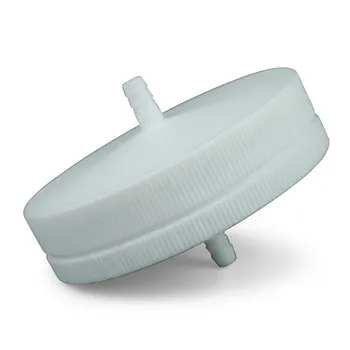
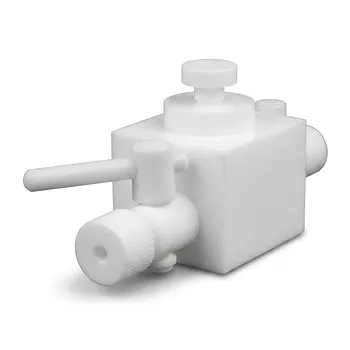
From everyday basic labware like beakers, measuring cylinders, crucibles, and reagent bottles to critical vacuum filtration tools, PFA tubing, and fluid transfer components (fittings, valves), we ensure your samples remain pure and your processes remain precise. For advanced research, we provide hydrothermal synthesis liners, microwave digestion vessels, and custom electrochemical cells tailored to your specific experimental geometries.
Why choose KINTEK?
- Unrivaled Purity: High-performance fluoropolymers prevent contamination in sensitive ion-exchange processes.
- End-to-End Customization: Our custom CNC fabrication delivers non-standard machined parts and bespoke setups designed for your unique MXene architectures.
- Comprehensive Range: We supply everything from centrifuge tubes and filters to microchannel reactors and battery testing fixtures.
Ready to optimize your lab's efficiency with high-volume orders or bespoke laboratory setups? Contact us today to discuss your project!
References
- Umme Kalsoom, Malik Maaza. MXene-based hybrid composites for lithium-ion batteries: advances in synthesis strategies and electrochemical performance. DOI: 10.1007/s11581-025-06628-z
This article is also based on technical information from Kintek Knowledge Base .
Related Products
- PTFE PFA Vacuum Filtration System Corrosion Resistant Customizable Shatterproof Laboratory Device
- Custom Corrosion Resistant PTFE Vacuum Filtration System with Teflon Buchner Funnel for Research Laboratories
- Corrosion Resistant PTFE Buchner Funnel and Vacuum Filtration System Unbreakable Chemical Solvent Filter Unit
- Customizable PTFE Reaction Vessel with Electric Stirring Paddle and Buchner Funnel Vacuum Filtration System
- High Purity PTFE Buchner Funnel Vacuum Filtration System Corrosion Resistant Low Trace Laboratory Suction Filter Apparatus
People Also Ask
- What makes PTFE filtration systems advantageous for industrial and scientific use? Unmatched Chemical & Thermal Stability
- How does the hydrophobicity of PTFE filters benefit their use? Ensure Uninterrupted Gas Flow and Solvent Filtration
- What temperature resistance do PTFE filters offer? Unmatched Thermal Stability from -200°C to +260°C
- Which chemicals are fully compatible with PTFE filters? Discover Unmatched Chemical Resistance
- What sizes and pore options are available for PTFE filters? Choose the Right Filter for Your Application