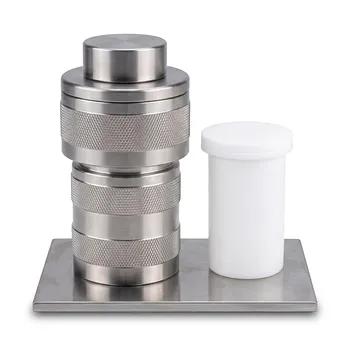
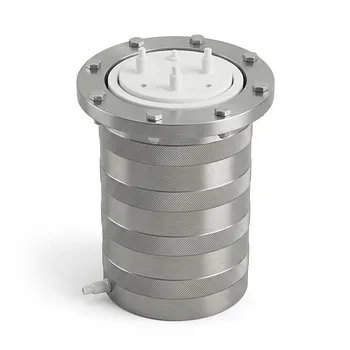
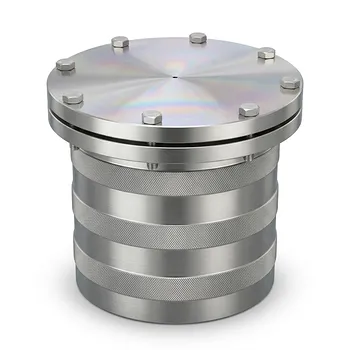
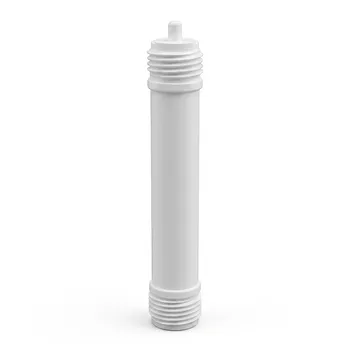
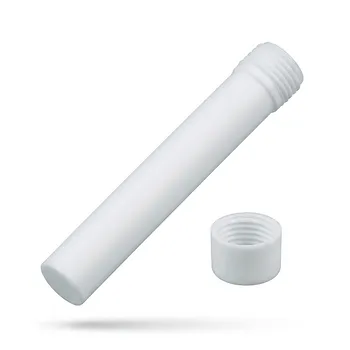
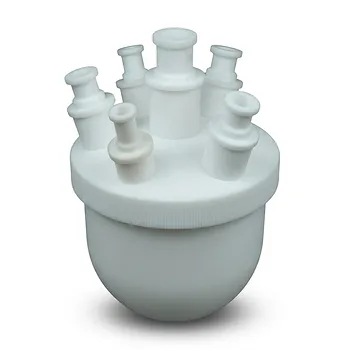
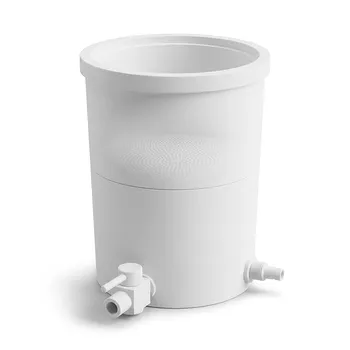
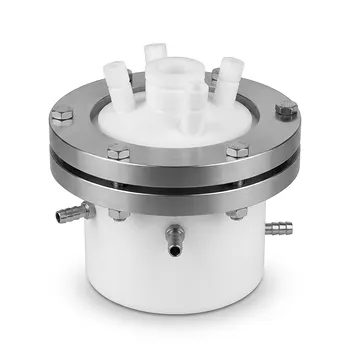
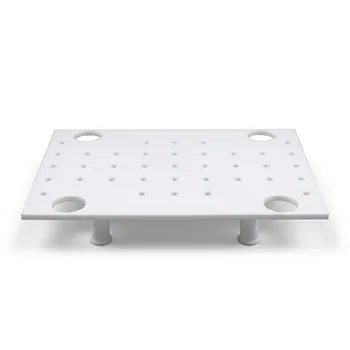
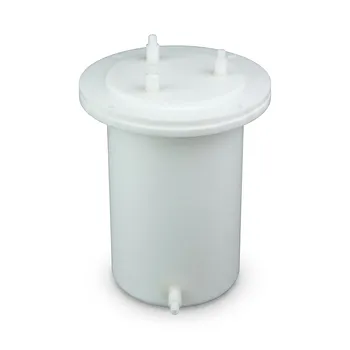
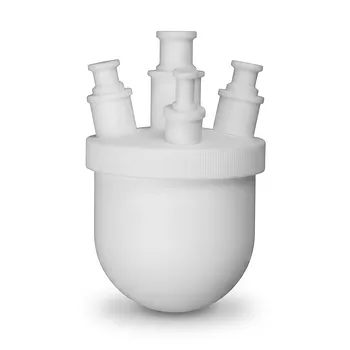
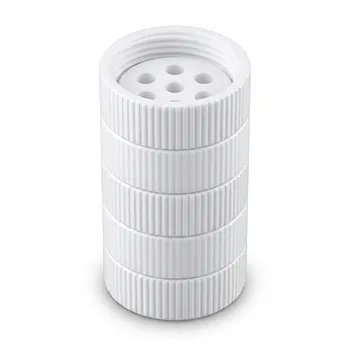
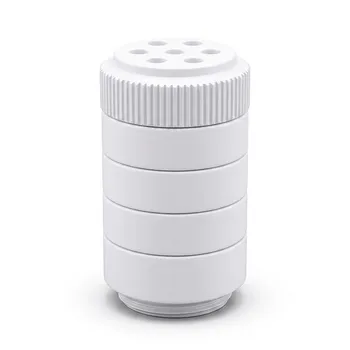
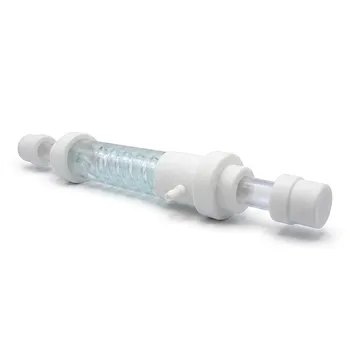
In the hydrothermal synthesis of 3D Sn-BDC, Polytetrafluoroethylene (PTFE) liners serve as the primary reaction vessel, providing a chemically inert environment that withstands temperatures up to 160°C. By isolating the reaction from the metal autoclave, the liner ensures that tin sources and organic ligands react under controlled autogenous pressure. Its non-stick surface is critical for preventing uncontrolled crystal growth on the vessel walls, which facilitates the formation of regular, high-quality 3D crystal structures.
The PTFE liner acts as both a protective barrier for the hardware and a precision environment for crystal growth. It prevents corrosion of the outer autoclave while ensuring the purity and morphological consistency of the synthesized 3D Sn-BDC framework.
Ensuring Structural Integrity and Corrosion Resistance
Protection of the External Autoclave
The primary function of the PTFE liner is to shield the stainless steel outer shell of the autoclave from corrosive reaction media. Hydrothermal synthesis often involves acidic or alkaline conditions that would otherwise erode the metal housing.
Chemical Inertness Under Pressure
PTFE is virtually non-reactive with the strong solvents and precursors used in tin-based MOF synthesis. This inertness allows the reaction to proceed at high autogenous pressures without the vessel contributing any chemical interference to the process.
Thermal Stability Limits
In the specific context of 3D Sn-BDC, the liner is rated to withstand the required synthesis temperature of 160°C. Maintaining this temperature is vital for providing the energy necessary for the coordination bonds to form the 3D lattice.
Managing Crystal Morphology and Purity
Prevention of Wall-Induced Nucleation
The non-stick properties of PTFE prevent "wall effects," where crystals nucleate and grow uncontrollably on the sides of the vessel. By minimizing these surface interactions, the tin and BDC ligands react more thoroughly within the solution to form regular, predictable 3D structures.
Eliminating Metal Ion Contamination
Stainless steel reactors can leach metal impurities like iron or nickel into the reaction system when exposed to high heat and pressure. The PTFE liner acts as a high-purity seal, ensuring that no external metal ions interfere with the optoelectronic or structural properties of the Sn-BDC.
Facilitating Product Recovery
The low surface energy of PTFE makes it easy to recover the synthesized micro- and nano-powders after the reaction is complete. This ensures a higher yield and simplifies the cleaning process, preventing cross-contamination between different experimental batches.
Understanding the Trade-offs and Limitations
Thermal Constraints
While PTFE is highly stable, it has a lower thermal threshold than the metal autoclave itself. Exceeding 200°C–250°C can lead to the deformation of the liner (creep) or the release of toxic vapors, which limits the temperature range of the synthesis.
Heat Transfer Inefficiency
PTFE is an insulator and does not conduct heat as efficiently as the surrounding stainless steel. This can lead to a slight lag in reaching the target reaction temperature, requiring precise calibration of the heating cycle to ensure the Sn-BDC crystals form correctly.
Pressure Sensitivity
Under extreme high-pressure conditions, PTFE liners can undergo physical deformation. If the liner does not fit perfectly within the autoclave, the pressure differential can cause it to "flow" or crack, potentially compromising the seal and damaging the external reactor.
Making the Right Choice for Your Goal
How to Apply This to Your Synthesis
- If your primary focus is crystal morphology: Ensure the PTFE liner is thoroughly cleaned and free of scratches, as surface defects can provide nucleation sites that disrupt the 3D structure.
- If your primary focus is material purity: Use high-purity, virgin PTFE liners to prevent the leaching of legacy contaminants from previous experiments into your Sn-BDC framework.
- If your primary focus is reactor longevity: Always inspect the liner for signs of "creep" or deformation after each 160°C cycle to prevent corrosive precursors from leaking into the stainless steel shell.
By acting as a controlled, non-reactive interface, the PTFE liner transforms a simple pressure vessel into a precision environment necessary for the delicate assembly of 3D tin-based metal-organic frameworks.
Summary Table:
| Feature | Primary Function | Key Benefit for 3D Sn-BDC |
|---|---|---|
| Chemical Inertness | Prevents reaction interference | Ensures high framework purity |
| Non-stick Surface | Minimizes wall nucleation | Consistent morphology & easy recovery |
| Corrosion Resistance | Shields metal autoclave shell | Protects equipment from acidic/alkaline media |
| Thermal Stability | Withstands up to 160°C | Facilitates stable coordination bond formation |
| Isolation Barrier | Prevents metal ion leaching | Eliminates contamination from Fe/Ni ions |
Elevate Your Synthesis Precision with KINTEK
Achieving the perfect 3D Sn-BDC framework requires an environment free from contamination and interference. KINTEK specializes in high-performance fluoropolymer solutions tailored for the most demanding hydrothermal processes.
From everyday basic labware like beakers, crucibles, and reagent bottles to advanced hydrothermal synthesis liners, microwave digestion vessels, and custom electrochemical cells, we manufacture virtually all imaginable laboratory supplies crafted from high-purity PTFE and PFA.
Why choose KINTEK?
- End-to-End Customization: Our expert CNC fabrication delivers bespoke laboratory setups and complex non-standard machined parts designed to your exact specifications.
- Comprehensive Range: We provide everything from fluid transfer components (tubing, valves, fittings) and sample prep tools to high-volume consumables like O-rings and seal tapes.
- Uncompromising Quality: We maintain an exclusive focus on high-performance materials to ensure your research achieves maximum purity and structural integrity.
Ready to optimize your laboratory's efficiency? Contact us today to discuss your custom requirements and discover how our fluoropolymer expertise can support your next breakthrough.
References
- Austin Chipojola Mtukula, Zhi‐Yuan Gu. Electrochemical Reduction of Carbon Dioxide to Formate by Tin-based Metal-Organic Frameworks. DOI: 10.37284/ijpac.3.1.2738
This article is also based on technical information from Kintek Knowledge Base .
Related Products
- PTFE Lined High Pressure Digestion Vessel 50ml High Temperature Hydrothermal Synthesis Tank
- High Pressure Custom TFM Reactor Stainless Steel Outer Vessel PTFE Inner Cup for Corrosive Synthesis
- Custom TFM Reaction Vessel with Stainless Steel Jacket and PTFE Inner Cup for High Corrosion Resistance
- High Purity PTFE Microwave Digestion Vessel for Soil and Food Analysis Acid Resistant Fluoropolymer Sample Preparation Liners
- High Purity TFM Microwave Digestion Vessels PTFE Acid Evaporation Liners Domestic GT-400 Equivalent Laboratory Reaction Containers
People Also Ask
- What are the benefits of using a PTFE-lined vessel for carbon-sulfur cathode treatment? Maximize Purity & Performance
- Why are PTFE-lined pressure digestion vessels required for the preparation of Ag/CeO2 catalysts? Purity & Performance
- What safety features are typically incorporated into high-pressure PTFE digestion vessel designs? Ensure Lab Safety
- What is the function of PTFE lined high-pressure vessels in g-C3N4 synthesis? Achieve High-Purity Material Growth
- Role of High-Pressure Digestion Tanks in Perovskite Synthesis: Achieve Superior Stability and Latent Heat