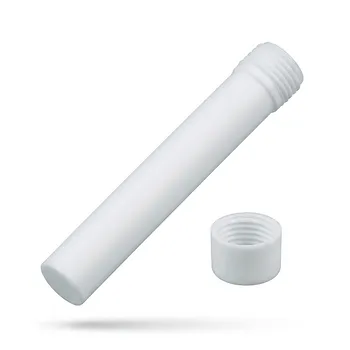
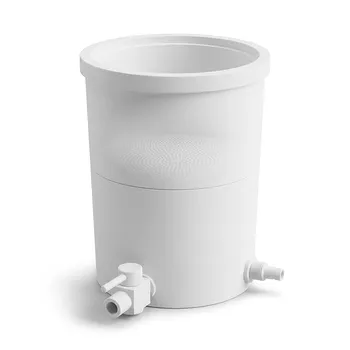
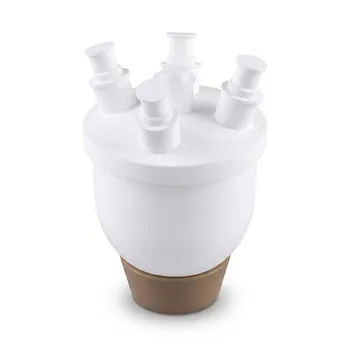
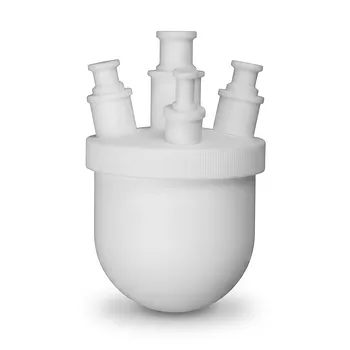
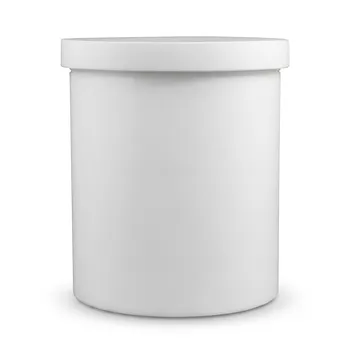
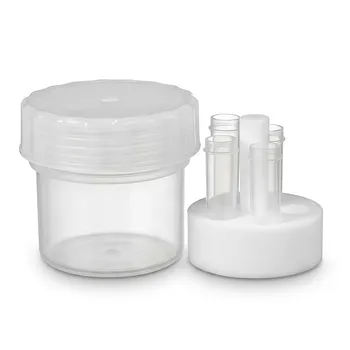
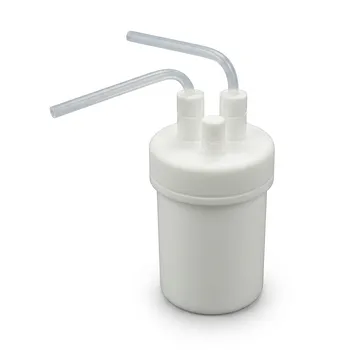
PTFE liners serve as chemically inert internal reaction vessels that protect the stainless steel autoclave from corrosion and prevent metallic contamination during synthesis. By providing a stable, non-reactive environment, these liners ensure that precursor chemicals—such as thioacetamide and molybdenum sources—interact without interference from the metal reactor walls, which is critical for maintaining the structural integrity and purity of single-atom doped molybdenum disulfide (MoS2).
Core Takeaway: The PTFE liner is an indispensable "chemical shield" that enables solvothermal reactions to occur at high temperatures and pressures without compromising the purity of the material or damaging the expensive hardware of the autoclave.
Safeguarding Chemical Purity and Structural Integrity
Prevention of Metallic Ion Contamination
In the synthesis of single-atom doped materials, even trace amounts of foreign metal ions can disrupt the desired atomic configuration. PTFE liners act as a barrier that prevents the reaction solution from leaching iron, nickel, or chromium from the stainless steel autoclave walls.
This isolation is vital for ensuring that the single-atom dopants occupy the correct positions within the MoS2 lattice rather than being overshadowed by impurities.
Facilitating Ordered Crystal Growth
The closed, inert environment within the liner allows for highly ordered polycondensation and nucleation. This controlled setting is what enables the molybdenum disulfide to form specific structures, such as nanosheets or nanoflower-like morphologies, with high crystallinity.
Without the stable environment provided by the liner, the pressure and temperature fluctuations could lead to inconsistent material properties.
Protecting Hardware from Corrosive Environments
Resistance to Aggressive Precursors
Solvothermal reactions often involve acidic or alkaline solutions and reactive precursors like thioacetamide. At elevated temperatures, these chemicals become highly corrosive to standard laboratory metals.
PTFE's exceptional chemical resistance allows it to withstand these aggressive media, effectively shielding the external stainless steel shell from irreversible damage and "pitting."
Managing High-Temperature and Pressure Demands
The liner is designed to operate within a sealed high-pressure system, often reaching temperatures up to 220°C. While the steel outer shell provides the mechanical strength to handle the pressure, the PTFE liner provides the thermal and chemical stability required for the solvent to reach its supercritical or subcritical state.
Enhancing Post-Reaction Recovery
The Advantage of a Non-Stick Surface
PTFE is inherently hydrophobic and non-stick, which is a significant advantage during the collection phase. Synthesized MoS2 products can be easily recovered from the liner walls without significant loss of material.
Simplified Cleaning and Maintenance
Because the liners prevent precursors from baking onto the metal walls of the autoclave, maintenance becomes significantly easier. This non-stick property ensures that the reaction vessel can be cleaned thoroughly, preventing cross-contamination between different synthesis batches.
Understanding the Trade-offs and Limitations
Thermal Constraints
While PTFE is highly stable, it has a definitive upper temperature limit, typically around 250°C. Exceeding this temperature can cause the liner to soften, deform, or release toxic vapors, potentially leading to a seal failure in the autoclave.
Permeability and Memory Effects
PTFE is slightly porous at a microscopic level under extreme pressure. Over time, certain organic solvents or metal ions can become embedded in the liner wall, a phenomenon known as "memory effect," which may necessitate periodic replacement to ensure absolute purity.
How to Apply This to Your Project
Making the Right Choice for Your Goal
- If your primary focus is extreme purity (Single-Atom Doping): Always use a high-quality, virgin PTFE or PFA liner and implement a rigorous "acid washing" protocol between runs to eliminate residual ions.
- If your primary focus is morphology control (Nanoflowers/Nanosheets): Ensure your liner is properly sized for your autoclave to maintain a perfect seal, as pressure leaks can disrupt the delicate nucleation process.
- If your primary focus is equipment longevity: Never exceed the manufacturer's recommended temperature (typically 200°C–220°C) to prevent the PTFE from "creeping" or deforming under pressure.
By treating the PTFE liner as a critical consumable rather than a permanent fixture, you ensure the repeatable synthesis of high-performance MoS2 materials.
Summary Table:
| Key Function | Benefit to MoS2 Synthesis | Hardware Protection |
|---|---|---|
| Chemical Inertness | Prevents metal ion contamination (Fe, Cr, Ni) | Shields steel from corrosive precursors |
| Thermal Stability | Enables reactions up to 220°C-250°C | Facilitates high-pressure environments |
| Non-stick Surface | Maximizes recovery of nanosheets/flowers | Prevents material buildup on walls |
| Physical Barrier | Ensures structural integrity of dopants | Eliminates autoclave pitting and damage |
Elevate Your Research Precision with KINTEK PTFE & PFA Solutions
In high-stakes synthesis like single-atom doping, the quality of your reaction vessel determines the success of your material. KINTEK provides an exhaustive range of high-performance fluoropolymer laboratory supplies, from everyday basic labware like beakers, crucibles, and digestion tubes to advanced fluid transfer components and sample prep tools.
Our expertise extends to custom-engineered solutions, including:
- Bespoke Reaction Vessels: Standard or custom electrochemical cells, battery testing fixtures, and microwave digestion vessels.
- Precision Components: End-to-end custom CNC fabrication for non-standard machined parts and complex laboratory setups.
- Comprehensive Consumables: High-purity filters, stirring bars, O-rings, and seal tapes designed for extreme chemical resistance.
Whether you are scaling up production or conducting sensitive trace analysis, KINTEK’s absolute focus on high-performance PTFE and PFA materials ensures your lab maintains the highest standards of purity and equipment longevity.
Ready to upgrade your lab hardware? Contact KINTEK today to discuss your custom requirements!
References
- Zhigui Wang, Xijun Liu. Synergy of single atoms and sulfur vacancies for advanced polysulfide–iodide redox flow battery. DOI: 10.1038/s41467-025-58273-9
This article is also based on technical information from Kintek Knowledge Base .
Related Products
- PTFE Lined High Pressure Digestion Vessel 50ml High Temperature Hydrothermal Synthesis Tank
- Custom TFM Reaction Vessel with Stainless Steel Jacket and PTFE Inner Cup for High Corrosion Resistance
- High Purity TFM Microwave Digestion Vessels PTFE Acid Evaporation Liners Domestic GT-400 Equivalent Laboratory Reaction Containers
- Large Scale PTFE Double Layer Reaction Tank with Integrated Filter Plate for Chemical Processing
- High Performance Customizable PTFE Reaction Vessel and Corrosion Resistant Polytetrafluoroethylene Flask for Chemical Laboratory Use
People Also Ask
- What are the benefits of using a PTFE-lined vessel for carbon-sulfur cathode treatment? Maximize Purity & Performance
- Why are PTFE-lined pressure digestion vessels required for the preparation of Ag/CeO2 catalysts? Purity & Performance
- What safety features are typically incorporated into high-pressure PTFE digestion vessel designs? Ensure Lab Safety
- What is the function of PTFE lined high-pressure vessels in g-C3N4 synthesis? Achieve High-Purity Material Growth
- Role of High-Pressure Digestion Tanks in Perovskite Synthesis: Achieve Superior Stability and Latent Heat