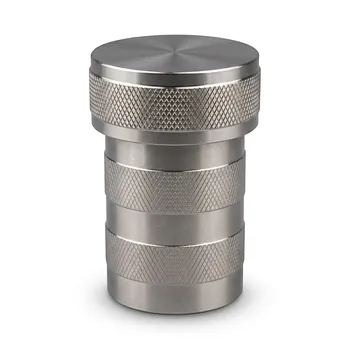
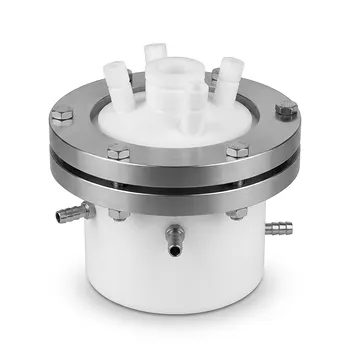
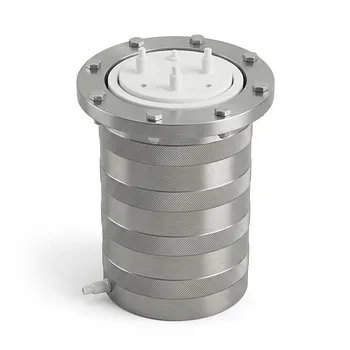
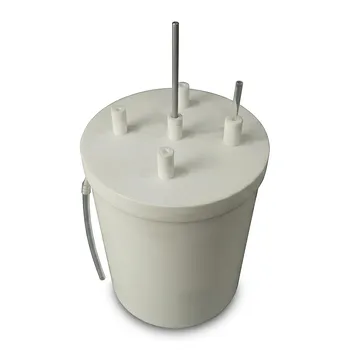
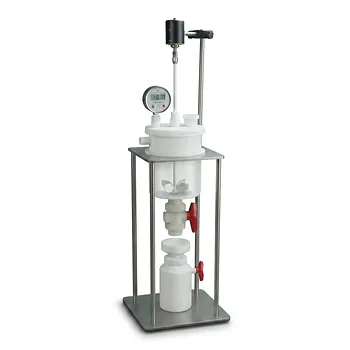
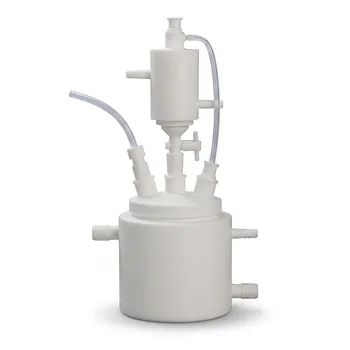
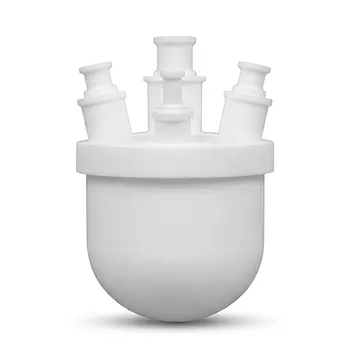
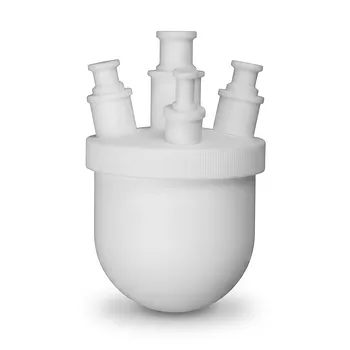
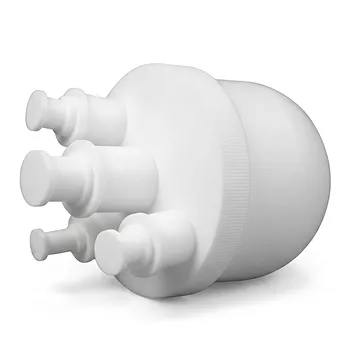
Hydrothermal synthesis reactors are the essential pressurized vessels that enable "wet" carbonization, transforming organic waste into high-value carbon materials. These reactors provide a sealed environment where water is heated above its boiling point under pressure, creating subcritical conditions. This state allows water to act as a reactive solvent that facilitates the dehydration, decarboxylation, and carbonization of biomass or plastic waste at relatively low temperatures.
Core Takeaway: The hydrothermal synthesis reactor functions as a controlled chemical crucible that uses pressurized water to break down complex waste materials into uniform, nano-scale carbon precursors. By maintaining a sealed, high-pressure environment, it enables chemical reactions—such as decarboxylation—that are impossible under standard atmospheric conditions.
The Chemistry of Waste Transformation
Facilitating Subcritical Carbonization
In a hydrothermal reactor, water is kept in a liquid state well above 100°C due to high internal pressure. This subcritical water acts as a powerful catalyst and solvent, breaking down the molecular structure of biomass and plastics. This environment triggers dehydration and decarboxylation, effectively stripping oxygen and hydrogen from the waste to leave behind a concentrated carbon framework.
Precision Morphology and Functionalization
The sealed nature of the reactor allows for precise control over the physical characteristics of the resulting material. Because the reaction occurs in a uniform liquid phase, the resulting carbon precursors often exhibit nano-scale dimensions and uniform morphology. Furthermore, the process preserves specific functional groups on the carbon surface, which are critical for future applications in energy storage or filtration.
Overcoming Capillary Resistance
When synthesizing complex materials, such as hollow carbon spheres, the high-pressure environment is vital for ensuring deep penetration. The pressure allows metal salt solutions to overcome capillary resistance, forcing ions into the internal channels of the carbon structure. This leads to a nanoscale dispersion of elements that would otherwise remain only on the surface of the material.
Engineering for Extreme Conditions
The Dual-Layer Architecture
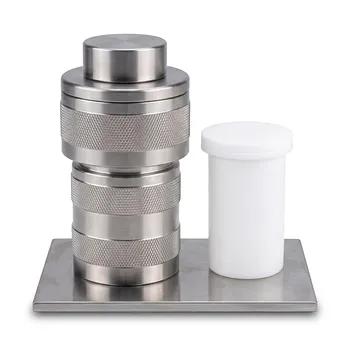
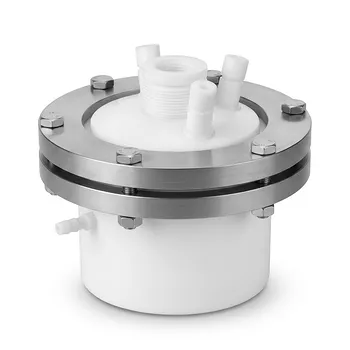
Standard hydrothermal reactors utilize a "shell and liner" design to balance strength with chemical resistance. A stainless steel outer shell provides the mechanical integrity required to withstand high internal pressures without rupturing. Inside this shell, an inert liner contains the actual reaction mixture, ensuring the structural metal is never in direct contact with corrosive fluids.
The Role of PTFE and PPL Liners
The inner liner is typically constructed from Polytetrafluoroethylene (PTFE) or Polyphenylene Sulfide (PPL). These materials are chosen for their chemical inertness, preventing the highly reactive hydrothermal medium from corroding the steel vessel. This isolation is crucial for maintaining the purity of the carbon product and preventing stress-corrosion cracking of the reactor itself.
Guiding Crystal Growth
Beyond carbonization, these reactors provide the physical constraints necessary to guide the growth direction of nanocrystals. By maintaining stable temperatures and pressures, the reactor allows precursors to dissolve and recombine into specific phases and unique structures, such as flower-like morphologies. This level of structural engineering is vital for maximizing the surface area and catalytic activity of the waste-derived product.
Understanding the Trade-offs
Temperature and Pressure Limitations
While effective, the materials used in these reactors have strict thermal ceilings. PTFE liners are generally limited to approximately 200°C–220°C, while PPL liners can handle slightly higher temperatures up to 260°C–280°C. Exceeding these limits can lead to liner deformation or the release of toxic vapors, potentially compromising the safety of the pressure vessel.
Scalability vs. Precision
Hydrothermal synthesis is primarily a batch process, which can limit high-volume industrial throughput compared to continuous dry pyrolysis. While it produces a superior, more uniform carbon product from "wet" waste, the requirement for cooling the reactor before opening adds significant time to the production cycle.
How to Apply This to Your Project
When utilizing hydrothermal synthesis reactors for waste processing, your choice of equipment and parameters should align with your specific material goals.
- If your primary focus is High-Purity Carbon: Ensure your reactor uses a high-purity PTFE liner to prevent any metal ion leaching from the stainless steel shell into your precursors.
- If your primary focus is Complex Morphologies: Prioritize precise pressure control and longer reaction times to allow for the complete dissolution and guided recombination of your precursors into specific crystal phases.
- If your primary focus is Processing Difficult Plastics: Opt for PPL-lined reactors to allow for the higher temperatures often required to break down more stable polymer chains.
By mastering the high-pressure environment of the hydrothermal reactor, you can convert low-value waste into highly engineered carbon structures with surgical precision.
Summary Table:
| Feature/Component | Role in Hydrothermal Carbonization (HTC) | Key Benefit |
|---|---|---|
| Subcritical Water | Acts as a reactive solvent and catalyst | Facilitates dehydration and decarboxylation |
| Sealed Environment | Maintains high pressure and stable temperature | Enables reactions impossible at atmospheric pressure |
| PTFE/PPL Liners | Provides chemical inertness and isolation | Prevents corrosion and ensures high material purity |
| Morphology Control | Guides crystal growth and dispersion | Produces uniform, nano-scale carbon structures |
| Stainless Steel Shell | Provides structural mechanical integrity | Withstands extreme internal pressures safely |
Elevate Your Waste-to-Value Research with KINTEK
Are you looking to master the precision of hydrothermal carbonization? KINTEK is your premier partner for high-performance laboratory supplies. We manufacture an exhaustive range of fluoropolymer solutions, from everyday labware like PTFE/PFA beakers, crucibles, and reagent bottles to the specialized hydrothermal synthesis liners and microwave digestion vessels critical for your carbonization projects.
Whether you need comprehensive fluid transfer components (tubing, valves), sample prep tools (filters, spatulas), or advanced reaction apparatus like custom electrochemical cells and battery testing fixtures, our end-to-end custom CNC fabrication ensures every part meets your exact specifications. From complex non-standard machined parts to high-volume orders, we maintain an absolute focus on high-performance fluoropolymer materials to deliver the purity and durability your research demands.
Ready to optimize your laboratory setup? Contact us today to discuss your custom fabrication needs and discover how KINTEK can enhance your research efficiency!
References
- Perseverance Dzikunu, Pedro Vilaça. Waste-to-carbon-based supercapacitors for renewable energy storage: progress and future perspectives. DOI: 10.1007/s40243-024-00285-4
This article is also based on technical information from Kintek Knowledge Base .
Related Products
- High Temperature Corrosion Resistant Hydrothermal Synthesis Reactor with TFM Inner Liner and Straight Cylinder Design
- PTFE Lined High Pressure Digestion Vessel 50ml High Temperature Hydrothermal Synthesis Tank
- Custom PTFE Reaction System with Hose Barb Fittings Corrosion Resistant High Sealing 2L 4L Lab Reactor with Separatory Funnel
- High Pressure Custom TFM Reactor Stainless Steel Outer Vessel PTFE Inner Cup for Corrosive Synthesis
- High Purity PFA Reaction Vessel for Biopharmaceutical Synthesis and Corrosive Chemical Fluid Handling with Customizable Tube Fittings
People Also Ask
- What is the role of a corrosion-resistant reactor in the synthesis of lignin-based carbon dots? Ensure Maximum Purity
- What are the technical advantages of using hydrothermal synthesis reactors for advanced electronic & optical nanomaterials?
- How does a hydrothermal synthesis reactor facilitate the production of crystalline materials with tailored morphologies? Precision Crystal Growth
- Why is the sealing reliability of a hydrothermal synthesis reactor critical for 24-hour cycles? Ensure Nano-Precision
- What role do hydrothermal synthesis reactors play in CQD preparation? Achieve High-Purity Nanomaterial Synthesis