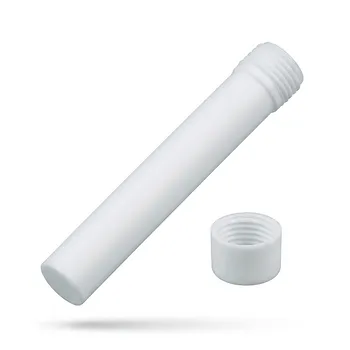
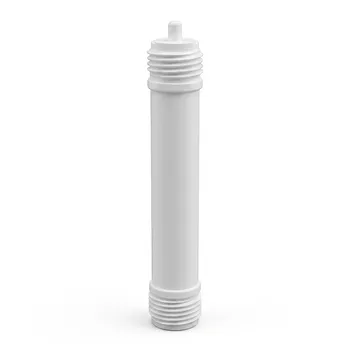
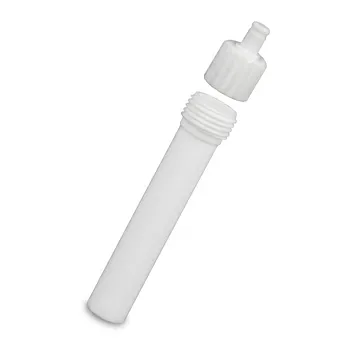
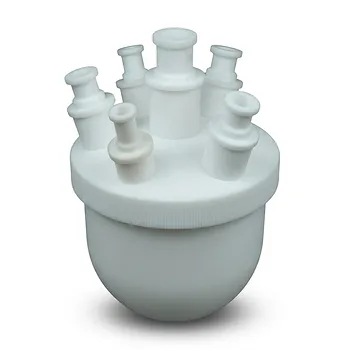
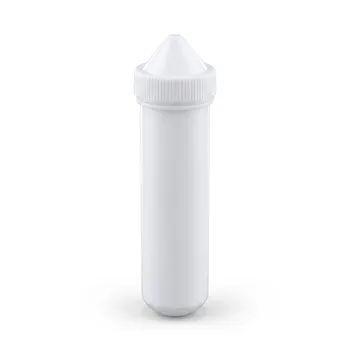
High-purity PTFE liners function as the critical internal reaction vessel in hydrothermal synthesis, providing a chemically inert and non-stick environment. These liners are specifically designed to withstand the extreme temperatures and pressures required for crystal growth while simultaneously protecting the external autoclave structure from corrosive media.
The core function of a high-purity PTFE liner is to isolate the chemical reaction from the metal autoclave shell, ensuring the purity of the synthesized material by preventing metal leaching and resisting corrosion from strong acids and bases.
Ensuring Chemical Purity and System Integrity
Providing a Chemically Inert Environment
High-purity PTFE (polytetrafluoroethylene) is virtually impermeable to chemical attack. It provides a stable, inert space that does not react with strong acids, bases, or organic solvents, which is essential for the preparation of high-performance nanomaterials.
Preventing Metal Impurity Leaching
In hydrothermal synthesis, even trace amounts of metal from the autoclave walls can alter the crystal structure or optoelectronic properties of the product. The liner acts as a total barrier, ensuring that the reaction system remains free from metal ions that would otherwise leach from the stainless steel outer shell.
Facilitating Product Recovery and Cleaning
The inherently non-stick surface of PTFE allows for the efficient recovery of synthesized micro- and nano-powders. This characteristic minimizes sample loss and simplifies the post-experimental cleaning process, preventing cross-contamination between different synthesis batches.
Protecting the Autoclave Hardware
Preventing Metal Corrosion
Hydrothermal reactions often involve highly aggressive media that would rapidly erode the stainless steel or alloy walls of a high-pressure reactor. The PTFE liner serves as a sacrificial and protective shield, significantly extending the operational lifespan of the expensive external autoclave.
Maintaining a High-Pressure Seal
When placed inside the reactor, the liner helps maintain a sealed reaction space. As the temperature rises, the liner and its lid work in tandem with the autoclave’s mechanical pressure to contain the volatile precursors and generated gases.
Thermal Stability and Morphology Control
By maintaining a stable internal environment at temperatures typically up to 220°C, the liner allows for controlled crystal growth. This stability is vital for achieving a uniform morphology in the final synthesized powders.
Understanding the Trade-offs and Limitations
Temperature Constraints
While PTFE is highly resistant to chemicals, it has a clear thermal ceiling, generally recommended not to exceed 220°C. Exceeding this limit can cause the liner to soften or deform, potentially leading to a breach of the seal or contamination of the sample.
Pressure Sensitivity
The liner itself does not provide the structural strength to contain high pressures; it relies entirely on the support of the metal autoclave shell. If the liner is not properly sized or if the external vessel fails, the liner will rupture instantly under internal pressure.
Cooling Rate Dependencies
Rapid cooling of the autoclave can sometimes cause the PTFE liner to contract differently than the metal shell. This differential contraction can lead to deformation or vacuum effects that may make the liner difficult to remove or cause it to crack over time.
How to Apply This to Your Project
Choosing the Right Liner Configuration
- If your primary focus is high-purity nanomaterial synthesis: Prioritize high-purity PTFE or PFA liners to ensure the lowest possible impurity leaching rates and maximum chemical resistance.
- If your primary focus is maximizing equipment lifespan: Ensure the liner is perfectly fitted to your autoclave to prevent corrosive vapors from reaching the stainless steel threads and walls.
- If your primary focus is high-temperature synthesis (above 220°C): Consider alternative materials like PPL (Polyphenylene polymers) or quartz liners, as standard PTFE will lose its structural integrity.
High-purity PTFE liners are the indispensable "inner sanctum" of hydrothermal synthesis, balancing chemical protection with the physical demands of high-pressure material science.
Summary Table:
| Key Function | Benefit to Lab Operations | Technical Limitation |
|---|---|---|
| Chemical Inertness | Prevents sample contamination & metal leaching | Max temperature 220°C |
| Corrosion Shield | Protects stainless steel autoclave hardware | Requires external support |
| Non-stick Surface | Facilitates 100% product recovery & easy cleaning | Sensitivity to rapid cooling |
| Pressure Sealing | Maintains stable environment for crystal growth | Subject to deformation if overheated |
Elevate Your Material Synthesis with KINTEK Precision
Are you looking to eliminate trace contamination and extend the life of your high-pressure reactors? KINTEK specializes in high-performance fluoropolymer solutions tailored for the most demanding laboratory environments. From everyday basic labware like beakers and reagent bottles to advanced hydrothermal synthesis liners, microwave digestion vessels, and custom electrochemical cells, we provide the absolute purity your research demands.
Why partner with KINTEK?
- Comprehensive Range: We manufacture everything from PFA/PTFE tubing and fittings to complex reaction apparatus and sample prep tools.
- Bespoke Fabrication: Benefit from our end-to-end custom CNC machining for non-standard parts and unique laboratory setups.
- Material Expertise: Our exclusive focus on high-performance fluoropolymers ensures maximum chemical resistance and thermal stability.
Whether you need high-volume consumables or a one-off custom-machined component, KINTEK is equipped to deliver. Contact us today to discuss your project requirements!
References
- Abdul Shakoor, Shahid Atiq. Synergistic Improvements in Ionic Conductivity, Diffusion Dynamics, and Transference Numbers for LaNiO<sub>3</sub>/MXene Supercapacitor Electrodes. DOI: 10.1002/batt.202500014
This article is also based on technical information from Kintek Knowledge Base .
Related Products
- PTFE Lined High Pressure Digestion Vessel 50ml High Temperature Hydrothermal Synthesis Tank
- High Pressure Custom TFM Reactor Stainless Steel Outer Vessel PTFE Inner Cup for Corrosive Synthesis
- High Purity TFM Microwave Digestion Vessels PTFE Acid Evaporation Liners Domestic GT-400 Equivalent Laboratory Reaction Containers
- High Purity PTFE Microwave Digestion Vessel for Soil and Food Analysis Acid Resistant Fluoropolymer Sample Preparation Liners
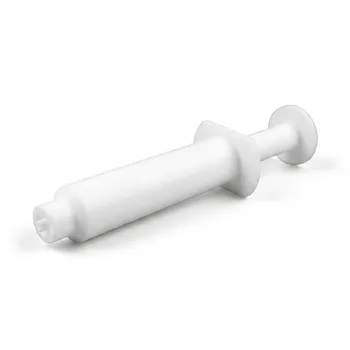
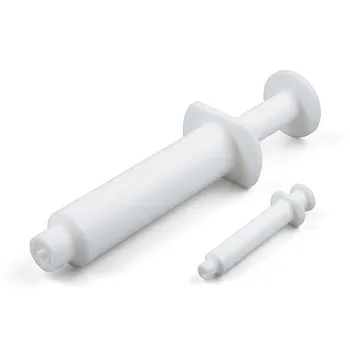
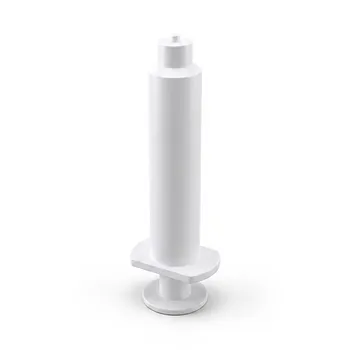
- High Purity 25ml PTFE Syringe for Trace Analysis and Automated Syringe Pump Systems
People Also Ask
- What are the benefits of using a PTFE-lined vessel for carbon-sulfur cathode treatment? Maximize Purity & Performance
- Why are PTFE-lined pressure digestion vessels required for the preparation of Ag/CeO2 catalysts? Purity & Performance
- What is the function of high-pressure PTFE digestion vessels in mineral analysis? Optimize Sample Mineralization
- What safety features are typically incorporated into high-pressure PTFE digestion vessel designs? Ensure Lab Safety
- What is the function of PTFE lined high-pressure vessels in g-C3N4 synthesis? Achieve High-Purity Material Growth