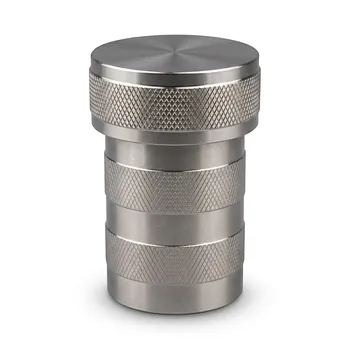
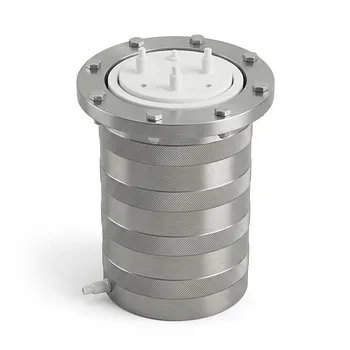
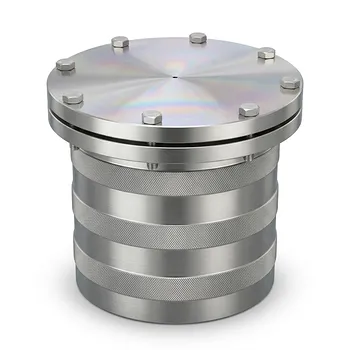
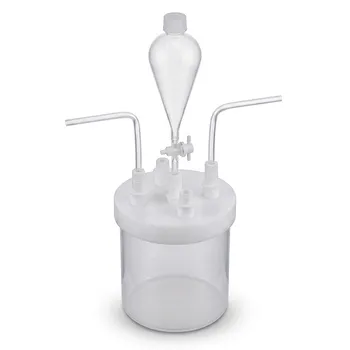
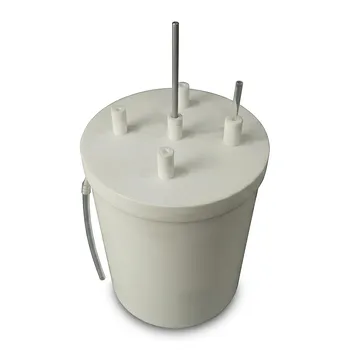
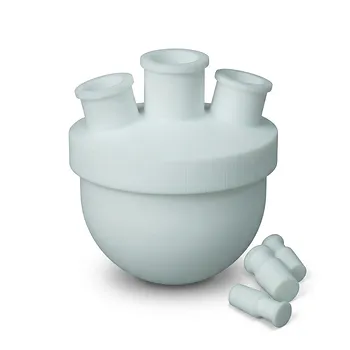
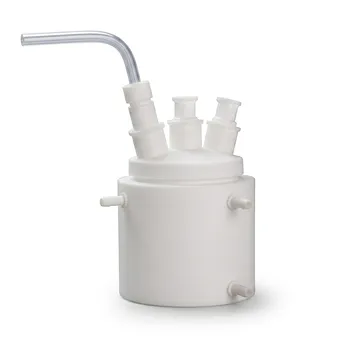
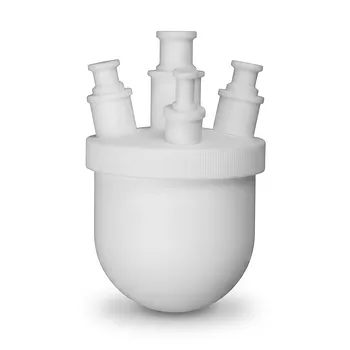
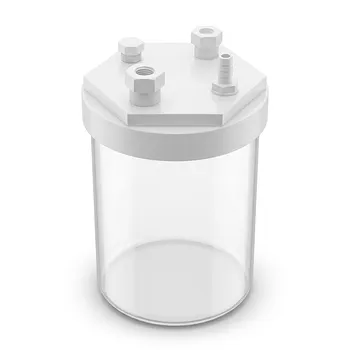
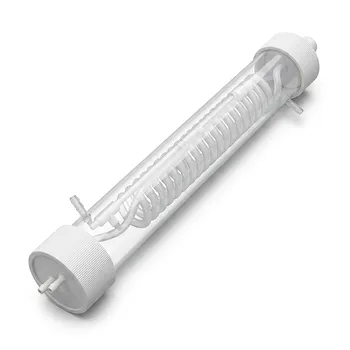
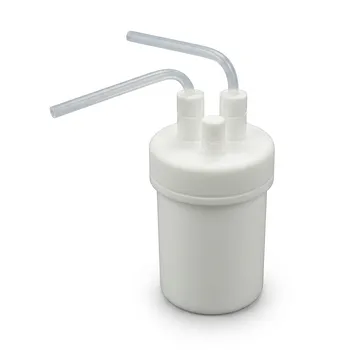
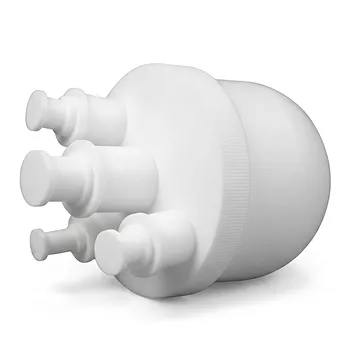
The high-pressure reactor is the critical vessel that enables the transformation of metal salts into the complex, multi-component crystalline structures required for MoVTeNbOx catalysts. By providing a sealed environment, these reactors allow the reaction mixture to reach temperatures and pressures well above the boiling point of the solvent. This specific physical state is essential for driving the deep hydrolysis, polycondensation, and primary crystallization of molybdenum, vanadium, tellurium, and niobium precursors.
Core Takeaway: High-pressure reactors facilitate the synthesis of MoVTeNbOx by creating a superheated environment that enhances precursor solubility and accelerates chemical reactions. This ensures the formation of precise mixed oxide crystalline phases that cannot be achieved under standard atmospheric conditions.
Facilitating Complex Chemical Transformations
Driving Deep Hydrolysis and Polycondensation
The primary function of the reactor is to provide the energy necessary for deep hydrolysis of metal precursors. In the presence of citric acid, the high-pressure environment forces the molybdenum, vanadium, tellurium, and niobium ions to undergo polycondensation. This process links the metal atoms into the complex intermediate chains required for the catalyst's backbone.
Enabling Primary Crystallization
Without the high-pressure environment, the metal precursors would remain as a disordered mixture or precipitate into undesired phases. The reactor provides the controlled conditions needed for primary crystallization, where the first stable crystal nuclei of the mixed oxide structure begin to form. This stage is the foundation for the final crystalline phase structure of the MoVTeNbOx catalyst.
The Physical Advantages of a Sealed Environment
Utilizing Autogenous Pressure
In a sealed reactor, heating the solvent creates autogenous pressure, which keeps the liquid from boiling away even as it exceeds its normal boiling point. This superheated state significantly increases the solubility of the precursors, ensuring that all metal ions are fully dissolved and available for reaction.
Enhancing Ion Diffusion
The high-temperature, high-pressure environment reduces the viscosity of the solvent and accelerates ion diffusion. This allows the various metal ions—molybdenum, vanadium, tellurium, and niobium—to move more freely and overcome capillary resistance or steric hindrances. The result is a more uniform and homogenous distribution of metals throughout the resulting catalyst structure.
Structural and Morphological Control
Achieving Specific Crystalline Phases
MoVTeNbOx catalysts rely on specific crystalline arrangements (such as the M1 and M2 phases) for their catalytic performance. The high-pressure reactor ensures the thermodynamic and kinetic conditions are met to favor these specific structures over inactive alternatives.
Maintaining System Purity and Safety
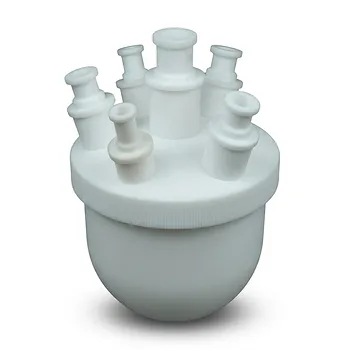
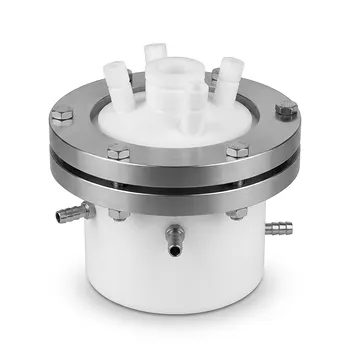
High-pressure reactors often utilize PTFE (Teflon) or PPL liners to protect the outer metal shell from the corrosive nature of the precursor solution. These liners are critical for preventing metal ion contamination from the reactor walls, ensuring the final catalyst maintains high chemical purity.
Understanding the Trade-offs
Balancing Temperature and Pressure
While higher temperatures accelerate the reaction, they also exponentially increase the internal pressure. Operating too close to the reactor's safety limits can lead to seal failure or mechanical fatigue of the vessel.
Challenges in Real-Time Monitoring
Because the reaction occurs inside a sealed, thick-walled steel vessel, it is difficult to monitor the progress of crystallization in real-time. This "black box" nature of hydrothermal synthesis requires precise timing and temperature control, as even minor deviations can result in the formation of the wrong crystalline phase.
How to Apply This to Your Project
Making the Right Choice for Your Goal
- If your primary focus is phase purity: Ensure the reactor maintains a stable temperature profile to allow for the slow, controlled primary crystallization of the mixed oxide precursors.
- If your primary focus is high-surface-area catalysts: Utilize the high-pressure environment to enhance the penetration of precursors into support structures, ensuring a nanoscale dispersion of the metal ions.
- If your primary focus is experimental safety: Always verify the temperature limits of your reactor liners (e.g., PTFE vs. PPL) to prevent deformation or leakage during the long hydrothermal synthesis cycles.
By mastering the high-pressure environment, researchers can precisely engineer the crystalline architecture of MoVTeNbOx catalysts to achieve peak industrial performance.
Summary Table:
| Function | Key Mechanism | Impact on Catalyst |
|---|---|---|
| Hydrolysis & Polycondensation | High-energy environment | Links metal atoms into complex intermediate chains. |
| Primary Crystallization | Controlled thermodynamic state | Forms stable nuclei for specific M1/M2 crystal phases. |
| Autogenous Pressure | Superheated solvent state | Increases precursor solubility and accelerates ion diffusion. |
| Structural Control | Kinetic regulation | Ensures chemical homogeneity and prevents inactive phases. |
| Purity Maintenance | Fluoropolymer (PTFE/PPL) lining | Prevents metal ion contamination from reactor walls. |
Elevate Your Catalyst Synthesis with KINTEK’s High-Performance Solutions
Achieving the precise crystalline phases of MoVTeNbOx requires uncompromising material purity and extreme chemical resistance. At KINTEK, we specialize in manufacturing the high-performance fluoropolymer components essential for successful hydrothermal synthesis.
Whether you need standard PTFE or PFA liners for hydrothermal synthesis, microwave digestion vessels, or complex custom CNC-machined parts, our end-to-end fabrication ensures your equipment withstands the most demanding high-pressure environments. Our expertise extends from basic labware (beakers, crucibles, and reagent bottles) and fluid transfer components (tubing, fittings, and valves) to advanced reaction apparatus and bespoke laboratory setups.
Ready to optimize your lab's performance? Contact KINTEK today to discuss your custom requirements or high-volume orders. Partner with us for an absolute focus on high-performance fluoropolymer materials and precision engineering.
References
- Zeyue Wei, Weixin Huang. HCl Treatment of Mixed-Phase MoVTeNbO<sub><i>x</i></sub> Catalysts for Enhanced Performance in Selective Oxidation of Propane. DOI: 10.1021/prechem.4c00089
This article is also based on technical information from Kintek Knowledge Base .
Related Products
- High Temperature Corrosion Resistant Hydrothermal Synthesis Reactor with TFM Inner Liner and Straight Cylinder Design
- PTFE Lined High Pressure Digestion Vessel 50ml High Temperature Hydrothermal Synthesis Tank
- High Pressure Custom TFM Reactor Stainless Steel Outer Vessel PTFE Inner Cup for Corrosive Synthesis
- Custom TFM Reaction Vessel with Stainless Steel Jacket and PTFE Inner Cup for High Corrosion Resistance
- High Purity PFA Reaction Vessel for Biopharmaceutical Synthesis and Corrosive Chemical Fluid Handling with Customizable Tube Fittings
People Also Ask
- What is the role of a corrosion-resistant reactor in the synthesis of lignin-based carbon dots? Ensure Maximum Purity
- What are the technical advantages of using hydrothermal synthesis reactors for advanced electronic & optical nanomaterials?
- How does a hydrothermal synthesis reactor facilitate the production of crystalline materials with tailored morphologies? Precision Crystal Growth
- Why is the sealing reliability of a hydrothermal synthesis reactor critical for 24-hour cycles? Ensure Nano-Precision
- What role do hydrothermal synthesis reactors play in CQD preparation? Achieve High-Purity Nanomaterial Synthesis