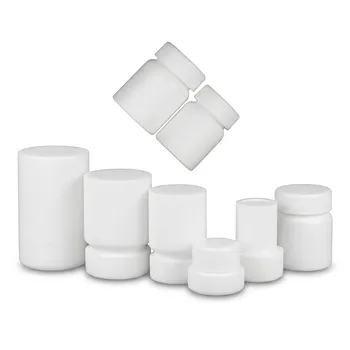
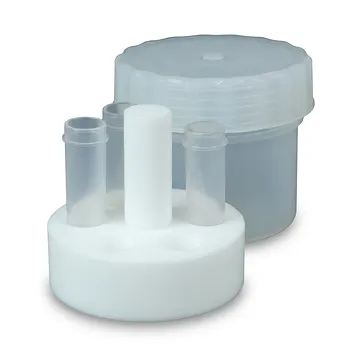
The Teflon-lined stainless steel hydrothermal autoclave is the essential reaction vessel for creating manganese-doped activated carbon. It provides a sealed, high-pressure environment that allows water to reach a "subcritical state," where its physical properties change to facilitate chemical reactions. This specific environment is what enables the uniform integration of manganese into the carbon matrix, resulting in a stable, amorphous structure.
The autoclave functions as a high-pressure reactor that manipulates the thermodynamic properties of water to break down manganese precursors. By combining mechanical strength with chemical inertness, it ensures that manganese is doped uniformly without introducing metallic impurities from the vessel itself.
The Role of Subcritical Water in Doping
Altering the Chemistry of Water
In a sealed autoclave, water is heated past its boiling point, increasing internal pressure and creating subcritical water. In this state, the dielectric constant of water decreases while its ionic product increases.
These changes transform water from a simple solvent into a highly reactive medium. This environment is necessary to facilitate the dissociation of potassium permanganate precursors, which are commonly used as the manganese source.
Achieving Uniform Manganese Distribution
The subcritical environment ensures that manganese ions are distributed evenly throughout the activated carbon matrix. Because the reaction occurs under high autogenous pressure, the manganese can penetrate the porous structure of the carbon deeply.
This process results in a final product with an amorphous structure. Unlike traditional methods that might create discrete crystalline phases, the autoclave environment promotes a more integrated, non-crystalline atomic arrangement.
Engineering the Reaction Environment
Balancing Strength and Inertness
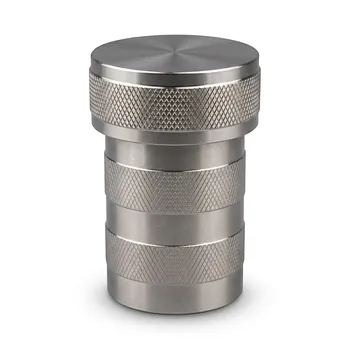
The autoclave is a dual-component system designed to handle extreme conditions. The stainless steel outer shell provides the mechanical strength required to withstand the high internal pressures generated during heating.
The internal Teflon (PTFE) liner provides essential chemical inertness. It protects the steel from corrosive precursors like potassium permanganate or acidic solutions, ensuring the vessel does not degrade during the synthesis.
Preventing Contamination and Impurities
A critical function of the Teflon liner is the prevention of metal impurity contamination. Without this barrier, the reaction liquid could leach iron, chromium, or nickel from the stainless steel walls.
By isolating the reaction, the autoclave ensures that the manganese-doped activated carbon remains high-purity. This purity is vital for the material’s performance in applications like energy storage or catalysis.
Understanding the Trade-offs
Temperature and Pressure Limitations
While Teflon is highly inert, it has a thermal ceiling, typically around 240°C. Exceeding these temperatures can cause the liner to deform or release toxic vapors, compromising the experiment and the vessel.
Additionally, because the pressure is autogenous (generated by heating the liquid in a fixed volume), it can be difficult to measure precisely in real-time without specialized sensors. This requires careful calculation of the "fill degree" to avoid over-pressurization.
Cooling and Material Recovery
Hydrothermal synthesis requires a slow, controlled cooling process to maintain the desired structural properties. Rapid cooling can cause thermal shock to the Teflon liner, leading to cracks or failures over time.
Furthermore, the sealed nature of the process means that the reaction cannot be monitored visually. Researchers must rely on pre-set parameters and post-reaction analysis to determine if the synthesis was successful.
How to Apply This to Your Synthesis
Making the Right Choice for Your Goal
- If your primary focus is high-purity doping: Use a high-quality PTFE liner and ensure it is thoroughly cleaned with acid between runs to prevent cross-contamination.
- If your primary focus is structural control: Carefully manage the temperature to stay within the subcritical water window, as this directly influences the transition to an amorphous phase.
- If your primary focus is vessel longevity: Never exceed a 70-80% fill level to ensure there is adequate head space for pressure, preventing mechanical stress on the steel and Teflon.
By precisely controlling the subcritical environment within the autoclave, you can transform simple carbon precursors into sophisticated, manganese-doped functional materials.
Summary Table:
| Component/Process | Primary Function | Key Outcome for Synthesis |
|---|---|---|
| Stainless Steel Shell | Mechanical Strength | Safely contains high autogenous pressure |
| Teflon (PTFE) Liner | Chemical Inertness | Prevents metal leaching and vessel corrosion |
| Subcritical Water | Enhanced Reactivity | Dissociates manganese precursors effectively |
| High Pressure | Deep Penetration | Achieves uniform Mn distribution in carbon pores |
| Thermal Control | Regulated Heating | Facilitates stable, amorphous atomic structures |
Elevate Your Synthesis with KINTEK’s Fluoropolymer Expertise
Achieve uncompromising purity in your material research with KINTEK. We specialize in high-performance laboratory supplies crafted exclusively from PTFE and PFA, ensuring your reactions remain free from contamination.
From essential hydrothermal synthesis liners, microwave digestion vessels, and high-purity beakers to advanced electrochemical cells and custom CNC-machined components, KINTEK supports your workflow at every scale. Whether you need standard consumables like stirring bars and tubing or bespoke reactor setups for complex fluid transfer, our end-to-end fabrication capabilities deliver exactly what your lab requires.
Ready to optimize your hydrothermal processes? Contact us today to discuss your custom requirements and experience the KINTEK difference in high-performance fluoropolymers.
References
- Nasser A.M. Barakat, Yasmin T. Sayed. Enhanced capacitive deionization performance using Mn-doped activated carbon electrodes for energy-efficient brackish water desalination. DOI: 10.1098/rsos.250372
This article is also based on technical information from Kintek Knowledge Base .
Related Products
- Custom TFM Reaction Vessel with Stainless Steel Jacket and PTFE Inner Cup for High Corrosion Resistance
- High Temperature Corrosion Resistant Hydrothermal Synthesis Reactor with TFM Inner Liner and Straight Cylinder Design
- PTFE Lined High Pressure Digestion Vessel 50ml High Temperature Hydrothermal Synthesis Tank
- Large Scale PTFE Beakers and Flasks for High Temperature Corrosion Resistant Laboratory Applications with Custom CNC Fabrication
- High Purity PTFE Square Tank with Lid Corrosion Resistant Low Background Teflon Sink for Trace Analysis
People Also Ask
- Why are high-performance pressure-resistant reaction vessels required for oxygen-assisted hydrothermal conversion at 150 °C?
- Why are high-quality fluoropolymer-lined reaction vessels required for alk-Ti3C2Tx MXene? Ensure Purity & HF Resistance
- How do magnetic stirring and reaction vessels impact MOF-derived carbon quality? Optimize Your Composite Performance
- Why are PTFE-lined reaction vessels necessary for forced degradation studies? Ensure high-purity results and accuracy.
- Why is a high-purity PTFE lined reaction vessel required for the acidic etching of MXenes? Ensure Material Purity.