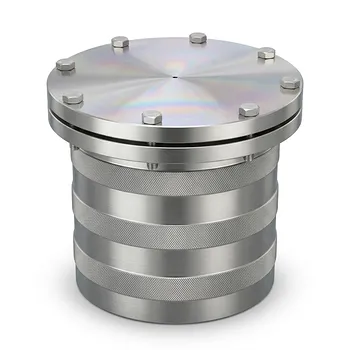
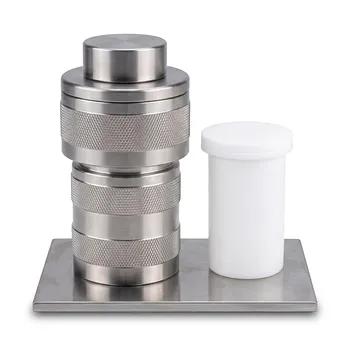
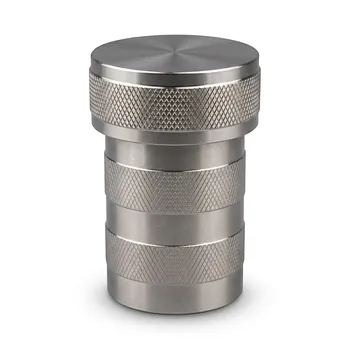
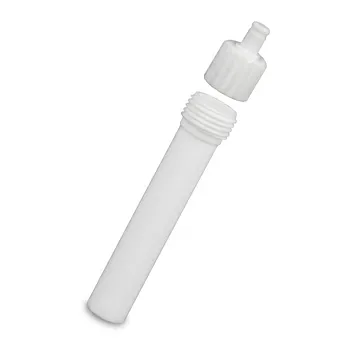
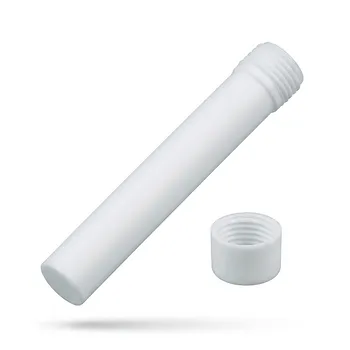
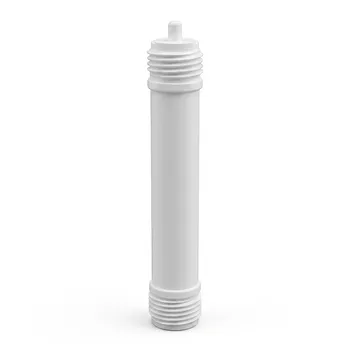
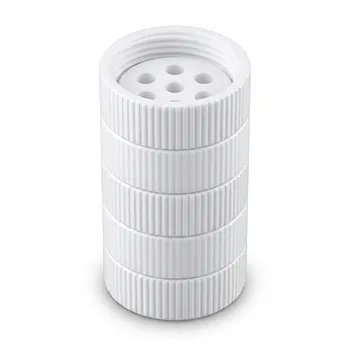
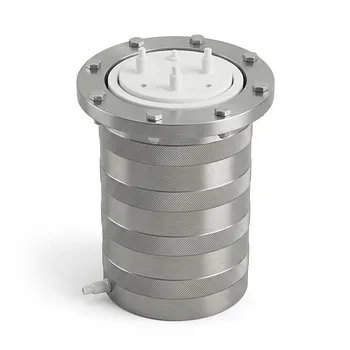
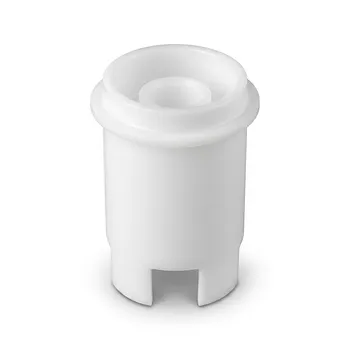
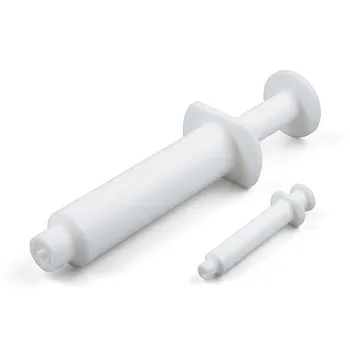
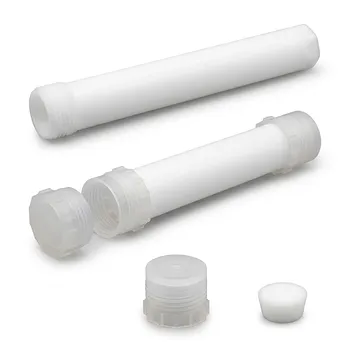
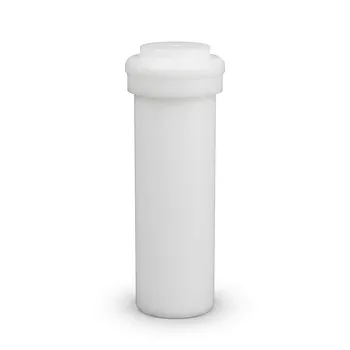
In the synthesis of NiPc-NH2, the high-pressure autoclave and its fluoropolymer liner function as a high-temperature reactor system that drives chemical cyclization while isolating the reaction from metallic impurities. The autoclave creates a sealed environment that maintains the pentanol solvent in a liquid state at 180 °C, providing the thermal energy required for 4-aminophthalonitrile and nickel chloride to react. The liner, typically made of Polytetrafluoroethylene (PTFE), acts as a critical chemical barrier that prevents the solvent from leaching metal ions from the reactor walls, ensuring the final amino-substituted nickel phthalocyanine molecular units achieve high purity.
The solvothermal process leverages a pressurized, high-temperature environment to overcome the activation energy required for base-catalyzed cyclization. The integration of a fluoropolymer liner is non-negotiable for ensuring the structural integrity of the catalyst and the longevity of the stainless steel reactor shell.
The Role of the Autoclave in Solvothermal Synthesis
Driving Kinetics through High-Pressure Thermal Energy
The primary function of the autoclave is to provide a sealed, constant-temperature environment (typically 180 °C) that facilitates the solvothermal reaction. By heating solvents like pentanol or ethanol beyond their atmospheric boiling points, the system generates internal pressure that significantly reduces reaction activation energy.
Enhancing Precursor Solubility and Interaction
High-pressure conditions increase the solubility of solid reactants, such as nickel chloride and organic ligands. This environment ensures the full coordination and self-assembly of nickel ions with 4-aminophthalonitrile, which is foundational for creating stable "pre-embedded" single-atom precursors.
Maintaining the Liquid Phase at Elevated Temperatures
The sealed system prevents the loss of volatile solvents, allowing them to remain in a superheated liquid state. This state provides the necessary energy for the solvent exchange and structural rearrangement required to form complex molecular frameworks like NiPc-NH2.
The Strategic Necessity of the Fluoropolymer Liner
Ensuring High Purity through Metal Isolation
The fluoropolymer liner, such as PTFE or PFA, serves as a chemically inert reaction vessel that prevents the reaction liquid from contacting the metallic walls of the autoclave. This isolation is vital to avoid metal ion contamination (e.g., iron or chromium from stainless steel) which would degrade the quality of the synthesized catalyst.
Providing Chemical and Corrosion Resistance
Solvents like pentanol, combined with base catalysts and metal precursors, can be highly corrosive at 180 °C. The liner protects the external stainless steel shell from erosion and chemical attack, ensuring the reactor remains safe and structurally sound over multiple synthesis cycles.
Facilitating Product Recovery and Collection
Fluoropolymers are characterized by an extremely smooth, non-stick surface. This physical property allows researchers to easily recover and collect the resulting solid precipitates or synthesized powder sediments without losing material to the reactor walls.
Understanding the Trade-offs
Thermal Conductivity and Heating Lag
While fluoropolymer liners offer excellent chemical protection, they have lower thermal conductivity than the surrounding metal shell. This can lead to a temperature lag between the oven's set point and the actual internal reaction temperature, requiring precise calibration.
Temperature Limitations of Polymers
Materials like PTFE have a maximum operating temperature, often around 250 °C to 260 °C. Exceeding these limits can cause the liner to soften or deform, potentially leading to a seal failure or contamination of the reaction mixture.
Mechanical Integrity under Pressure
The liner relies on the stainless steel autoclave for mechanical support; it cannot withstand high internal pressures on its own. If the liner is not properly seated or sized, the pressure can cause the solvent to bypass the liner, leading to "wicking" and subsequent corrosion of the outer vessel.
How to Apply This to Your Project
Recommendations for Synthesis Optimization
- If your primary focus is Maximum Purity: Always use a high-purity PTFE or PFA liner and perform a "blank" cleaning run with the intended solvent to remove any residual surface contaminants.
- If your primary focus is Reaction Rate: Ensure the autoclave is pre-heated or account for the thermal lag introduced by the fluoropolymer liner to ensure the internal temperature stays at the required 180 °C.
- If your primary focus is Vessel Longevity: Inspect the liner for signs of "pitting" or discoloration after each run, as these are early indicators of chemical degradation that could eventually expose the steel shell.
The synergy between the pressure-resistant autoclave and the chemically inert liner is the technical cornerstone for producing high-quality, uncontaminated NiPc-NH2 precursors.
Summary Table:
| Component | Primary Function | Key Laboratory Benefit |
|---|---|---|
| High-Pressure Autoclave | Provides sealed, 180°C environment | Maintains solvent liquid phase; drives reaction kinetics. |
| Fluoropolymer Liner (PTFE/PFA) | Chemical isolation barrier | Prevents metal ion contamination; protects reactor shell. |
| Non-Stick Surface | Material recovery | Simplifies collection of synthesized powder sediments. |
| Structural Shell | Mechanical support | Withstands internal pressure generated by superheated solvents. |
Elevate Your Synthesis Precision with KINTEK
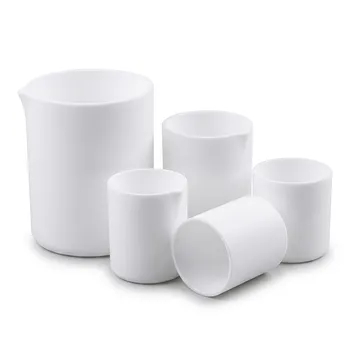
Achieve uncompromising purity in your chemical research with KINTEK’s high-performance fluoropolymer solutions. From everyday basic labware (beakers, measuring cylinders, and reagent bottles) to advanced hydrothermal synthesis liners and microwave digestion vessels, we provide the chemically inert environment your catalysts require.
Our expertise extends from high-purity trace analysis instruments and fluid transfer components to bespoke laboratory setups crafted via end-to-end custom CNC fabrication. Whether you need standard PTFE/PFA parts or complex, non-standard machined components for electrochemical cells and reaction apparatus, KINTEK is your absolute partner for high-performance materials.
Ready to optimize your reactor setup? Contact us today to discuss your custom requirements or high-volume orders!
References
- Shanhe Gong, Shu Ping Lau. Interface engineering of single-molecular heterojunction catalysts for CO2 electroreduction in strong acid medium. DOI: 10.1038/s41467-025-63722-6
This article is also based on technical information from Kintek Knowledge Base .
Related Products
- Custom TFM Reaction Vessel with Stainless Steel Jacket and PTFE Inner Cup for High Corrosion Resistance
- PTFE Lined High Pressure Digestion Vessel 50ml High Temperature Hydrothermal Synthesis Tank
- High Temperature Corrosion Resistant Hydrothermal Synthesis Reactor with TFM Inner Liner and Straight Cylinder Design
- High Purity PTFE Microwave Digestion Vessel Replacement Liner for Acid Sample Preparation and Trace Analysis
- High Purity TFM Microwave Digestion Vessels PTFE Acid Evaporation Liners Domestic GT-400 Equivalent Laboratory Reaction Containers
People Also Ask
- Why are high-performance pressure-resistant reaction vessels required for oxygen-assisted hydrothermal conversion at 150 °C?
- Why are high-quality fluoropolymer-lined reaction vessels required for alk-Ti3C2Tx MXene? Ensure Purity & HF Resistance
- How do magnetic stirring and reaction vessels impact MOF-derived carbon quality? Optimize Your Composite Performance
- Why are PTFE-lined reaction vessels necessary for forced degradation studies? Ensure high-purity results and accuracy.
- Why is a high-purity PTFE lined reaction vessel required for the acidic etching of MXenes? Ensure Material Purity.