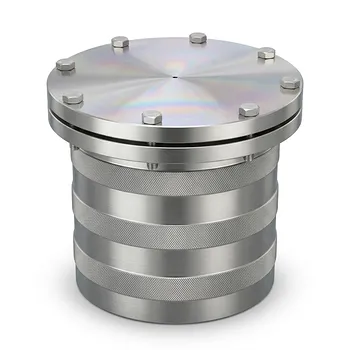
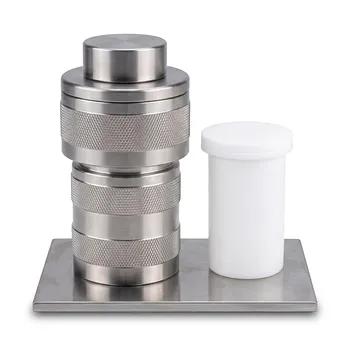
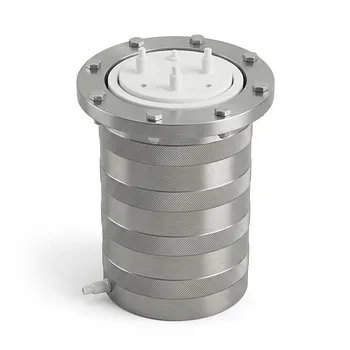
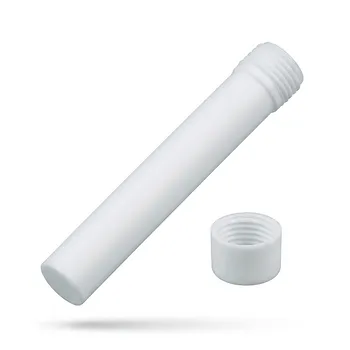
The PTFE-lined stainless steel autoclave serves as a specialized reaction vessel that facilitates the "bottom-up" synthesis of carbon quantum dots (CQDs) through hydrothermal carbonization. By creating a sealed, high-temperature, and high-pressure environment, it enables organic precursors to undergo complex chemical transformations that would be impossible at atmospheric pressure. The PTFE liner specifically ensures that these reactions occur in a chemically inert environment, preventing metallic contamination and protecting the structural integrity of the vessel.
Core Takeaway: The autoclave provides the physical pressure and thermal energy required to dehydrate and carbonize precursors into nanoscale structures, while the PTFE liner preserves the purity and optical properties of the CQDs by preventing contact with the metal reactor walls.
The Mechanics of Hydrothermal Carbonization
Creating a High-Pressure Environment
The stainless steel outer shell of the autoclave acts as a pressure-bearing vessel, allowing the reaction to reach temperatures well above the boiling point of the solvent. As the liquid (such as deionized water or DMF) is heated within the sealed chamber, it generates autogenous pressure, which is the primary force driving the nucleation and growth of carbon nanocrystals.
Facilitating Molecular Transformation
The high-pressure environment lowers the energy barrier for the dehydration, polymerization, and carbonization of organic precursors like citric acid, urea, or cellulose. These conditions force the molecular building blocks to reorganize into dense, nanoscale carbon structures with specific photophysical properties, such as fluorescence.
Promoting High Crystallinity
The stable, pressurized environment within the autoclave is essential for achieving high-crystallinity single-phase products. Controlled heating ensures that the carbonization process is uniform, which is critical for producing CQDs with consistent sizes and high quantum yields.
The Critical Role of the PTFE Liner
Ensuring Chemical Inertness and Purity
The PTFE (Polytetrafluoroethylene) liner is used because it is exceptionally stable and chemically inert, meaning it will not react with precursors or solvents even at high temperatures. This prevents the introduction of metal ion contamination from the stainless steel shell, which would otherwise quench the fluorescence of the CQDs or alter their chemical profile.
Corrosion Resistance and Vessel Protection
Many CQD syntheses involve aggressive reagents, such as ammonia solutions or acidic precursors, which can severely corrode stainless steel at 180°C to 220°C. The PTFE liner acts as a protective barrier, shielding the high-strength steel shell from chemical attack and significantly extending the operational life of the equipment.
Facilitating Product Recovery
PTFE is known for its anti-adhesive properties and extremely smooth surface. This allows researchers to easily recover the synthesized CQDs and solid precipitates from the liner after the reaction is complete, minimizing product loss and simplifying the cleaning process for subsequent experiments.
Understanding the Trade-offs and Limitations
Temperature Constraints
While PTFE is highly resistant to chemicals, it has a physical limit; it generally cannot be used for reactions exceeding 220°C to 250°C as the material begins to soften or decompose. For syntheses requiring higher temperatures, more expensive PPL (para-polyphenylene) liners or specialized alloy autoclaves must be used.
Thermal Expansion and Sealing
PTFE has a different coefficient of thermal expansion than the stainless steel shell. If the autoclave is heated or cooled too rapidly, the liner may deform or the seal may fail, leading to pressure leaks that can ruin the synthesis and pose safety risks to the laboratory environment.
How to Apply This to Your Synthesis Goals
Choosing the Right Approach for Your Project
- If your primary focus is high quantum yield and purity: Ensure your PTFE liner is pristine and free of scratches, as even trace metal ions from a compromised liner can significantly reduce the fluorescence of your carbon dots.
- If your primary focus is large-scale production: Monitor the fill-level of your autoclave (typically 60-80% of capacity) to balance the need for autogenous pressure with the safety limits of the stainless steel shell.
- If your primary focus is synthesizing doped CQDs (e.g., Nitrogen-doped): Use the autoclave to maintain the high pressure necessary to force nitrogen atoms from precursors like urea into the carbon lattice during the carbonization phase.
By mastering the balance of temperature, pressure, and chemical containment provided by the autoclave, you can precisely control the final properties of your carbon quantum dots.
Summary Table:
| Component | Role in CQD Synthesis | Primary Benefit |
|---|---|---|
| Stainless Steel Shell | High-pressure containment | Enables autogenous pressure for crystallization |
| PTFE Liner | Chemical barrier & inertness | Prevents metal contamination; protects fluorescence |
| Hydrothermal Environment | Thermal energy provider | Drives dehydration and polymerization of precursors |
| Sealing Mechanism | Atmospheric isolation | Maintains stable temperature and pressure for uniformity |
Precision Fluoropolymer Solutions for Your Lab
Elevate your research with KINTEK’s high-performance fluoropolymer solutions. As specialists in high-purity materials, we manufacture virtually all imaginable laboratory supplies crafted from PTFE and PFA.
From everyday basic labware (beakers, measuring cylinders, and reagent bottles) to advanced hydrothermal synthesis liners, microwave digestion vessels, and custom electrochemical cells, KINTEK provides the chemical inertness and thermal stability your synthesis demands. Whether you require standard consumables like O-rings and stirring bars or bespoke non-standard machined parts via our end-to-end custom CNC fabrication, we deliver everything from single bespoke setups to high-volume orders.
Ensure the purity of your Carbon Quantum Dots with the right equipment. Contact our technical experts today to discuss your custom requirements!
References
- Fani Rahayu Hidayah Rayanisaputri, Vivi Fauzia. The Role of Solvent in Carbon Quantum Dot Synthesis on the Performance of MoS<sub>2</sub> Nanosheet/Carbon Quantum Dot Heterostructures as Electrocatalysts for the Hydrogen Evolution Reaction. DOI: 10.1021/acsanm.4c06067
This article is also based on technical information from Kintek Knowledge Base .
Related Products
- Custom TFM Reaction Vessel with Stainless Steel Jacket and PTFE Inner Cup for High Corrosion Resistance
- PTFE Lined High Pressure Digestion Vessel 50ml High Temperature Hydrothermal Synthesis Tank
- High Pressure Custom TFM Reactor Stainless Steel Outer Vessel PTFE Inner Cup for Corrosive Synthesis
- High Purity TFM Microwave Digestion Vessels PTFE Acid Evaporation Liners Domestic GT-400 Equivalent Laboratory Reaction Containers
- High Purity PTFE Microwave Digestion Vessel Replacement Liner for Acid Sample Preparation and Trace Analysis
People Also Ask
- Why are high-performance pressure-resistant reaction vessels required for oxygen-assisted hydrothermal conversion at 150 °C?
- Why are PTFE-lined reaction vessels necessary for forced degradation studies? Ensure high-purity results and accuracy.
- Why are high-quality fluoropolymer-lined reaction vessels required for alk-Ti3C2Tx MXene? Ensure Purity & HF Resistance
- How do magnetic stirring and reaction vessels impact MOF-derived carbon quality? Optimize Your Composite Performance
- Why is a high-purity PTFE lined reaction vessel required for the acidic etching of MXenes? Ensure Material Purity.