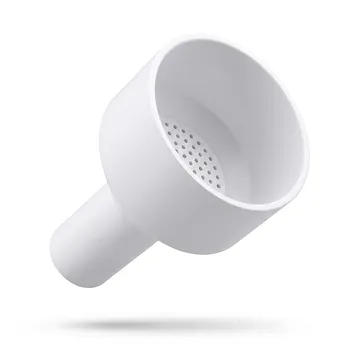
In the solvothermal synthesis of Bismuth Oxybromide (BiOBr), the PTFE-lined stainless steel autoclave serves as a critical high-pressure reaction vessel. It creates a sealed environment that allows the solvent to remain in a liquid state at temperatures significantly exceeding its normal boiling point. This setup facilitates the complete reaction of precursors and the controlled growth of high-purity micro-nanostructures that would be impossible to achieve under standard atmospheric conditions.
The autoclave functions as a dual-purpose system: the stainless steel shell provides the structural strength to maintain high internal pressures, while the PTFE liner ensures chemical inertness and prevents metal contamination. Together, they enable the precise thermodynamic conditions required for the nucleation and growth of advanced photocatalytic materials.
Thermodynamic and Kinetic Functions
Achieving Superheated Liquid States
The primary role of the sealed autoclave is to generate high pressure, which keeps the reaction solution from vaporizing at elevated temperatures. By maintaining the solvent in a liquid phase above its boiling point, the system increases the kinetic energy of the reactants, promoting faster and more complete chemical transformations.
Enhancing Precursor Solubility
Solvothermal conditions significantly increase the solubility of precursors that are otherwise poorly soluble at room temperature. This environment promotes a "dissolution-recrystallization" process, which is essential for guiding the precursors into specific crystalline forms, such as BiOBr nanosheets or nanobelts.
Driving Morphological Control
The high-temperature, high-pressure environment allows for the fine-tuning of nucleation and growth rates. This precise control is what enables the synthesis of uniform micro-nanostructures with specific surface areas, which is vital for the material’s performance in photocatalytic applications.
Integrity and Chemical Purity
The Protective Role of the PTFE Liner
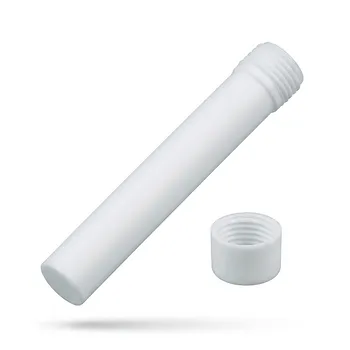
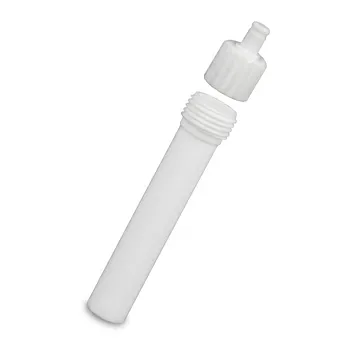
Polytetrafluoroethylene (PTFE) is used as an inner liner because of its exceptional chemical inertness and resistance to corrosion. In BiOBr synthesis, which may involve acidic components or strong polar solvents, the liner prevents the reaction liquid from eroding the stainless steel outer shell.
Preventing Metal Ion Contamination
If the reaction solution were to come into direct contact with the stainless steel, it could leach chromium, nickel, or iron ions into the sample. The PTFE liner acts as a barrier, ensuring that the redox reactions occur in a pure environment and that the resulting nanocatalysts are free from performance-degrading metallic impurities.
Facilitating Product Recovery
The extremely smooth surface of the PTFE material prevents the synthesized solid precipitates from adhering strongly to the walls of the vessel. This characteristic simplifies the subsequent recovery and collection of the BiOBr powder sediments after the reaction is complete.
Understanding the Trade-offs
Temperature Limitations of PTFE
While PTFE is highly resistant to chemicals, it has a clear thermal threshold, typically around 220°C to 250°C. Exceeding these temperatures can cause the liner to soften or deform, potentially compromising the seal and leading to dangerous pressure leaks.
Pressure Risks and Safety
The strength of the stainless steel shell is a safety feature, but it also requires strict adherence to filling degree limits (usually 60-80% of volume). Overfilling the autoclave can lead to an exponential increase in pressure as the liquid expands, risking a mechanical failure of the vessel.
Heating and Cooling Gradients
Autoclaves have significant thermal mass, meaning they heat up and cool down slowly. This "thermal lag" must be accounted for in the experimental design, as the actual reaction time at the target temperature may differ from the time the oven is active.
How to Apply This to Your Synthesis
Making the Right Choice for Your Goal
- If your primary focus is high material purity: Ensure the PTFE liner is inspected for scratches or pitting before use to prevent any potential leaching from the underlying steel.
- If your primary focus is morphology control: Strictly control the "filling ratio" of the solvent, as the internal pressure directly influences the crystal growth patterns and the uniformity of the nanostructures.
- If your primary focus is equipment longevity: Avoid using temperatures near the PTFE limit for extended periods and clean the liner with non-abrasive methods to maintain its smooth, non-stick surface.
By mastering the balance between pressure, temperature, and chemical containment, you can reliably produce BiOBr micro-nanostructures with the precise properties required for advanced technical applications.
Summary Table:
| Feature | Function in BiOBr Synthesis | Key Benefit |
|---|---|---|
| High Pressure | Maintains solvents in liquid state above boiling point | Increases kinetic energy & precursor solubility |
| PTFE Liner | Provides chemically inert barrier against corrosion | Prevents iron/chrome/nickel contamination |
| Thermal Control | Regulates nucleation and growth rates | Facilitates uniform micro-nanostructure morphology |
| Non-stick Surface | Reduces adherence of solid precipitates | Simplifies recovery of BiOBr powder sediments |
Elevate Your Solvothermal Synthesis with KINTEK
Precision in BiOBr synthesis requires equipment that stands up to extreme thermodynamic conditions without compromising purity. At KINTEK, we specialize in high-performance fluoropolymer solutions tailored for advanced laboratory needs.
From PTFE and PFA lined autoclaves and custom hydrothermal synthesis liners to a full range of high-purity labware—including beakers, crucibles, and complex fluid transfer components—we provide the tools necessary for zero-contamination research. Whether you need standard consumables like stirring bars and O-rings or bespoke laboratory setups and custom CNC-machined parts, our end-to-end fabrication ensures your specific research requirements are met with absolute focus.
Ready to optimize your material growth? Contact KINTEK today to discuss your custom project or high-volume lab supply needs!
References
- Oyelusi Olaifa, Andreas Kafizas. Purifying the Air with Photocatalysis: Developing Bismuth Oxybromide/ Copper Phthalocyanine Composite Photocatalyst Filters with Enhanced Activity for NO<sub>x</sub> Removal. DOI: 10.1002/cptc.202400346
This article is also based on technical information from Kintek Knowledge Base .
Related Products
- Custom TFM Reaction Vessel with Stainless Steel Jacket and PTFE Inner Cup for High Corrosion Resistance
- PTFE Lined High Pressure Digestion Vessel 50ml High Temperature Hydrothermal Synthesis Tank
- High Pressure Custom TFM Reactor Stainless Steel Outer Vessel PTFE Inner Cup for Corrosive Synthesis
- High Purity TFM Microwave Digestion Vessels PTFE Acid Evaporation Liners Domestic GT-400 Equivalent Laboratory Reaction Containers
- High Purity PTFE Microwave Digestion Vessel Replacement Liner for Acid Sample Preparation and Trace Analysis
People Also Ask
- Why are high-performance pressure-resistant reaction vessels required for oxygen-assisted hydrothermal conversion at 150 °C?
- Why are high-quality fluoropolymer-lined reaction vessels required for alk-Ti3C2Tx MXene? Ensure Purity & HF Resistance
- How do magnetic stirring and reaction vessels impact MOF-derived carbon quality? Optimize Your Composite Performance
- Why are PTFE-lined reaction vessels necessary for forced degradation studies? Ensure high-purity results and accuracy.
- Why is a high-purity PTFE lined reaction vessel required for the acidic etching of MXenes? Ensure Material Purity.