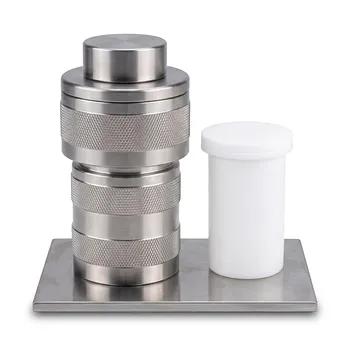
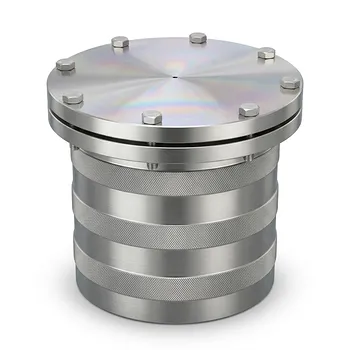
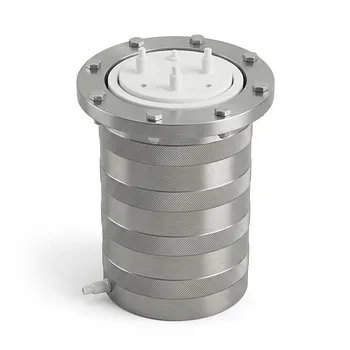
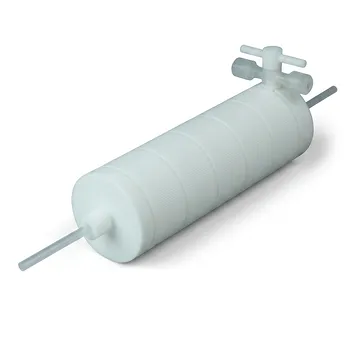
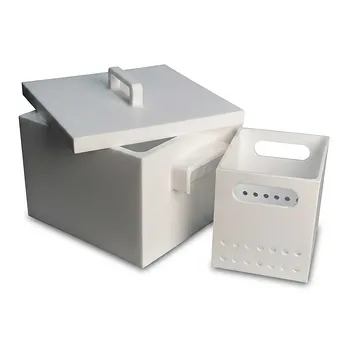
In the solvothermal synthesis of alpha-Fe2O3 nanosheets, a PTFE-lined stainless steel autoclave functions as a specialized reactor that creates a sealed, high-temperature, and high-pressure environment. This system enables the chemical transformation of ferric nitrate precursors into specific crystalline nanostructures while maintaining high levels of chemical purity and structural integrity.
The autoclave acts as a dual-purpose vessel: the stainless steel shell provides the mechanical strength required to withstand autogenous pressure, while the PTFE liner serves as a chemically inert barrier. Together, they allow for the controlled nucleation and growth of high-purity alpha-Fe2O3 nanosheets without metal contamination or vessel corrosion.
The Synergistic Role of the Dual-Component Reactor
Structural Integrity via Stainless Steel
The stainless steel outer shell provides the necessary mechanical strength to contain the high pressures generated during solvothermal reactions. At temperatures such as 140°C, the solvent within the vessel expands, creating autogenous pressure that exceeds atmospheric limits.
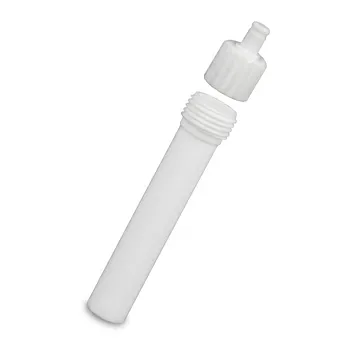
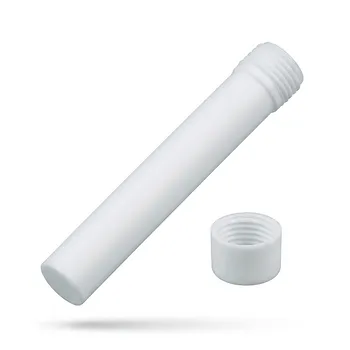
Chemical Protection via PTFE Lining
The Polytetrafluoroethylene (PTFE) liner acts as a sacrificial and protective barrier for the steel. It prevents the precursor solution from directly contacting the metal walls, effectively eliminating the risk of corrosive erosion and equipment failure.
Ensuring High Product Purity
By isolating the reaction mixture, the PTFE liner prevents metal ion contamination from the stainless steel. This is critical for the synthesis of alpha-Fe2O3, as the introduction of external metallic impurities would disrupt the crystalline phase and catalytic properties of the nanosheets.
Driving Crystalline Morphology and Phase Purity
Generation of Autogenous Pressure
The airtight seal of the autoclave facilitates the buildup of internal pressure, which is the physical basis for promoting the nucleation of nanocrystals. This pressure allows the solvent to remain in a liquid state well above its normal boiling point, accelerating the chemical transformation of precursors.
Control of Nanosheet Growth
The stable thermal environment provided by the autoclave allows for the precise development of alpha-Fe2O3 nanosheets. This controlled growth ensures that the resulting material achieves high-crystallinity and a single-phase product profile, which is essential for performance in applications like catalysis.
Enhanced Product Recovery
The extremely smooth and non-stick surface of the PTFE lining facilitates the collection of solid precipitates. After the reaction is complete, the synthesized powder sediments can be easily recovered without sticking to the vessel walls, maximizing the experimental yield.
Understanding the Trade-offs and Operational Limits
Temperature and Pressure Constraints
While PTFE is highly inert, it has physical limitations regarding thermal stability. Operating above 220°C–250°C can cause the liner to soften or undergo thermal decomposition, potentially leading to vessel leakage or mechanical failure.
Thermal Expansion Mismatch
Stainless steel and PTFE have different coefficients of thermal expansion. If the autoclave is heated or cooled too rapidly, the liner may deform or "creep," which can compromise the airtight seal and lead to inconsistent pressure levels during synthesis.
Cleaning and Cross-Contamination
Although the surface is non-stick, micro-pores in the PTFE can sometimes trap residual precursors from previous experiments. Rigorous cleaning protocols (often involving acid leaching) are required between runs to maintain the absolute purity of different batches of alpha-Fe2O3.
Applying This Technology to Your Synthesis Goals
The choice of autoclave parameters should align directly with the desired characteristics of your nanomaterial.
- If your primary focus is phase purity: Ensure the PTFE liner is free of scratches or degradation to prevent any trace metal contamination from the steel shell.
- If your primary focus is morphology control: Maintain a constant temperature (e.g., 140°C) to allow for steady autogenous pressure, which dictates the uniform growth of the nanosheets.
- If your primary focus is high yield: Utilize the non-stick properties of the PTFE liner to ensure full recovery of the synthesized powder sediments post-reaction.
By balancing mechanical containment with chemical inertness, the PTFE-lined autoclave remains the definitive tool for precision solvothermal synthesis.
Summary Table:
| Component | Primary Function | Key Benefit for Synthesis |
|---|---|---|
| Stainless Steel Shell | Mechanical containment | Withstands high autogenous pressure at 140°C+ |
| PTFE Liner | Chemical isolation | Prevents metal ion contamination and corrosion |
| Airtight Seal | Pressure generation | Drives nucleation and growth of single-phase crystals |
| Non-stick Surface | Product collection | Ensures high recovery yield of synthesized powders |
Elevate Your Synthesis with KINTEK’s High-Performance Fluoropolymers
Precision in nanomaterial synthesis demands equipment that never compromises on purity. KINTEK specializes in high-performance PTFE and PFA laboratory supplies, offering everything from everyday basic labware (beakers, measuring cylinders, crucibles, dishes, reagent/wash bottles, centrifuge and digestion tubes) and high-purity trace analysis instruments to comprehensive fluid transfer components (tubing, fittings, valves).
Whether you need standard sample prep tools (separatory funnels, burettes, filters, pipettes) and general consumables (stirring bars, O-rings, gaskets) or advanced reaction apparatus like hydrothermal synthesis liners, microwave digestion vessels, and custom electrochemical cells, we have you covered. Backed by end-to-end custom CNC fabrication, KINTEK delivers everything from complex non-standard machined parts to high-volume orders with an absolute focus on material excellence.
Ready to optimize your lab's results? Contact us today to discuss your custom requirements!
References
- Ahmad Rajabizadeh, Hossein Jafari Mansoorian. Optimisation of the removal of antibiotics from aqueous environments through ultrasonic processing with α-hematite nanoparticles using response surface methodology (case study: cefixime). DOI: 10.1007/s13201-025-02472-8
This article is also based on technical information from Kintek Knowledge Base .
Related Products
- PTFE Lined High Pressure Digestion Vessel 50ml High Temperature Hydrothermal Synthesis Tank
- Custom TFM Reaction Vessel with Stainless Steel Jacket and PTFE Inner Cup for High Corrosion Resistance
- High Purity PTFE Microwave Digestion Vessel Replacement Liner for Acid Sample Preparation and Trace Analysis
- High Purity TFM Microwave Digestion Vessels PTFE Acid Evaporation Liners Domestic GT-400 Equivalent Laboratory Reaction Containers
- High Pressure Custom TFM Reactor Stainless Steel Outer Vessel PTFE Inner Cup for Corrosive Synthesis
People Also Ask
- What are the benefits of using a PTFE-lined vessel for carbon-sulfur cathode treatment? Maximize Purity & Performance
- Why are PTFE-lined pressure digestion vessels required for the preparation of Ag/CeO2 catalysts? Purity & Performance
- What safety features are typically incorporated into high-pressure PTFE digestion vessel designs? Ensure Lab Safety
- What is the function of PTFE lined high-pressure vessels in g-C3N4 synthesis? Achieve High-Purity Material Growth
- Role of High-Pressure Digestion Tanks in Perovskite Synthesis: Achieve Superior Stability and Latent Heat