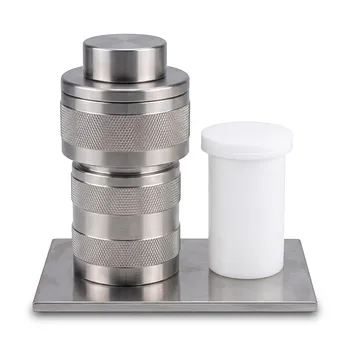
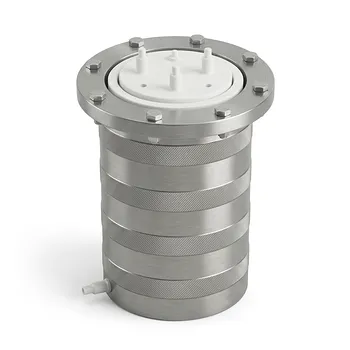
A PTFE-lined stainless steel autoclave functions as a pressurized chemical reactor that facilitates the thermal decomposition of precursors to release active sulfur species at 150°C. It provides the sealed, high-energy environment necessary for the nucleation and growth of V-Ni3S2 nanorods while isolating the reaction from metallic contaminants.
The autoclave serves as a critical pressure vessel that enables hydrothermal synthesis by combining the mechanical strength of steel with the chemical inertness of PTFE. This setup ensures the reaction proceeds under autogenous pressure to achieve high-crystallinity nanostructures without compromising chemical purity.
The Role of Thermodynamics in Nanorod Synthesis
Creating the High-Pressure Environment
The primary function of the stainless steel shell is to provide the mechanical strength required to withstand autogenous pressure. At 150°C, the precursor solution generates internal pressure that far exceeds atmospheric limits, which is the physical basis for promoting the growth of one-dimensional nanostructures.
Facilitating Thermal Decomposition
The sealed environment allows the reaction liquid to reach temperatures above its boiling point without evaporating. This high-temperature state is essential for the thermal decomposition of precursors, which triggers the release of active sulfur species required to form the V-Ni3S2 lattice.
Promoting Nucleation and Crystallization
The stable, constant-temperature environment provided by the autoclave ensures that the nucleation and crystal growth of the nanorods occur uniformly. This consistency is vital for achieving high-crystallinity, single-phase products rather than amorphous or irregular precipitates.
Ensuring Chemical Purity and Structural Integrity
Preventing Metallic Contamination
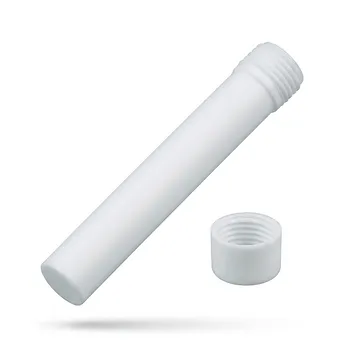
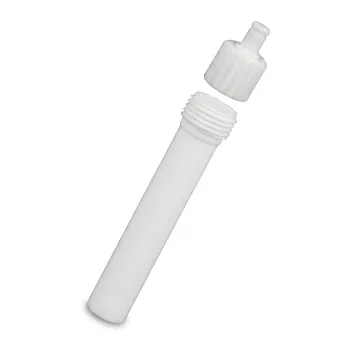
The PTFE (polytetrafluoroethylene) liner acts as a total barrier between the corrosive reaction liquid and the stainless steel walls. This isolation is critical to prevent the introduction of impurity ions (such as iron or chromium) from the steel, which would otherwise degrade the electrochemical performance of the V-Ni3S2 nanorods.
Corrosion Resistance and Stability
Hydrothermal precursors for nickel-based sulfides can be highly reactive or corrosive. PTFE offers superior chemical inertness, allowing it to resist erosion from acidic or alkaline reagents that would typically damage metal vessels.
Facilitating Product Recovery
The extremely smooth surface of the PTFE liner prevents the synthesized nanorods from adhering to the container walls. This characteristic facilitates the collection of solid precipitates and ensures that the morphology of the nanorods remains intact during the recovery process.
Understanding the Trade-offs and Limitations
Temperature Constraints
While PTFE is highly stable, it has a definite thermal ceiling, typically around 220°C to 250°C. For reactions requiring temperatures higher than this, the liner may begin to deform or release toxic vapors, necessitating the use of alternative materials like PPL (Polyphenylene polymers).
Pressure Safety Risks
The transition from liquid to gas within a sealed vessel creates significant internal stress. Failure to adhere to filling degree limits (usually 60% to 80% of the liner volume) can lead to over-pressurization, risking a catastrophic failure of the stainless steel shell.
Heating and Cooling Rates
The thick walls of the stainless steel autoclave create high thermal mass, meaning it does not heat or cool rapidly. This lag must be accounted for in synthesis protocols to ensure the effective reaction time aligns with the desired nanostructure dimensions.
How to Optimize Your Synthesis Results
To achieve the highest quality V-Ni3S2 nanorods, consider the following technical recommendations based on your specific synthesis goals:
- If your primary focus is phase purity: Ensure the PTFE liner is thoroughly cleaned with aqua regia or dilute acid between runs to prevent cross-contamination from previous reactions.
- If your primary focus is nanorod uniformity: Maintain a consistent filling ratio (typically 70-75%) to ensure the autogenous pressure remains stable across different batches.
- If your primary focus is structural integrity: Use a slow cooling (furnace cooling) method rather than rapid quenching to prevent thermal shock from damaging the nanorod morphology.
By mastering the balance between the autoclave's mechanical pressure and the liner's chemical protection, researchers can reliably produce high-performance nanostructures for energy applications.
Summary Table:
| Component | Primary Function | Key Benefit for Nanorod Synthesis |
|---|---|---|
| Stainless Steel Shell | Mechanical strength & pressure containment | Enables high-energy hydrothermal environment at 150°C |
| PTFE Liner | Chemical inertness & physical barrier | Prevents metallic contamination (Fe/Cr) and ensures purity |
| Sealed System | Maintains autogenous pressure | Facilitates thermal decomposition and uniform crystal growth |
| Non-stick Surface | Reduces wall adhesion | Simplifies product recovery and preserves nanorod morphology |
Elevate Your Synthesis Precision with KINTEK
Achieving high-crystallinity nanostructures like V-Ni3S2 requires equipment that guarantees both extreme pressure resistance and absolute chemical purity. KINTEK specializes in high-performance fluoropolymer solutions tailored for the most demanding laboratory environments.
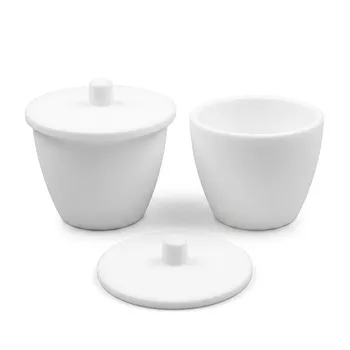
From essential PTFE and PFA labware (beakers, crucibles, and reagent bottles) and high-purity trace analysis instruments to specialized hydrothermal synthesis liners and microwave digestion vessels, we manufacture virtually every laboratory supply you need. Whether you require standard consumables like stirring bars and O-rings or bespoke laboratory setups—including complex non-standard machined parts crafted via our end-to-end custom CNC fabrication—KINTEK provides the material expertise to ensure your research is never compromised by contamination.
Ready to optimize your hydrothermal protocols? Contact us today to discuss your custom requirements!
References
- Kyeongseok Min, Sung‐Hyeon Baeck. Unveiling the Role of V and P Dual‐Doping in Ni<sub>3</sub>S<sub>2</sub> Nanorods: Enhancing Bifunctional Electrocatalytic Activities for Anion Exchange Membrane Water Electrolysis. DOI: 10.1002/sstr.202500217
This article is also based on technical information from Kintek Knowledge Base .
Related Products
- Custom TFM Reaction Vessel with Stainless Steel Jacket and PTFE Inner Cup for High Corrosion Resistance
- PTFE Lined High Pressure Digestion Vessel 50ml High Temperature Hydrothermal Synthesis Tank
- High Pressure Custom TFM Reactor Stainless Steel Outer Vessel PTFE Inner Cup for Corrosive Synthesis
- High Purity TFM Microwave Digestion Vessels PTFE Acid Evaporation Liners Domestic GT-400 Equivalent Laboratory Reaction Containers
- High Purity PTFE Microwave Digestion Vessel Replacement Liner for Acid Sample Preparation and Trace Analysis
People Also Ask
- Why is a Polytetrafluoroethylene (PTFE) lined reaction vessel an ideal choice for preparing PtNPs/FeSAC tandem catalysts?
- Why are high-performance pressure-resistant reaction vessels required for oxygen-assisted hydrothermal conversion at 150 °C?
- Why are PTFE-lined reaction vessels necessary for forced degradation studies? Ensure high-purity results and accuracy.
- Why are high-quality fluoropolymer-lined reaction vessels required for alk-Ti3C2Tx MXene? Ensure Purity & HF Resistance
- How do magnetic stirring and reaction vessels impact MOF-derived carbon quality? Optimize Your Composite Performance