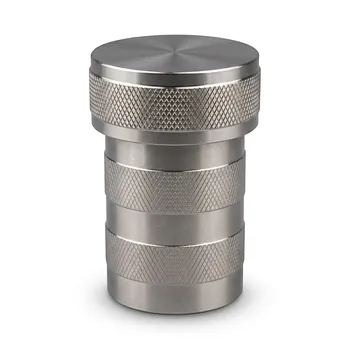
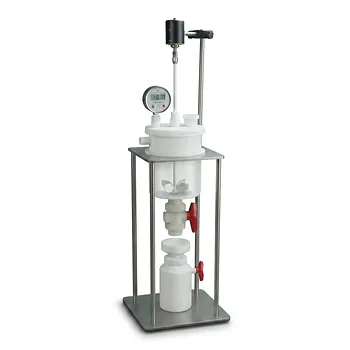
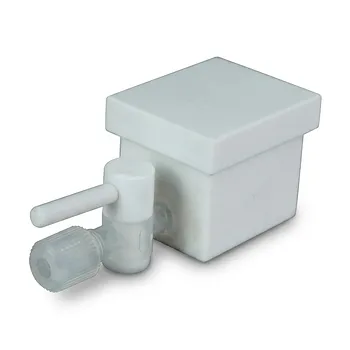
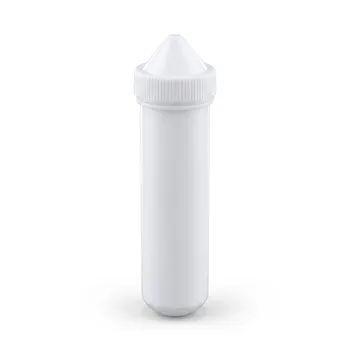
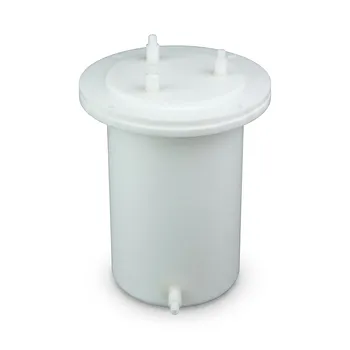
The PTFE-lined stainless steel autoclave serves as a specialized, high-pressure reaction vessel that facilitates the hydrothermal crystallization of SAPO-34 molecular sieves. It provides a chemically inert, sealed environment that allows corrosive precursors to react at temperatures between 180 °C and 220 °C under autogenous pressure, ensuring the formation of high-purity crystalline structures.
The autoclave acts as a micro-reactor that translates thermal energy into the internal pressure required for molecular sieve nucleation. By isolating corrosive reagents from the structural metal shell, it ensures both the safety of the operation and the phase purity of the resulting SAPO-34.
Creating the Hydrothermal Environment
Achieving Subcritical Conditions
Hydrothermal synthesis requires water to act as a solvent at temperatures significantly above its boiling point. The sealed autoclave allows the internal pressure to rise naturally as the temperature increases, creating autogenous pressure.
This pressurized state is the physical foundation for the nucleation and crystal growth of SAPO-34. Without this high-pressure environment, the chemical precursors would not achieve the energy state necessary to form the specific chabazite (CHA) framework.
Sustaining Mechanical Integrity
While the inner liner handles the chemistry, the stainless steel outer shell provides the necessary mechanical strength. It acts as a pressure vessel capable of withstanding the internal forces generated at temperatures up to 220 °C.
This dual-material construction ensures that the reactor does not deform or fail during the multi-hour or multi-day crystallization process. The steel shell is the "muscle" that permits the use of high-energy synthesis conditions.
The Role of Chemical Inertness
Resistance to Corrosive Precursors
SAPO-34 synthesis often involves phosphoric acid and strong organic templates or bases. These substances are highly corrosive and would rapidly attack the iron and chromium in a standard stainless steel vessel.
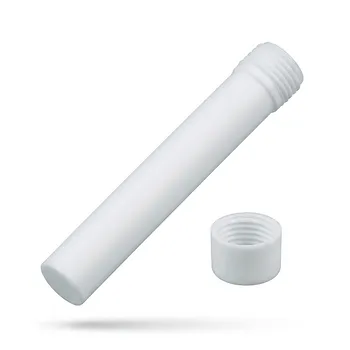
The PTFE (Polytetrafluoroethylene) liner is chosen for its exceptional chemical stability. It creates a barrier that prevents the reaction slurry from eroding the autoclave walls, which would otherwise lead to structural failure of the vessel.
Prevention of Metallic Contamination
If the reaction liquid were to contact the metal shell, iron or nickel ions would leach into the gel. These metallic impurities can integrate into the molecular sieve lattice or act as competing catalysts, ruining the catalytic selectivity of the SAPO-34.
The PTFE liner ensures that the growth of nanocrystals occurs in a high-purity environment. This isolation is critical for producing single-phase products with the precise acidity required for applications like the Methanol-to-Olefins (MTO) process.
Understanding the Trade-offs
Temperature Limitations
While PTFE is chemically robust, it has a distinct thermal ceiling, typically around 250 °C. Approaching or exceeding this limit can cause the liner to soften, deform, or release toxic vapors, which limits the synthesis window.
Heat Transfer Inefficiency
PTFE is an insulator, meaning it does not conduct heat as efficiently as the stainless steel shell. This creates a thermal lag between the oven temperature and the actual temperature of the reaction gel inside the liner.
Researchers must account for this lag to ensure the internal environment stays within the critical 180-220 °C range. Inaccurate temperature control can lead to the formation of unintended dense phases or poorly crystallized materials.
Making the Right Choice for Your Goal
To achieve the best results in SAPO-34 synthesis, consider your primary objective:
- If your primary focus is phase purity: Ensure the PTFE liner is thoroughly cleaned with acid between runs to remove residual nuclei from previous syntheses.
- If your primary focus is rapid crystallization: Pre-heat the autoclave to account for the thermal insulation of the PTFE liner, ensuring the internal gel reaches the target temperature quickly.
- If your primary focus is product recovery: Leverage the extremely smooth surface of the PTFE liner to easily collect the solid precipitates and minimize material loss during filtration.
The synergy between the chemical resistance of PTFE and the structural strength of stainless steel is what makes the successful synthesis of advanced molecular sieves possible.
Summary Table:
| Component | Primary Function | Key Benefit for SAPO-34 |
|---|---|---|
| Stainless Steel Shell | Structural Support | Withstands high autogenous pressure at 180-220°C |
| PTFE Liner | Chemical Inertness | Prevents corrosion from acids and metallic contamination |
| Sealed Design | Pressure Containment | Facilitates nucleation and crystal framework growth |
| Smooth Surface | Material Recovery | Minimizes product loss during collection and filtration |
Precision Engineering for Your Most Demanding Synthesis
Elevate your research with KINTEK, your premier partner for high-performance laboratory solutions. From everyday basic labware—including beakers, measuring cylinders, crucibles, reagent bottles, and centrifuge tubes—to specialized high-purity trace analysis instruments and cleaning tanks, we provide the foundational tools for excellence.
We specialize in the full spectrum of fluid transfer components (tubing, fittings, valves), sample prep tools (filters, pipettes, tweezers), and essential consumables. For advanced research, KINTEK offers standard and custom hydrothermal synthesis liners, microwave digestion vessels, electrochemical cells, and microchannel reactors.
Our end-to-end custom CNC fabrication allows us to deliver everything from complex non-standard machined parts to high-volume orders with an absolute focus on high-performance PTFE and PFA materials. Ensure the purity of your SAPO-34 molecular sieves and experimental workflows with our bespoke setups.
Ready to optimize your lab's performance? Contact us today to discuss your custom requirements!
References
- Mona Torabi Verki, Fariba Marzpour Shalmani. Crystallization and particle size distribution of hydrothermally synthesized SAPO-34: an experimental and population balance study. DOI: 10.1038/s41598-024-81146-y
This article is also based on technical information from Kintek Knowledge Base .
Related Products
- PTFE Lined High Pressure Digestion Vessel 50ml High Temperature Hydrothermal Synthesis Tank
- Custom TFM Reaction Vessel with Stainless Steel Jacket and PTFE Inner Cup for High Corrosion Resistance
- High Temperature Corrosion Resistant Hydrothermal Synthesis Reactor with TFM Inner Liner and Straight Cylinder Design
- High Pressure Custom TFM Reactor Stainless Steel Outer Vessel PTFE Inner Cup for Corrosive Synthesis
- PTFE Acid Steam Cleaning System HF Resistant Trace Analysis Beaker Digestion Tank Customizable
People Also Ask
- What are the benefits of using a PTFE-lined vessel for carbon-sulfur cathode treatment? Maximize Purity & Performance
- Why are PTFE-lined pressure digestion vessels required for the preparation of Ag/CeO2 catalysts? Purity & Performance
- What safety features are typically incorporated into high-pressure PTFE digestion vessel designs? Ensure Lab Safety
- What is the function of PTFE lined high-pressure vessels in g-C3N4 synthesis? Achieve High-Purity Material Growth
- Role of High-Pressure Digestion Tanks in Perovskite Synthesis: Achieve Superior Stability and Latent Heat