The primary function of a PTFE-lined stainless steel autoclave in the hydrothermal synthesis of NiFe-LDHs is to create a sealed, high-pressure environment that is chemically shielded from the reaction. This specialized vessel allows precursor solutions to reach temperatures well above their boiling point, facilitating the precise crystallization of nickel-iron layered double hydroxides.
Core Takeaway: The autoclave functions as a pressurized "pressure cooker" where the stainless steel provides mechanical strength to withstand internal pressure, while the PTFE liner ensures chemical purity by preventing corrosive alkaline precursors from reacting with the metal shell.
The Engineering of a High-Pressure Environment
The Role of the Stainless Steel Outer Shell
The stainless steel exterior provides the necessary mechanical strength to contain the high internal pressures generated during heating. This pressure, often referred to as autogenous pressure, is critical because it keeps the aqueous solvent in a liquid state at temperatures exceeding 100°C.
The Chemical Necessity of the PTFE Liner
The Polytetrafluoroethylene (PTFE) liner serves as a chemically inert barrier between the reaction gel and the metal vessel. Because the synthesis of NiFe-LDHs often involves highly alkaline solutions or aggressive salt precursors, the liner prevents these chemicals from corroding the steel shell.
Maintaining Solution Purity
By isolating the reaction from the metal walls, the PTFE liner ensures that no unintended metallic impurities (like chromium or extra iron from the steel) contaminate the product. This isolation is vital for maintaining the exact stoichiometric ratio of Nickel to Iron required for high-performance electrocatalysts.
Impact on NiFe-LDH Structural Integrity
Precision Control of Crystal Growth
The stable temperature and pressure provided by the autoclave allow for the controlled nucleation of the LDH phase. This stability is essential for achieving specific interlayer spacing and ensuring the structural integrity of the final nanosheets.
Facilitating Two-Dimensional Morphology
The hydrothermal environment encourages the growth of NiFe-LDHs into two-dimensional nanostructures. This results in materials with a high specific surface area and exposed active facets, which significantly enhances their performance in applications like water splitting.
Enhancing Crystallinity
The sealed environment promotes the formation of high-crystallinity single-phase products. Consistent autogenous pressure ensures that the reactants interact uniformly, leading to a more homogenous crystal structure compared to open-air synthesis methods.
Understanding the Trade-offs and Risks
Thermal Limitations of PTFE
While PTFE is highly inert, it has a strict temperature ceiling, typically around 220°C. Exceeding this limit can cause the liner to soften, deform, or even decompose, which risks contaminating the sample or causing the autoclave to leak.
Filling Degree and Pressure Risks
The internal pressure is highly sensitive to the filling degree (the volume of liquid relative to the vessel size). Overfilling the autoclave can lead to an exponential increase in pressure as the liquid expands, potentially exceeding the mechanical safety limits of the stainless steel shell.
Cleaning and Cross-Contamination
PTFE is non-stick, but it is also porous at the microscopic level. If not cleaned rigorously between uses, trace amounts of previous precursors can remain trapped, leading to cross-contamination in subsequent synthesis batches.
How to Optimize Your Synthesis Process
To achieve the best results when using a PTFE-lined autoclave for NiFe-LDH synthesis, consider your specific material goals:
- If your primary focus is Phase Purity: Ensure the PTFE liner is pristine and free of scratches to prevent any contact between the alkaline precursor and the steel shell.
- If your primary focus is High Crystallinity: Monitor the temperature stability closely and maintain a consistent filling degree (usually 60-80%) to ensure stable autogenous pressure.
- If your primary focus is Scaling Up: Account for the "thermal lag" of the thick stainless steel walls, as larger autoclaves take significantly longer to reach the target internal temperature.
By balancing the mechanical power of the steel with the chemical protection of the PTFE liner, you can reliably produce high-quality NiFe-LDHs with tailored electrochemical properties.
Summary Table:
| Component | Primary Function | Key Benefit |
|---|---|---|
| Stainless Steel Shell | Mechanical strength & pressure containment | Enables safe high-temperature aqueous reactions |
| PTFE Liner | Chemically inert barrier | Prevents corrosion and metallic contamination |
| Sealed Environment | Generation of autogenous pressure | Facilitates 2D morphology and high crystallinity |
| Reaction Control | Stable thermal environment | Ensures precise stoichiometric ratios for LDH phases |
Elevate Your Synthesis Precision with KINTEK
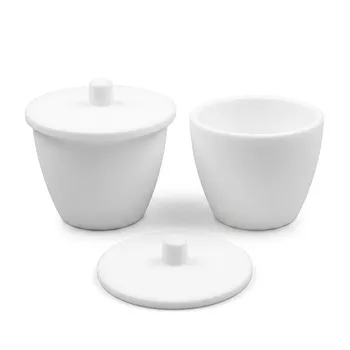
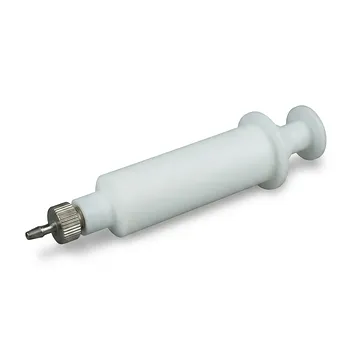
Unlock the full potential of your material research with KINTEK, your premier partner for high-performance fluoropolymer laboratory solutions. From everyday basic labware like PTFE and PFA beakers, crucibles, and reagent bottles to specialized hydrothermal synthesis liners and microwave digestion vessels, we provide the chemical purity your NiFe-LDH research demands.
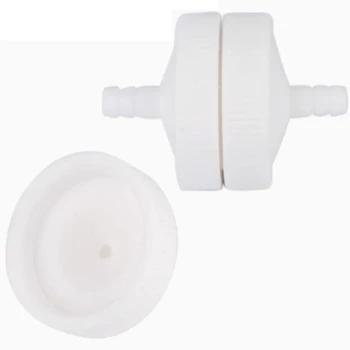
Our expertise extends to advanced fluid transfer components, filtration tools, and custom-engineered reaction apparatus, including electrochemical cells and battery testing fixtures. Backed by end-to-end custom CNC fabrication, KINTEK can deliver everything from high-volume standard orders to complex, bespoke non-standard machined parts tailored to your exact specifications.
Ready to enhance your lab's efficiency with premium materials? Contact us today to discuss your custom project or bulk needs!
References
- Xinyu Gai, Zhaobing Guo. Insight on the Ultrafast Water Treatment over NiFe-Layered Double Hydroxides via Electroactivation of Ferrate(VI): The Role of Spin State Regulation. DOI: 10.3390/w17091369
This article is also based on technical information from Kintek Knowledge Base .
Related Products
- Custom TFM Reaction Vessel with Stainless Steel Jacket and PTFE Inner Cup for High Corrosion Resistance
- PTFE Lined High Pressure Digestion Vessel 50ml High Temperature Hydrothermal Synthesis Tank
- High Pressure Custom TFM Reactor Stainless Steel Outer Vessel PTFE Inner Cup for Corrosive Synthesis
- High Purity TFM Microwave Digestion Vessels PTFE Acid Evaporation Liners Domestic GT-400 Equivalent Laboratory Reaction Containers
- High Purity PTFE Microwave Digestion Vessel Replacement Liner for Acid Sample Preparation and Trace Analysis
People Also Ask
- Why is a Polytetrafluoroethylene (PTFE) lined reaction vessel an ideal choice for preparing PtNPs/FeSAC tandem catalysts?
- Why are high-performance pressure-resistant reaction vessels required for oxygen-assisted hydrothermal conversion at 150 °C?
- Why are PTFE-lined reaction vessels necessary for forced degradation studies? Ensure high-purity results and accuracy.
- How do magnetic stirring and reaction vessels impact MOF-derived carbon quality? Optimize Your Composite Performance
- Why are high-quality fluoropolymer-lined reaction vessels required for alk-Ti3C2Tx MXene? Ensure Purity & HF Resistance