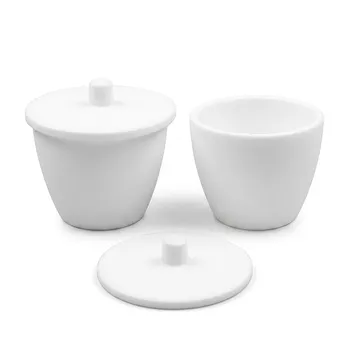
The hydrothermal synthesis of BiOCl$_{1-x}$I$_x$ nanostructures relies on a PTFE-lined stainless steel autoclave to create a controlled, high-energy environment. This vessel provides the sealed, high-temperature, and high-pressure conditions necessary to convert bismuth oxyhalide precursors into regular nanosheet structures. By isolating corrosive precursors like glacial acetic acid within an inert chamber, the autoclave ensures high sample purity and promotes uniform crystal growth.
Core Takeaway: The autoclave functions as a specialized pressure vessel that combines the mechanical strength of steel with the chemical inertness of Polytetrafluoroethylene (PTFE) to facilitate the nucleation and growth of high-crystallinity nanostructures under autogenous pressure.
The Dual-Component Design: Strength Meets Inertness
The Stainless Steel Outer Shell
The primary role of the stainless steel exterior is to provide the mechanical strength required to withstand extreme internal forces. During the heating process, the liquid precursors expand and vaporize, generating significant autogenous pressure.
Without this robust outer shell, the vessel could not safely contain the high-pressure environment required for the hydrothermal process. This structural integrity allows the reaction to reach temperatures like 160 °C while remaining completely sealed.
The PTFE Liner (Chemical Shield)
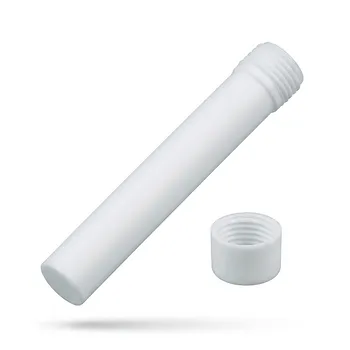
The Polytetrafluoroethylene (PTFE) liner serves as a critical barrier between the reaction medium and the metal walls. It offers exceptional chemical stability, which is vital when using corrosive precursors such as glacial acetic acid.
By preventing the solution from attacking the stainless steel, the liner eliminates the risk of introducing metallic impurities into the BiOCl$_{1-x}$I$_x$ sample. Furthermore, its smooth surface facilitates the subsequent recovery and collection of the synthesized powder.
Driving the Synthesis of BiOCl$_{1-x}$I$_x$ Nanosheets
Promoting Nucleation and Crystallinity
The sealed environment creates the physical basis for subcritical hydrothermal conditions. The resulting high pressure increases the solubility of precursors, facilitating the thorough mixing and synergistic interaction of components.
These conditions are essential for promoting the nucleation and growth of nanocrystals. This process ensures the formation of high-crystallinity, single-phase products that would be difficult to achieve at atmospheric pressure.
Facilitating Morphological Control
In the specific case of BiOCl$_{1-x}$I$_x$, the stable reaction space maintained at 160 °C is the driving force for structural transformation. The energy provided by this environment promotes the conversion of precursors into regular nanosheet structures.
The precise control of temperature and pressure within the autoclave allows researchers to dictate the final one-dimensional or two-dimensional morphology of the nanostructures. This consistency is vital for ensuring the active materials perform reliably in their intended applications.
Understanding the Trade-offs
Temperature and Pressure Limitations
While PTFE is highly inert, it has a defined thermal threshold, typically losing structural integrity above 220–250 °C. For reactions requiring higher temperatures, researchers must switch to alternative liners like PPL (Para-polyphenylene) or gold-plated vessels.
Liner Deformation and Maintenance
Over time, repeated cycles of heating and cooling can cause the PTFE liner to deform or "creep." If the liner does not fit perfectly within the steel shell, it may lead to leaks or pressure failures, potentially damaging the autoclave or contaminating the synthesis.
Thermal Lag During Heating
The combination of a thick steel wall and a PTFE liner creates thermal insulation, meaning the internal temperature of the solution may lag behind the oven's set temperature. Precise synthesis requires accounting for this ramp-up time to ensure the reaction occurs at the intended temperature for the correct duration.
How to Apply This to Your Project
Recommendations for Successful Synthesis
- If your primary focus is high sample purity: Always inspect the PTFE liner for discoloration or pitting before use to ensure no residual metallic ions or previous reactants contaminate your BiOCl$_{1-x}$I$_x$ nanostructures.
- If your primary focus is nanosheet uniformity: Ensure the autoclave is filled to approximately 60–80% of its capacity to provide sufficient headspace for autogenous pressure without risking over-pressurization.
- If your primary focus is experimental safety: Never exceed the maximum temperature rating of your specific PTFE liner, as the material can release toxic fumes and lose its shape if overheated.
By mastering the high-pressure environment of the autoclave, you can precisely tune the structural and chemical properties of BiOCl$_{1-x}$I$_x$ for advanced technical applications.
Summary Table:
| Component | Primary Function | Benefit for BiOCl1-xIx Synthesis |
|---|---|---|
| Stainless Steel Shell | Structural Strength | Safely contains high autogenous pressure at 160°C |
| PTFE Liner | Chemical Inertness | Prevents metallic impurities from corrosive glacial acetic acid |
| Sealed Environment | Pressure Generation | Increases solubility to promote nucleation and crystallinity |
| Controlled Heating | Morphological Drive | Provides the energy required to grow regular nanosheet structures |
Elevate Your Research with Precision Fluoropolymer Labware
Ensure the purity and structural integrity of your nanostructures with KINTEK. We specialize in high-performance PTFE and PFA laboratory supplies, offering everything from standard labware (beakers, crucibles, and reagent bottles) to advanced reaction apparatus like hydrothermal synthesis liners and microwave digestion vessels.
Whether you require high-purity trace analysis instruments, fluid transfer components (tubing, valves), or sample prep tools, our end-to-end custom CNC fabrication can deliver bespoke non-standard machined parts tailored to your specific research parameters.
Ready to optimize your synthesis process? Contact KINTEK today for high-volume orders or custom laboratory setups!
References
- John Fredy Florez-Rios, Armando Pérez-Centeno. Synthesis, characterization and photoactivity of BiOCl <sub>1−x</sub> I <sub>x</sub> nanostructures by hydrothermal method using bismuth acetate. DOI: 10.1088/2053-1591/ae22c9
This article is also based on technical information from Kintek Knowledge Base .
Related Products
- Custom TFM Reaction Vessel with Stainless Steel Jacket and PTFE Inner Cup for High Corrosion Resistance
- PTFE Lined High Pressure Digestion Vessel 50ml High Temperature Hydrothermal Synthesis Tank
- High Pressure Custom TFM Reactor Stainless Steel Outer Vessel PTFE Inner Cup for Corrosive Synthesis
- High Purity TFM Microwave Digestion Vessels PTFE Acid Evaporation Liners Domestic GT-400 Equivalent Laboratory Reaction Containers
- High Purity PTFE Microwave Digestion Vessel Replacement Liner for Acid Sample Preparation and Trace Analysis
People Also Ask
- Why are high-performance pressure-resistant reaction vessels required for oxygen-assisted hydrothermal conversion at 150 °C?
- Why are high-quality fluoropolymer-lined reaction vessels required for alk-Ti3C2Tx MXene? Ensure Purity & HF Resistance
- How do magnetic stirring and reaction vessels impact MOF-derived carbon quality? Optimize Your Composite Performance
- Why are PTFE-lined reaction vessels necessary for forced degradation studies? Ensure high-purity results and accuracy.
- Why is a high-purity PTFE lined reaction vessel required for the acidic etching of MXenes? Ensure Material Purity.