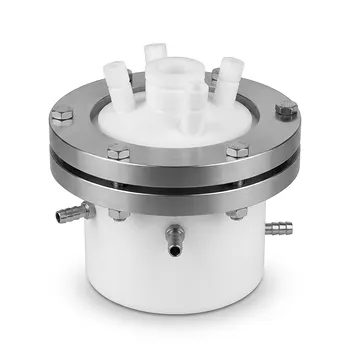
The PTFE-lined hydrothermal synthesis autoclave acts as a high-pressure chemical reactor that "cuts" MXene nanosheets into ultra-small quantum dots. By providing a sealed, high-temperature environment, it facilitates the thermodynamic breakdown of larger sheets into zero-dimensional particles while the PTFE liner ensures the resulting quantum dots remain free from metallic impurities.
Core Takeaway: The autoclave provides the subcritical pressure necessary to physically restructure MXene nanosheets into quantum dots, while the PTFE liner serves as a vital chemical barrier that prevents corrosive reagents from leaching metallic contaminants into the sample.
The Role of Subcritical Conditions in MQD Formation
Engineering the "Cutting" Mechanism
Hydrothermal synthesis uses heat and pressure to transform Ti3C2Tx MXene nanosheets into quantum dots (MQDs). Under these specific conditions, the energy in the sealed vessel is sufficient to cut the larger sheets into ultra-small structures that exhibit quantum confinement effects.
Enhancing Reactant Solubility
The sealed environment allows solvents to reach temperatures well above their atmospheric boiling points while remaining in a liquid state. These subcritical conditions significantly increase the solubility and reactivity of the precursors, facilitating a supersaturated state necessary for the nucleation of high-quality crystals.
Maintaining Precise Synthesis Ratios
Because the system is strictly sealed, there is no loss of solvent or reagents through evaporation. This ensures that the synthesis ratios remain constant throughout the reaction, which is critical for controlling the final morphology and size of the quantum dots.
The Necessity of the PTFE Liner
Protection Against Corrosive Environments
The synthesis of MQDs often involves strong alkaline environments, such as ammonia. Polytetrafluoroethylene (PTFE) is chosen for its exceptional chemical inertness and resistance to erosion from these harsh reaction solutions.
Preventing Metal Ion Contamination
Without the liner, corrosive reagents would react with the stainless steel outer shell of the autoclave. The PTFE barrier prevents metal ion contamination, ensuring the high purity and consistent optical performance required for quantum dot applications.
Safeguarding Structural Integrity
By isolating the reaction chemistry from the metal housing, the liner prevents structural damage to the autoclave itself. This protection allows the equipment to safely withstand the autogenous pressure generated during long-duration heating cycles, often reaching temperatures up to 200°C.
Understanding the Trade-offs and Limitations
Temperature Constraints of PTFE
While PTFE is highly inert, it has a functional temperature ceiling, typically around 200°C to 250°C. Exceeding these limits can cause the liner to soften or deform, compromising the seal and potentially releasing toxic fumes.
Pressure Sensitivity and Safety
The pressure inside the autoclave is autogenous, meaning it is generated by the heating of the solvent in a confined space. If the vessel is overfilled—typically exceeding 80% of its total volume—the internal pressure can rise exponentially, risking a mechanical failure of the stainless steel shell.
Heat Transfer Delays
PTFE is an insulator, which means it does not conduct heat as efficiently as the outer metal shell. This creates a thermal lag between the oven temperature and the actual reaction temperature inside the liner, which must be accounted for during precision synthesis.
How to Apply This to Your Synthesis Goals
When utilizing a PTFE-lined autoclave for MXene quantum dot preparation, your choice of parameters should align with your specific research objectives:
- If your primary focus is Maximum Purity: Ensure the PTFE liner is thoroughly acid-washed between uses to eliminate any residual ions that could quench the fluorescence of your MQDs.
- If your primary focus is Controlling Particle Size: Focus on the reaction duration and temperature, as higher pressures and longer residence times typically lead to smaller, more uniform "cutting" of the nanosheets.
- If your primary focus is Equipment Longevity: Never exceed a 75-80% fill level with alkaline solutions to prevent internal pressure spikes that could warp the PTFE liner or breach the safety gasket.
By mastering the balance between subcritical thermodynamics and chemical containment, you can reliably produce high-purity MXene quantum dots with tailored electronic properties.
Summary Table:
| Feature | Role in MQD Synthesis | Key Benefit |
|---|---|---|
| Subcritical Pressure | Physically "cuts" MXene nanosheets | Produces 0D quantum dots with confinement effects |
| PTFE Liner | Chemical barrier against corrosive alkaline | Prevents metal ion contamination and quenching |
| Sealed System | Prevents solvent/reagent evaporation | Maintains constant synthesis ratios for uniformity |
| Thermal Energy | Enhances precursor solubility/reactivity | Achieves supersaturation for crystal nucleation |
| Autogenous Pressure | Enables high-temperature liquid reactions | Facilitates rapid and efficient chemical breakdown |
Elevate Your Research with Precision Fluoropolymer Labware
Precision in MXene synthesis requires equipment that stands up to harsh chemicals without compromising purity. KINTEK provides a comprehensive range of high-performance PTFE and PFA laboratory supplies designed for the most demanding research applications.
From everyday basic labware (beakers, measuring cylinders, crucibles, reagent/wash bottles, centrifuge and digestion tubes) and high-purity trace analysis instruments to comprehensive fluid transfer components (tubing, fittings, valves), sample prep tools (filters, pipettes, tweezers), and general consumables, we have you covered.
For advanced research, KINTEK offers specialized derivative and reaction apparatus, including:
- Hydrothermal synthesis liners and microwave digestion vessels.
- Standard or custom electrochemical cells and battery testing fixtures.
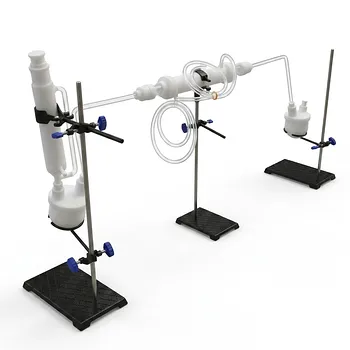
- Microchannel reactors and condensation/reflux devices.
Backed by end-to-end custom CNC fabrication, KINTEK can deliver everything from complex non-standard machined parts to high-volume orders with an absolute focus on high-performance fluoropolymer materials.
Contact our experts at KINTEK today to discuss your bespoke laboratory setup!
References
- Nisha Hiralal Makani, Shubo Han. A Sensitive Electrochemical Cholinesterase-Inhibiting Biosensor for Organophosphorus Pesticides Based on Ti3C2TX MXene Quantum Dots. DOI: 10.3390/bios15090575
This article is also based on technical information from Kintek Knowledge Base .
Related Products
- PTFE Lined High Pressure Digestion Vessel 50ml High Temperature Hydrothermal Synthesis Tank
- High Temperature Corrosion Resistant Hydrothermal Synthesis Reactor with TFM Inner Liner and Straight Cylinder Design
- Custom TFM Reaction Vessel with Stainless Steel Jacket and PTFE Inner Cup for High Corrosion Resistance
- High Pressure Custom TFM Reactor Stainless Steel Outer Vessel PTFE Inner Cup for Corrosive Synthesis
- PTFE Acid Steam Cleaning System HF Resistant Trace Analysis Beaker Digestion Tank Customizable
People Also Ask
- What are the benefits of using a PTFE-lined vessel for carbon-sulfur cathode treatment? Maximize Purity & Performance
- Why are PTFE-lined pressure digestion vessels required for the preparation of Ag/CeO2 catalysts? Purity & Performance
- What safety features are typically incorporated into high-pressure PTFE digestion vessel designs? Ensure Lab Safety
- What is the function of PTFE lined high-pressure vessels in g-C3N4 synthesis? Achieve High-Purity Material Growth
- Role of High-Pressure Digestion Tanks in Perovskite Synthesis: Achieve Superior Stability and Latent Heat