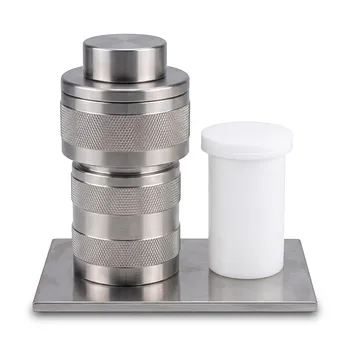
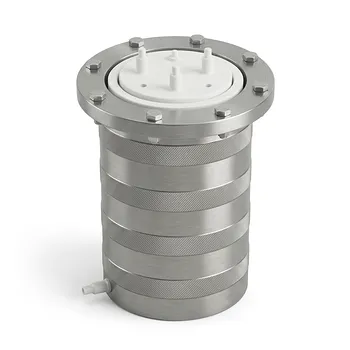
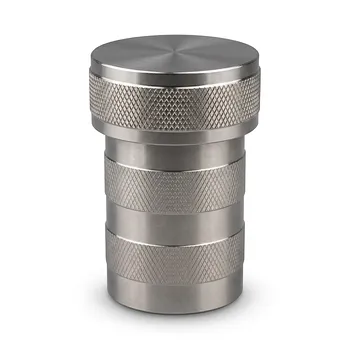
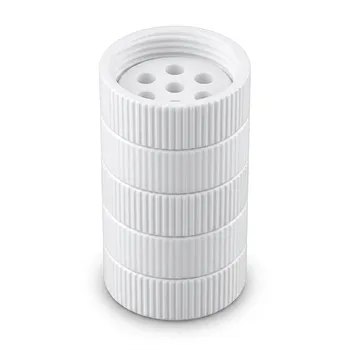
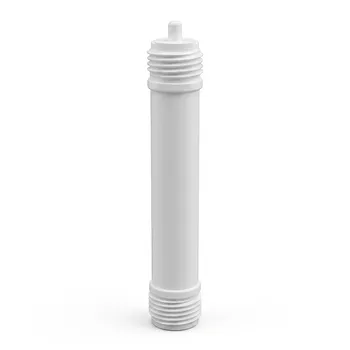
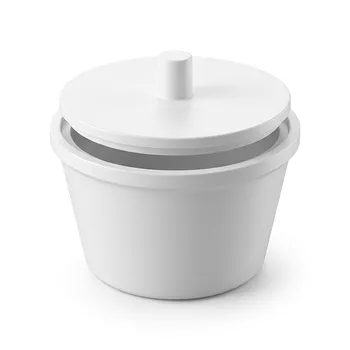
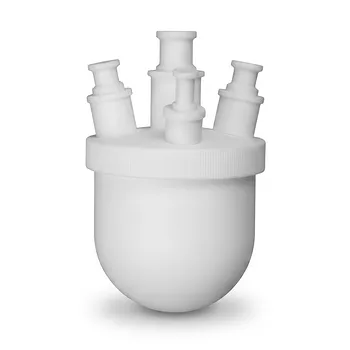
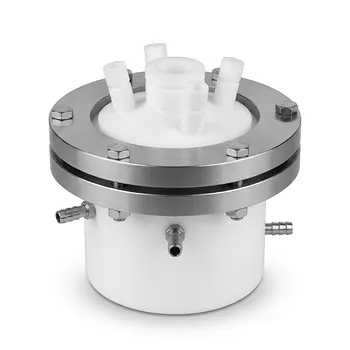
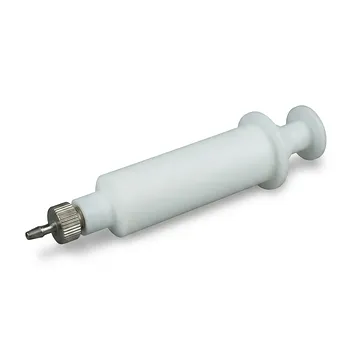
The PTFE-lined high-pressure autoclave acts as a chemically inert, sealed reactor that facilitates the crystallization of terbium clusters by sustaining high autogenous pressure and preventing metallic contamination. In the synthesis of Tb16, it allows organic solvents like DMF and acetonitrile to reach temperatures well above their boiling points (typically 150°C) while protecting the reaction from the corrosive effects of precursors and ensuring the formation of high-purity single crystals through programmed cooling.
The core function of the PTFE-lined autoclave is to provide a "clean-room" environment within a pressurized vessel. It simultaneously resists the aggressive chemical nature of organic solvents at high temperatures and isolates the reaction from the metallic outer shell to ensure the structural integrity and purity of the terbium clusters.
The Mechanics of the Solvothermal Environment
High-Pressure Containment for Superheated Solvents
In the synthesis of Tb16, solvents like N,N-Dimethylformamide (DMF) and acetonitrile (MeCN) are heated to 150°C, far exceeding their standard boiling points. The autoclave creates a sealed environment that contains the resulting autogenous pressure, forcing the solvents into a supercritical or subcritical state. This state increases the solubility of the terbium precursors and ligands, enabling reactions that would be impossible at atmospheric pressure.
Controlled Thermal Conditions for Crystallization
The heavy stainless steel shell of the autoclave provides thermal mass, which is essential for maintaining a constant temperature. This stability, combined with programmed cooling, allows the Tb16 clusters to crystallize slowly. Precision in temperature control ensures that the resulting product consists of high-purity single crystals rather than amorphous powders.
The Critical Role of the PTFE Liner
Chemical Inertness and Corrosion Resistance
Polytetrafluoroethylene (PTFE) is chosen for its extreme resistance to chemical attack. At elevated temperatures, strong polar solvents like DMF and acidic or alkaline precursors can aggressively corrode the stainless steel body of the autoclave. The PTFE liner acts as a impermeable barrier, protecting the equipment and preventing the reaction fluid from eroding the outer shell.
Prevention of Metal Impurity Contamination
One of the greatest risks in lanthanide cluster synthesis is the introduction of extraneous metal ions (such as iron or chromium) from the reactor walls. The PTFE material is chemically non-reactive and does not leach ions into the solution. This ensures that the terbium clusters can form without competing metal impurities interfering with the specific molecular architecture of the Tb16 core.
Facilitating Product Recovery
PTFE possesses a naturally non-stick, smooth surface. This property is vital during the collection phase, as it prevents the synthesized terbium crystals or precipitates from adhering to the walls. It allows for the complete recovery of solid products and simplifies the cleaning process, preventing cross-contamination between different batches.
Understanding the Trade-offs
Temperature and Pressure Limitations
While PTFE is highly inert, it has a lower thermal threshold than the stainless steel shell, typically limited to 220°C–250°C before it begins to deform or release toxic vapors. In the synthesis of Tb16, staying at 150°C is safe, but exceeding these limits can lead to "liner collapse" or seal failure.
Thermal Lag and Internal Gradients
PTFE is an excellent insulator, which means there is a significant delay between the temperature measured by the oven and the actual temperature inside the liner. Users must account for this thermal lag when designing programmed cooling cycles for single-crystal growth. If the cooling is too rapid or the lag is not considered, the crystal quality of the terbium clusters may be compromised.
Making the Right Choice for Your Synthesis
How to Apply This to Your Project
When utilizing a PTFE-lined autoclave for the synthesis of advanced clusters or metal-organic frameworks, your choice should be dictated by your specific purity and safety requirements.
- If your primary focus is high-purity single crystals: Ensure the autoclave is used with a programmed cooling oven to mitigate the thermal insulation effects of the PTFE liner.
- If your primary focus is equipment longevity: Inspect the PTFE liner regularly for signs of "pitting" or discoloration, especially when using aggressive solvents like DMF at temperatures above 150°C.
- If your primary focus is maximizing yield: Take advantage of the non-stick properties of the liner by using a gentle rinse with the mother liquor to collect all settled precipitates.
By maintaining the integrity of the PTFE barrier, you ensure that the complex solvothermal reaction remains a controlled, high-purity process capable of producing sophisticated molecular structures like Tb16.
Summary Table:
| Component/Feature | Function in Solvothermal Synthesis | Key Benefit for Tb16 Clusters |
|---|---|---|
| PTFE Liner | Chemical inertness & barrier protection | Prevents metallic contamination & corrosion |
| SS Outer Shell | High-pressure containment | Allows superheating of solvents (DMF/MeCN) |
| Thermal Mass | Heat retention & stable insulation | Enables slow, programmed cooling for crystals |
| Non-stick Surface | Smooth internal interface | Maximizes product recovery and prevents adhesion |
Elevate Your Synthesis with KINTEK’s High-Performance Fluoropolymers
Precision in solvothermal synthesis like Tb16 requires the absolute purity and chemical resistance that only premium materials can provide. KINTEK specializes in manufacturing virtually all laboratory supplies crafted from high-performance PTFE and PFA.
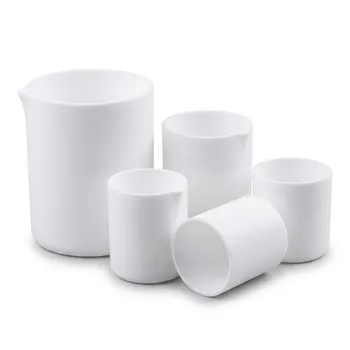
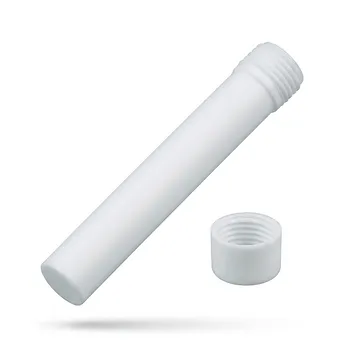
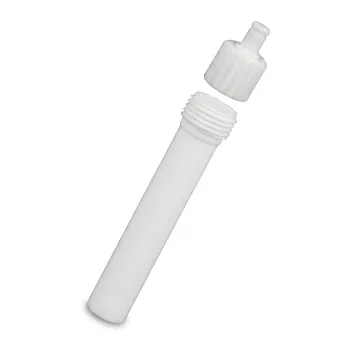
Whether you need everyday basic labware (beakers, crucibles, reagent bottles, and digestion tubes), comprehensive fluid transfer components (tubing, valves, fittings), or advanced reaction apparatus like hydrothermal synthesis liners, microwave digestion vessels, and custom electrochemical cells, we have you covered.
Backed by end-to-end custom CNC fabrication, KINTEK delivers everything from high-volume orders to bespoke, non-standard machined parts designed for your unique research needs. Ensure the integrity of your next reaction—contact our experts today to discuss your project!
References
- Yuanyuan Hu, Shuang‐Quan Zang. Temperature‐Inert Terbium Cluster Scintillator. DOI: 10.1002/agt2.70140
This article is also based on technical information from Kintek Knowledge Base .
Related Products
- PTFE Lined High Pressure Digestion Vessel 50ml High Temperature Hydrothermal Synthesis Tank
- Custom TFM Reaction Vessel with Stainless Steel Jacket and PTFE Inner Cup for High Corrosion Resistance
- High Pressure Custom TFM Reactor Stainless Steel Outer Vessel PTFE Inner Cup for Corrosive Synthesis
- High Temperature Corrosion Resistant Hydrothermal Synthesis Reactor with TFM Inner Liner and Straight Cylinder Design
- High Temperature PTFE Reaction Sieve with Customizable Layers and Precision Pore Sizes for Threaded Sample Separation Devices
People Also Ask
- What are the benefits of using a PTFE-lined vessel for carbon-sulfur cathode treatment? Maximize Purity & Performance
- Why are PTFE-lined pressure digestion vessels required for the preparation of Ag/CeO2 catalysts? Purity & Performance
- What safety features are typically incorporated into high-pressure PTFE digestion vessel designs? Ensure Lab Safety
- What is the function of high-pressure PTFE digestion vessels in mineral analysis? Optimize Sample Mineralization
- What is the function of PTFE lined high-pressure vessels in g-C3N4 synthesis? Achieve High-Purity Material Growth