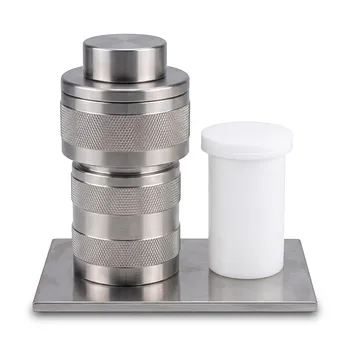
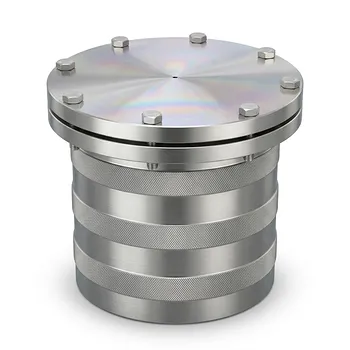
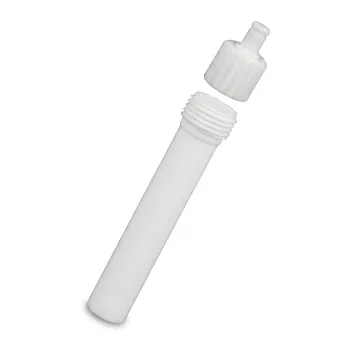
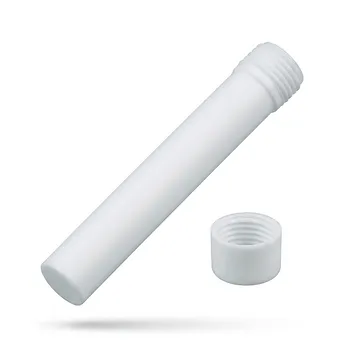
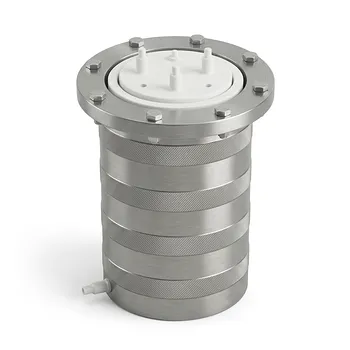
A PTFE-lined autoclave is the fundamental reaction vessel for the solvothermal synthesis of SWNTs/Ag@ZnBDC composites. It provides a hermetically sealed environment capable of maintaining high temperatures and pressures while ensuring the chemical precursors remain isolated from the metallic body of the reactor. This isolation is critical for preventing the introduction of metallic impurities and protecting the autoclave from corrosive organic solvents like Dimethylformamide (DMF).
The primary function of a PTFE-lined autoclave is to provide a chemically inert, high-pressure environment that ensures the purity of the Metal-Organic Framework (MOF) crystal growth. By acting as a barrier between the reaction medium and the stainless steel vessel, it enables the formation of complex hybrid materials without contamination or equipment degradation.
Maintaining High Purity and Structural Integrity
Prevention of Metallic Contamination
The Polytetrafluoroethylene (PTFE) liner is used because it is almost entirely chemically inert. In the synthesis of SWNTs/Ag@ZnBDC, any contact between the precursor solution and the stainless steel outer walls could introduce iron, nickel, or chromium ions into the system. These impurity ions would disrupt the precise coordination of the Zinc (Zn) and Benzene-1,4-dicarboxylic acid (BDC) nodes, compromising the resulting MOF structure.
Facilitating MOF Crystal Growth
The solvothermal process requires stable conditions over extended periods, often at temperatures such as 120 °C. The PTFE-lined environment allows for the slow, controlled nucleation and growth of crystals on the Single-Walled Carbon Nanotubes (SWNTs) and Silver (Ag) nanoparticles. This stability is essential for ensuring that the Ag@ZnBDC structure adheres correctly to the nanotube surfaces.
Protecting the Pressure Vessel and Enhancing Recovery
Resistance to Corrosive Solvents
Solvothermal synthesis frequently employs strong polar solvents, such as DMF, which can become highly aggressive under high pressure and temperature. The PTFE liner protects the structural stainless steel shell from chemical erosion and stress corrosion cracking. This protection extends the operational life of the equipment and ensures safety during high-pressure cycles.
Superior Material Recovery
PTFE is characterized by an extremely smooth, non-stick surface. After the reaction is complete, this property allows researchers to easily collect the solid precipitates, such as the synthesized SWNTs/Ag@ZnBDC powder. Minimizing material loss on the vessel walls is vital for maintaining high yields and ensuring that the recovered composite accurately reflects the intended chemical stoichiometry.
Understanding Technical Limitations and Trade-offs
Temperature Constraints
While PTFE is highly effective, it has distinct thermal limits, typically becoming susceptible to deformation or "creeping" near 250 °C. In most SWNT composite synthesis protocols occurring at 120 °C to 180 °C, this is not an issue, but exceeding these limits can lead to liner failure. If higher temperatures are required, alternative liners like PFA or specialized metallic alloys may be necessary.
Differential Thermal Expansion
PTFE expands at a much higher rate than the stainless steel outer shell when heated. This requires precise engineering of the liner dimensions to ensure a tight seal is maintained without crushing the liner. Users must ensure that the autoclave is cooled slowly to prevent the liner from contracting too quickly, which can create vacuums or gaps that trap residual precursors.
Best Practices for Solvothermal Synthesis
Before beginning the synthesis of complex composites like SWNTs/Ag@ZnBDC, consider the specific requirements of your precursor chemistry.
- If your primary focus is Maximum Product Purity: Ensure the PTFE liner is thoroughly cleaned with aqua regia or specific solvents between runs to remove any embedded trace metals.
- If your primary focus is Equipment Longevity: Always inspect the liner for "pitting" or discoloration, as these are early signs of chemical breakthrough that could lead to autoclave shell corrosion.
- If your primary focus is High-Yield Recovery: Utilize the non-stick properties of the liner by using plastic or PTFE-coated spatulas to harvest the composite, avoiding metal tools that can scratch the liner surface.
By providing a controlled, inert, and pressurized micro-environment, the PTFE-lined autoclave serves as the essential architecture for successfully engineering advanced hybrid nanomaterials.
Summary Table:
| Feature | Function in Synthesis | Benefit for SWNTs/Ag@ZnBDC |
|---|---|---|
| Chemical Inertness | Isolates precursors from metal reactor body | Prevents metallic ion (Fe, Ni, Cr) contamination |
| Pressure Sealing | Maintains stable solvothermal environment | Facilitates slow, controlled MOF crystal growth |
| Non-stick Surface | High-smoothness PTFE liner walls | Ensures high-yield recovery of solid precipitates |
| Corrosion Resistance | Protects vessel from aggressive DMF solvents | Extends equipment life and ensures safety |
| Thermal Stability | Operates safely between 120°C and 180°C | Ideal for standard MOF synthesis protocols |
Optimize Your Nanomaterial Synthesis with KINTEK Fluoropolymers
Achieving the structural integrity required for SWNTs/Ag@ZnBDC composites demands the highest purity environments. KINTEK specializes in high-performance fluoropolymer laboratory supplies, providing everything from standard PTFE and PFA liners to advanced reaction apparatus.
Whether you need everyday basic labware (beakers, crucibles, reagent bottles) or specialized tools like hydrothermal synthesis liners, microwave digestion vessels, and custom electrochemical cells, we have you covered. Our expertise extends to comprehensive fluid transfer components, sample prep tools, and general consumables, all crafted with an exclusive focus on high-performance materials.
Why partner with KINTEK?
- End-to-End Customization: Our custom CNC fabrication delivers complex non-standard machined parts tailored to your specific research needs.
- Unmatched Purity: We ensure your reactions remain free from metallic contamination and chemical erosion.
- Scalable Solutions: From bespoke laboratory setups to high-volume industrial orders.
Ready to enhance your lab's efficiency and material purity? Contact us today to discuss your custom requirements!
References
- Gajanan A. Bodkhe, Mahendra D. Shirsat. Electrochemical Sensing of Hg2+ Ions Using an SWNTs/Ag@ZnBDC Composite with Ultra-Low Detection Limit. DOI: 10.3390/chemosensors13070259
This article is also based on technical information from Kintek Knowledge Base .
Related Products
- PTFE Lined High Pressure Digestion Vessel 50ml High Temperature Hydrothermal Synthesis Tank
- Custom TFM Reaction Vessel with Stainless Steel Jacket and PTFE Inner Cup for High Corrosion Resistance
- High Purity PTFE Microwave Digestion Vessel Replacement Liner for Acid Sample Preparation and Trace Analysis
- High Purity TFM Microwave Digestion Vessels PTFE Acid Evaporation Liners Domestic GT-400 Equivalent Laboratory Reaction Containers
- High Pressure Custom TFM Reactor Stainless Steel Outer Vessel PTFE Inner Cup for Corrosive Synthesis
People Also Ask
- What are the benefits of using a PTFE-lined vessel for carbon-sulfur cathode treatment? Maximize Purity & Performance
- Why are PTFE-lined pressure digestion vessels required for the preparation of Ag/CeO2 catalysts? Purity & Performance
- What safety features are typically incorporated into high-pressure PTFE digestion vessel designs? Ensure Lab Safety
- What is the function of high-pressure PTFE digestion vessels in mineral analysis? Optimize Sample Mineralization
- What is the function of PTFE lined high-pressure vessels in g-C3N4 synthesis? Achieve High-Purity Material Growth