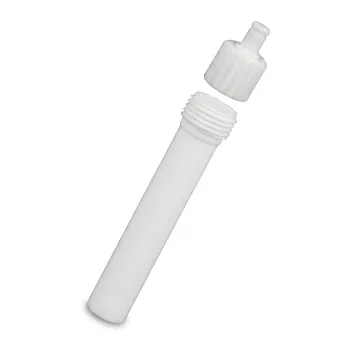
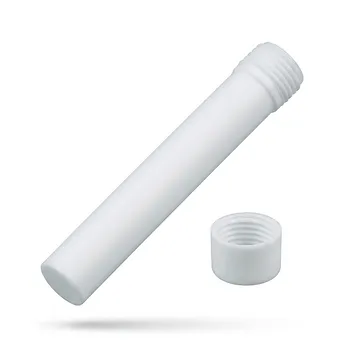
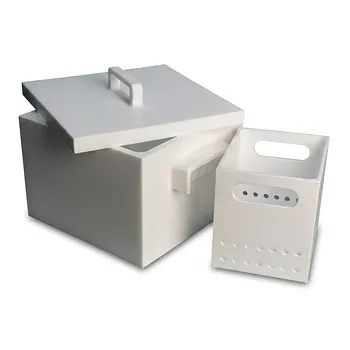
The PTFE-lined autoclave serves as a specialized reaction vessel that provides a chemically inert, high-pressure, and high-temperature environment necessary for PFA@SWNT synthesis. In this specific process, the liner ensures that formamide precursors undergo in-situ self-condensation into polyformamide at 180°C without reacting with the container walls. This configuration is critical for maintaining the structural integrity of the single-walled carbon nanotubes and the high purity of the resulting hybrid material.
The core function of the PTFE-lined autoclave is to provide a contamination-free "micro-environment" that withstands the aggressive conditions of solvothermal synthesis. It acts as both a chemical barrier to protect the product's purity and a physical barrier to prevent the reaction from corroding the metallic autoclave housing.
Ensuring Chemical Purity and Integrity
Prevention of Side Reactions
The primary role of the Polytetrafluoroethylene (PTFE) liner is its exceptional chemical inertness. During the synthesis of PFA@SWNTs, the reaction solution remains isolated from the metallic walls of the autoclave.
This isolation ensures that the formamide undergoes in-situ self-condensation into polyformamide chains directly on the nanotube surface. Without the liner, the precursors might react with the metal vessel, introducing unwanted side products and compromising the hybrid material.
Elimination of Metal Ion Contamination
Metallic autoclaves, usually made of stainless steel, can leach metal ions into the solution when exposed to high heat and polar solvents. The PTFE liner acts as a definitive barrier against this erosion.
By preventing the introduction of these impurities, the liner ensures that the morphological growth of the polyformamide on the SWNTs is controlled and predictable. This is essential for maintaining the electrical and structural properties of the carbon nanotubes.
Facilitating the Solvothermal Environment
Managing High-Temperature and High-Pressure
Solvothermal synthesis requires the reaction to occur above the boiling point of the solvent, creating autogenous pressure. The PTFE liner is designed to withstand these conditions, typically operating effectively at temperatures like 180°C.
The sealed environment allows the precursor solution to remain in a liquid state well above its standard boiling point. This high-energy state is what drives the polymerization of formamide onto the relatively stable surface of the single-walled carbon nanotubes.
Protection of the External Hardware
While the PTFE liner handles the chemistry, the stainless steel outer shell handles the physical pressure. The liner prevents corrosive solvents and precursors from reaching and weakening the steel shell.
This dual-layer approach prevents chemical erosion of the equipment. By shielding the metal from aggressive chemicals, the liner extends the lifespan of the laboratory equipment and ensures safety during high-pressure cycles.
Optimizing Product Recovery and Maintenance
Non-Stick Surface for Yield Maximization
PTFE is known for its highly non-stick characteristics, which are vital for the recovery of solid precipitates. After the synthesis of PFA@SWNTs, the hybrid materials can be easily collected from the liner walls.
This smooth surface minimizes product loss and ensures that the final yield of the polyformamide-modified nanotubes is as high as possible. It also prevents "cross-contamination" between different experimental batches.
Ease of Cleaning and Maintenance
Because the reaction materials do not adhere or react with the PTFE, the cleaning process is significantly simplified. This allows for rapid turnaround in laboratory settings.
The ability to thoroughly decontaminate the liner ensures that subsequent syntheses are not affected by residual carbon nanotubes or polymer fragments. This consistency is vital for reproducible research results.
Understanding the Trade-offs
Temperature Limitations
While PTFE is remarkably stable, it has a lower thermal threshold than the steel shell surrounding it. Most PTFE liners are limited to a maximum continuous operating temperature of 220°C to 250°C.
Exceeding these temperatures can cause the liner to soften or deform, leading to a seal failure. In the synthesis of PFA@SWNTs at 180°C, the material is safe, but researchers must remain cautious of "thermal overshoot."
Differential Thermal Expansion
PTFE and stainless steel expand at different rates when heated. If the autoclave is heated or cooled too rapidly, the liner can experience mechanical stress or "creep."
This can eventually lead to cracks or thinning of the liner wall. Proper protocol requires gradual heating and cooling to maintain the long-term integrity of the PTFE material.
How to Apply This to Your Synthesis Goal
Choosing the Right Approach for Your Project
- If your primary focus is material purity: Always inspect the PTFE liner for any discoloration or pitting before starting the 180°C formamide reaction to ensure no legacy contaminants are present.
- If your primary focus is equipment longevity: Ensure the outer stainless steel threads are clean and that the PTFE "seal" (the top lip of the liner) is not compressed or deformed, as this prevents solvent vapors from escaping and corroding the outer shell.
- If your primary focus is high-yield recovery: Use a plastic spatula rather than metal tools to scrape the PFA@SWNTs from the liner to avoid scratching the PTFE surface, which would create sites for future contamination.
The PTFE-lined autoclave is the indispensable "clean room" of solvothermal chemistry, enabling the delicate modification of carbon nanotubes under extreme conditions.
Summary Table:
| Feature | Role in PFA@SWNT Synthesis |
|---|---|
| Chemical Inertness | Prevents side reactions and eliminates metal ion contamination from the outer vessel. |
| High Pressure/Temp Stability | Enables 180°C solvothermal conditions required for formamide self-condensation. |
| Non-Stick Surface | Maximizes yield recovery and simplifies the cleaning process for carbon nanotubes. |
| Thermal Barrier | Protects the stainless steel outer shell from corrosive precursors and high-energy solvents. |
| Isolation Layer | Acts as a contamination-free "micro-environment" for consistent, reproducible results. |
Elevate Your Research with KINTEK’s High-Performance Fluoropolymer Solutions
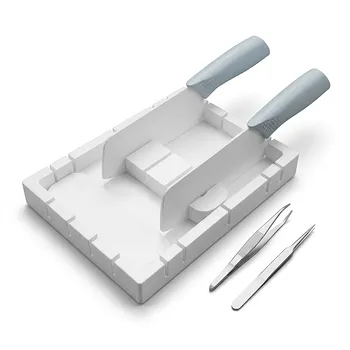
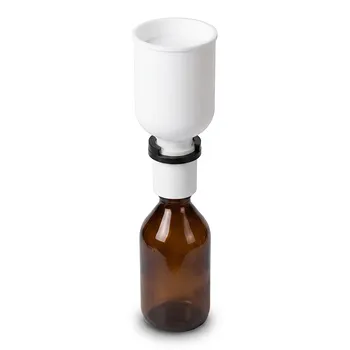
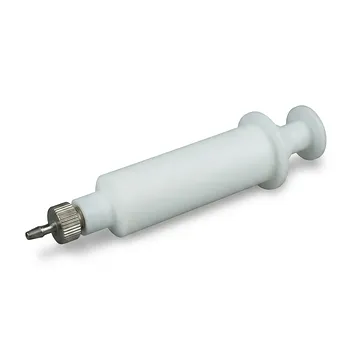
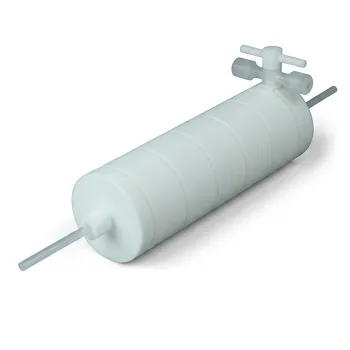
Precision in nanomaterial synthesis starts with the right equipment. At KINTEK, we specialize in high-performance fluoropolymer materials designed to withstand the most aggressive laboratory environments. From everyday basic labware like PFA beakers, measuring cylinders, and reagent bottles to advanced reaction apparatus such as hydrothermal synthesis liners and PTFE-lined autoclaves, we provide the contamination-free environment your research demands.
Our expertise extends to comprehensive fluid transfer components (tubing, fittings, valves), sample prep tools (pipettes, filters, tweezers), and essential consumables (O-rings, stirring bars, gaskets). Backed by end-to-end custom CNC fabrication, KINTEK can deliver everything from high-volume standard orders to complex, non-standard machined parts and bespoke laboratory setups.
Ready to optimize your synthesis yields and maintain absolute purity? Contact us today to discover how our tailored PTFE and PFA solutions can support your laboratory's success!
References
- Fengwei Zhang, Sheng Zhu. Partial thermal atomization of residual Ni NPs in single-walled carbon nanotubes for efficient CO <sub>2</sub> electroreduction. DOI: 10.1039/d4sc07291j
This article is also based on technical information from Kintek Knowledge Base .
Related Products
- PTFE Lined High Pressure Digestion Vessel 50ml High Temperature Hydrothermal Synthesis Tank
- Custom TFM Reaction Vessel with Stainless Steel Jacket and PTFE Inner Cup for High Corrosion Resistance
- High Purity PTFE Microwave Digestion Vessel Replacement Liner for Acid Sample Preparation and Trace Analysis
- High Purity TFM Microwave Digestion Vessels PTFE Acid Evaporation Liners Domestic GT-400 Equivalent Laboratory Reaction Containers
- High Pressure Custom TFM Reactor Stainless Steel Outer Vessel PTFE Inner Cup for Corrosive Synthesis
People Also Ask
- What are the benefits of using a PTFE-lined vessel for carbon-sulfur cathode treatment? Maximize Purity & Performance
- Why are PTFE-lined pressure digestion vessels required for the preparation of Ag/CeO2 catalysts? Purity & Performance
- What safety features are typically incorporated into high-pressure PTFE digestion vessel designs? Ensure Lab Safety
- What is the function of high-pressure PTFE digestion vessels in mineral analysis? Optimize Sample Mineralization
- What is the function of PTFE lined high-pressure vessels in g-C3N4 synthesis? Achieve High-Purity Material Growth