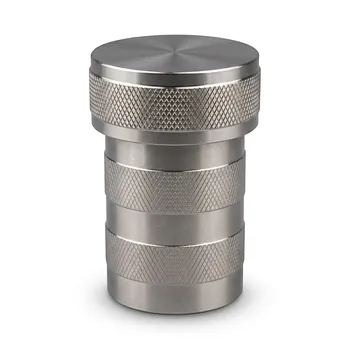
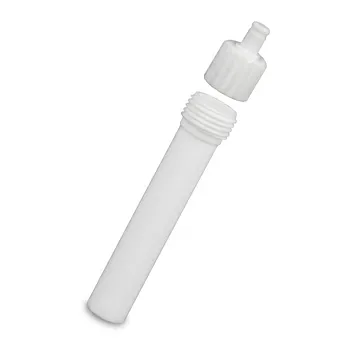
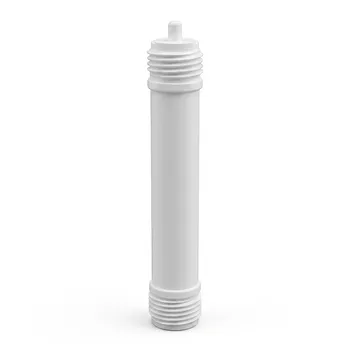
The PTFE liner acts as the critical barrier and reaction chamber during hydrothermal synthesis. In the production of Nickel-Cobalt Carbonate Hydroxide (Ni-Co-CHH), the liner provides a chemically inert environment that prevents the precursor solution from corroding the stainless steel autoclave shell. It simultaneously facilitates the high-pressure conditions and non-stick surfaces required for the uniform growth of nanostructures on substrates such as nickel foam.
The PTFE liner is a functional necessity that ensures chemical purity and controlled crystallization by isolating corrosive reagents from the metallic autoclave body. This isolation allows for the creation of a high-pressure, autogenous environment where Ni-Co-CHH can grow with high crystallinity and specific morphologies.
Maintaining Chemical Purity and Structural Integrity
Corrosion Resistance Against Precursor Media
The primary role of the Polytetrafluoroethylene (PTFE) liner is to serve as a chemically inert shield. During the synthesis of Ni-Co-CHH, the precursor solution often contains reactive species that would otherwise attack the iron, chromium, and nickel in the stainless steel autoclave shell.
Eliminating Metal Ion Contamination
By preventing the reaction liquid from eroding the vessel walls, the liner ensures that no unwanted metallic impurities are introduced into the sample. This is vital for maintaining the precise stoichiometry of Ni-Co-CHH, as contamination from the autoclave walls could alter the electrochemical performance of the nanomaterials.
Thermal and Chemical Stability
The PTFE material is specifically chosen for its ability to withstand the typical synthesis temperature of 120 degrees Celsius while remaining resistant to acidic or alkaline conditions. This stability ensures the liner does not degrade or leach organic contaminants into the reaction mixture during the extended heating period.
Creating the Optimal Reaction Environment
Facilitating Autogenous High Pressure
The liner, when sealed within the stainless steel shell, allows the solvent to reach a subcritical or supercritical state. This generates autogenous pressure, which significantly enhances the reactivity of the precursor molecules and drives the dissolution-recrystallization process necessary for nanomaterial formation.
Promoting Uniform Nucleation and Growth
The non-stick properties of PTFE are essential when synthesizing Ni-Co-CHH directly onto substrates like nickel foam. Because the crystals do not readily adhere to the PTFE walls, the growth is directed more efficiently toward the intended substrate, leading to a more uniform nanostructure.
Controlling Crystal Facets and Morphology
The high-pressure environment maintained by the liner-autoclave assembly promotes the oriented, regular growth of nanocrystals. This allows for the development of specific crystal facets and high surface area structures, such as two-dimensional nanosheets or nanorod arrays, which are critical for high-performance applications.
Understanding the Trade-offs and Limitations
Temperature Constraints
While PTFE is highly versatile, it has a strict thermal ceiling, typically around 200°C to 250°C. Exceeding these temperatures can cause the liner to soften, deform, or release toxic fluorinated vapors, potentially compromising both the experiment and the safety of the laboratory.
Thermal Expansion and Sealing Issues
PTFE has a high coefficient of thermal expansion, meaning it expands and contracts significantly more than the stainless steel shell. If the autoclave is cooled too rapidly, the liner may shrink away from the seal, leading to pressure loss or "creeping" of the precursor solution between the liner and the steel wall.
Cleaning and Cross-Contamination
Because PTFE is slightly porous at the microscopic level, it can sometimes retain trace amounts of precursors from previous reactions. Rigorous cleaning protocols are required between uses to ensure that residual ions do not act as unintended seeds for the next synthesis batch.
How to Optimize Your Hydrothermal Synthesis
Actionable Advice for Research and Production
- If your primary focus is phase purity: Inspect the PTFE liner for any discoloration or pitting before use to ensure no metallic ions from the autoclave shell can penetrate the barrier.
- If your primary focus is uniform morphology on substrates: Ensure the substrate is positioned to take advantage of the liner's non-stick surface, preventing bulk precipitation from competing with surface growth.
- If your primary focus is safety and longevity: Limit your reaction temperature to at least 20 degrees below the manufacturer’s maximum rating to prevent liner deformation and ensure a consistent pressure seal.
The integration of a PTFE liner is the definitive solution for managing the harsh chemical and physical demands of Ni-Co-CHH nanomaterial synthesis.
Summary Table:
| Key Feature | Role in Ni-Co-CHH Synthesis |
|---|---|
| Corrosion Resistance | Shields the stainless steel shell from reactive precursor media. |
| Purity Maintenance | Eliminates metallic ion contamination for precise stoichiometry. |
| Pressure Generation | Facilitates autogenous pressure required for crystallization. |
| Surface Properties | Non-stick PTFE walls promote uniform growth on target substrates. |
| Thermal Stability | Withstands standard 120°C synthesis temperatures reliably. |
Elevate Your Research with KINTEK’s High-Performance Fluoropolymers
At KINTEK, we maintain an exclusive focus on high-performance fluoropolymer materials to empower your scientific breakthroughs. From everyday basic labware like beakers, crucibles, and reagent bottles to specialized components like high-purity trace analysis instruments and cleaning tanks, we manufacture virtually all imaginable laboratory supplies crafted from PTFE and PFA.
Our capabilities extend beyond standard consumables; we provide comprehensive fluid transfer components (tubing, valves), sample prep tools (filters, pipettes), and advanced reaction apparatus including standard or custom electrochemical cells, hydrothermal synthesis liners, and microwave digestion vessels. Backed by end-to-end custom CNC fabrication, KINTEK is equipped to deliver everything from high-volume orders to complex, non-standard machined parts tailored to your bespoke laboratory setups.
Ensure the purity and success of your synthesis today. Contact us now to discover how our precision-engineered PTFE and PFA solutions can enhance your laboratory’s efficiency and results.
References
- Mohit Bhatt, A. K. Sinha. Superior charge storage performance of optimized nickel cobalt carbonate hydroxide hydrate nanostructures for supercapacitor application. DOI: 10.1038/s41598-025-85113-z
This article is also based on technical information from Kintek Knowledge Base .
Related Products
- PTFE Lined High Pressure Digestion Vessel 50ml High Temperature Hydrothermal Synthesis Tank
- Custom TFM Reaction Vessel with Stainless Steel Jacket and PTFE Inner Cup for High Corrosion Resistance
- High Temperature Corrosion Resistant Hydrothermal Synthesis Reactor with TFM Inner Liner and Straight Cylinder Design
- High Purity PTFE Microwave Digestion Vessel Replacement Liner for Acid Sample Preparation and Trace Analysis
- High Purity PTFE Microwave Digestion Vessel for Soil and Food Analysis Acid Resistant Fluoropolymer Sample Preparation Liners
People Also Ask
- What are the benefits of using a PTFE-lined vessel for carbon-sulfur cathode treatment? Maximize Purity & Performance
- Why are PTFE-lined pressure digestion vessels required for the preparation of Ag/CeO2 catalysts? Purity & Performance
- What safety features are typically incorporated into high-pressure PTFE digestion vessel designs? Ensure Lab Safety
- What is the function of PTFE lined high-pressure vessels in g-C3N4 synthesis? Achieve High-Purity Material Growth
- Role of High-Pressure Digestion Tanks in Perovskite Synthesis: Achieve Superior Stability and Latent Heat